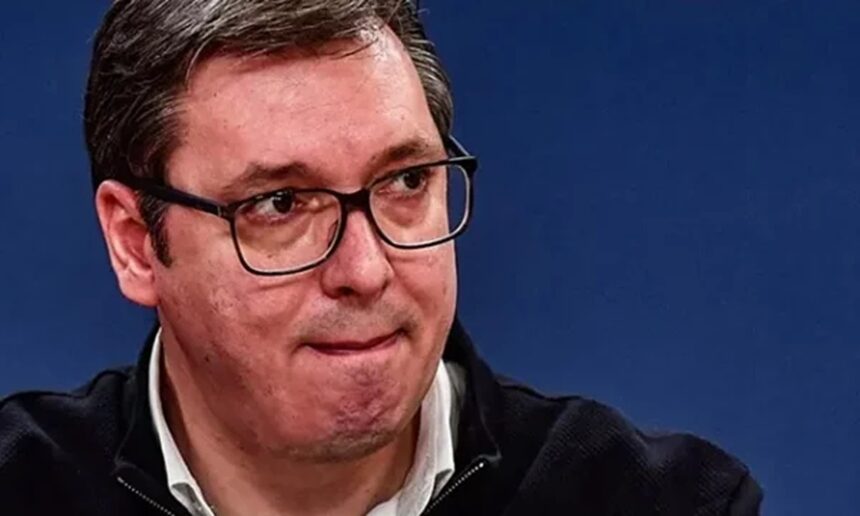
Serbian President Aleksandar Vučić announced on Wednesday that he will officially travel to Montenegro to attend the high-level EU–Western Balkans Summit in the coastal town of Tivat scheduled for June 5.
The decision marks a critical diplomatic shift, finalized immediately after an intensive, open political discussion with European Commission President Ursula von der Leyen.
Addressing the press corps at the Palace of Serbia, Vučić confirmed his presence at what Brussels is framing as a cornerstone geopolitical alignment event for the region. Additionally, the Serbian President revealed that he is slated to hold a crucial, direct phone call with Ukrainian President Volodymyr Zelenskyy later this afternoon to discuss localized security dynamics.
Tivat 2026: The New Focal Point of European Expansion
The upcoming summit in Tivat—hosted by Montenegrin President Jakov Milatović—carries significant political weight for the 24-month horizon of Western Balkan integration.
The summit arrives at a highly sensitive diplomatic juncture, closely trailing a series of intense bilateral friction points across the region, including mounting tensions over minority voting coercion in Graçanica and a multi-nation pushing for a phased economic entry model into the European Single Market.
   [THE TIVAT GEOPOLITICAL FRAMEWORK - JUNE 5]
   • Host Country:       Montenegro (Marking 20 years of renewed independence).
   • High-Level Lineup:  President of European Council António Costa, EC Chief Ursula von der Leyen,
                         EP Head Roberta Metsola, and all 6 Western Balkan leaders.
   • Total Delegations:  Between 35 to 42 international states and institutions.
The Tightrope: Navigating Brussels and Kyiv
While the European Commission has consistently praised Serbia’s foundational infrastructure reforms and financial alignment packages, EU chief von der Leyen has simultaneously maintained steady diplomatic pressure on Belgrade. Brussels has continuously demanded that Serbia “redouble efforts” toward complete harmonization with European foreign policy standards—specifically regarding the EU’s active sanctions regime against Moscow.
Vučić’s scheduled afternoon conversation with Ukrainian President Zelenskyy highlights Belgrade’s ongoing, delicate tightrope act. As the EU rolls out an unprecedented €90 billion financing package to keep Kyiv liquid through 2027, Serbia is increasingly signaling a pragmatic, strategic willingness to engage directly with Ukrainian leadership, ensuring Belgrade remains tethered to core Euro-Atlantic security tracks without entirely severing its remaining regional diplomatic balances.