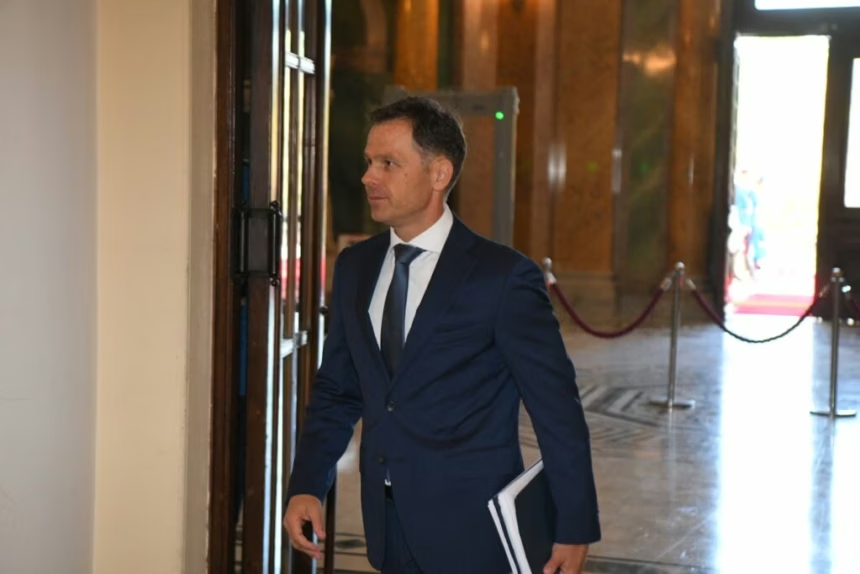
As Serbia undergoes a political transition following the recent election defeat of the Serbian Progressive Party (SNS), one prominent figure has been notably absent from public view: outgoing Finance Minister Siniša Mali.
Since President Aleksandar Vučić acknowledged the party’s defeat on the night of October 25, Mali has appeared publicly only twice — at an SNS patron-saint celebration and at a meeting of the party’s Main Board on October 31.
His limited public presence has prompted speculation about his political future and whether he could become a key witness in potential investigations into the former ruling establishment.
Speaking to Nova.rs, Zoran Stojiljković, a retired professor at the Faculty of Political Sciences and a future member of parliament on the Student List, described Mali’s absence as potentially significant.
Stojiljković said the outgoing ruling establishment was seeking to retain as much institutional influence and as many officials as possible despite losing the election.
He argued that Mali could possess valuable information about the previous government’s internal operations and financial affairs.
“What is indicative to me is that nobody is appearing in public apart from Vučić, and one of the symptoms is that Siniša Mali is also absent, although his testimony and insight into how things worked would be extremely valuable,” Stojiljković said.
He added that Mali had previously been mentioned in public discussions as a potentially important protected witness.
“If anyone knows something about that regime, it is him,” Stojiljković said, describing Mali as a figure who had held influential positions under different political administrations.
Could Mali become a cooperating witness?
Mali’s name was not included on the SNS electoral list, meaning he would not automatically benefit from parliamentary immunity once a new government is formed.
Lawyer Jovan Rajić, however, argued that Mali should not be offered cooperating-witness status, accusing him of being deeply involved in alleged corruption within the former ruling establishment.
Rajić described Mali as a central figure in the party’s financial operations and argued that investigators should examine his role rather than treat him as a potential cooperating witness.
He compared Mali’s position with that of businessman Davor Macura, the owner of Alta Bank, who was recently arrested in connection with allegations involving the bank.
Rajić suggested that Macura could potentially qualify for cooperating-witness status, depending on what information he possesses and is willing to provide to investigators.
He argued that Mali, by contrast, should face scrutiny over his own alleged responsibility for decisions and financial arrangements during the previous government’s time in office.
These are Rajić’s allegations and political assessments; they have not been established by a court.
Allegations and controversies involving Mali
Rajić referred to several controversies involving the finance minister, including the demolition in Belgrade’s Savamala district, questions surrounding properties in Bulgaria, allegations concerning Mali’s doctoral dissertation, the planned redevelopment of the former General Staff building and the EXPO project.
He also referred to Mali’s alleged connections with individuals involved in political and business activities during the Vučić government.
Rajić argued that these matters should be examined as part of a broader investigation into the previous administration.
Mali has not been charged with the offenses alleged by Rajić in the interview, and the lawyer’s statements should not be treated as established findings.
‘In the bunker with Vučić’
Asked why Mali had largely disappeared from public view, Rajić suggested that the minister had been under pressure to participate in the SNS election campaign.
He referred to Mali’s appearances at campaign events, including activities with municipal sanitation workers, pensioners and performers, claiming that the minister appeared uncomfortable during those engagements.
Rajić argued that Mali might want to distance himself from the political establishment but would find it difficult to do so while remaining closely associated with Vučić.
He compared the situation to senior officials remaining alongside a leader during the final days of a collapsing political system, predicting that Mali and other figures would remain loyal until law enforcement authorities intervened.
Those remarks represent Rajić’s interpretation of the political situation rather than verified information about Mali’s current whereabouts or intentions.
A clearer picture expected by the end of the year
Stojiljković said the political and institutional position of Mali and other senior figures from the former administration could become clearer by the end of the year.
Drawing on his previous experience at Serbia’s Anti-Corruption Agency, he argued that one of the most effective ways to establish potential responsibility was to follow financial transactions and examine the origins of assets.
He said investigators should compare individuals’ declared legal income with the value of their property and spending.
“That process has started, but it will take time,” Stojiljković said.
He also suggested that the coming months could bring significant changes within the former ruling establishment as the new parliament is constituted, a government is formed and presidential elections approach.
Stojiljković predicted that these developments could substantially weaken the former ruling party’s political structure within two or three months, drawing a comparison with the political changes that followed October 5, 2000.
For now, Mali’s limited public appearances have raised questions about his political future and the role he may play in the transition. Whether he becomes a witness in any future investigation, however, will depend on the evidence gathered by the competent authorities and decisions made within the judicial process.