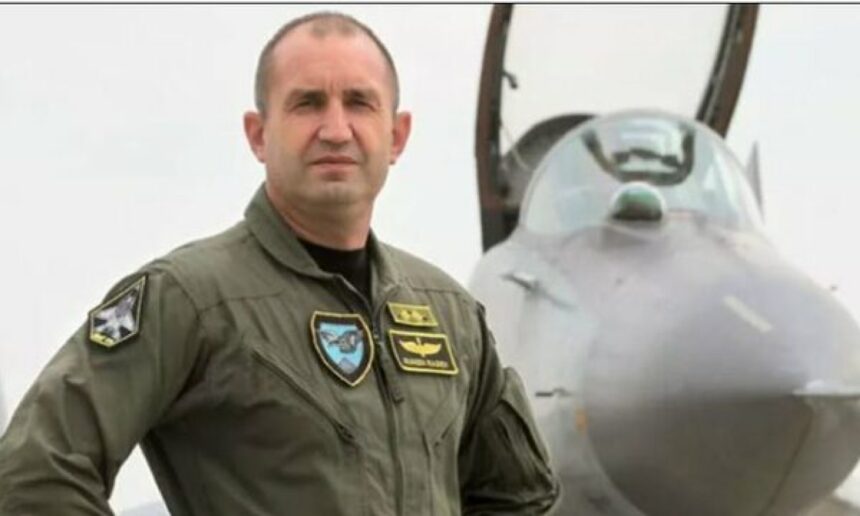
Rumen Radev, a former fighter pilot turned politician, has re-emerged as a dominant force in Bulgaria’s political landscape now positioning himself as a potential prime minister after years as president.
From military general to political powerhouse
Radev built his reputation as a commander of Bulgaria’s Air Force before entering politics. In 2016, he rose to prominence as president with backing from the Bulgarian Socialist Party, often seen as carrying pro-Russian leanings.
Now, after stepping down from the presidency, he has returned with a new political project—“Progressive Bulgaria”and quickly become a frontrunner in parliamentary elections.
Anti-corruption message and “outsider” image
Despite spending over a decade at the top of power, Radev has successfully rebranded himself as an anti-establishment figure. His campaign centers on fighting corruption and dismantling what he calls a “mafia state” in one of the EU’s poorest countries.
His main rival remains Boyko Borisov, a long-time political heavyweight often associated with entrenched power structures.
Clash with Ukraine and controversial positions
Radev has drawn strong international attention for his stance on the war in Ukraine. He has repeatedly opposed military aid to Kyiv and urged negotiations with Russia, positioning himself as “pragmatic” rather than pro-Russian.
His tensions with Volodymyr Zelensky became evident during a previous visit in Sofia, where the two clashed over support for Ukraine.
He has also criticized the European Union, accusing it of prioritizing ideology over economic pragmatism, and even attempted to block Bulgaria’s eurozone ambitions through a referendum.
Allegations of Russian influence
Radev’s long-standing ties with Moscow continue to raise concerns. Reports suggest that Russian-linked networks amplified his campaign online, while past connections to figures associated with Russian intelligence have fueled suspicion.
However, Radev denies being pro-Russian, instead describing himself as “pro-Bulgarian” and focused on national interests.
A potential “new Orbán”?
In Brussels, concerns are growing that Radev could become a figure similar to Viktor Orbán a nationalist leader challenging EU norms from within.
Still, key differences remain. Unlike Orbán’s strong parliamentary majority, Radev may have to govern without a full majority, potentially limiting his ability to reshape institutions as aggressively.
What comes next?
Radev’s rise reflects deep public frustration with corruption and instability. But whether he becomes a reformer, a disruptor, or something in between will depend on how he uses power if he secures it.
For now, Bulgaria stands at another crossroads caught between European integration, national sovereignty, and shifting geopolitical influences.