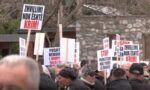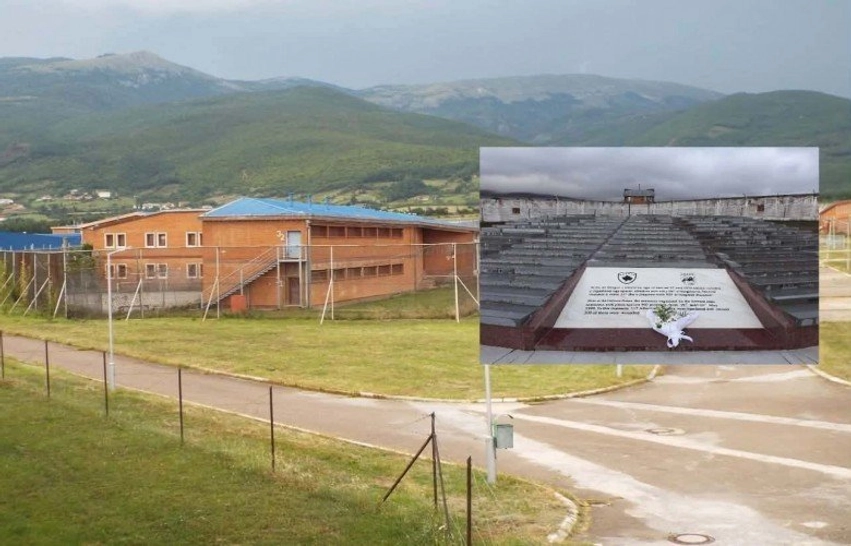
Family members, survivors, and state officials are gathering today at the Dubrava Prison complex to hold memorial tributes marking the 27th anniversary of the Dubrava Prison Massacre, widely condemned as one of the most calculated and barbaric war crimes committed against Albanian political prisoners by the Serbian regime during the 1999 Kosovo War.
The commemorative event, scheduled to begin at 11:00 AM, honors the memory of more than 100 prisoners who were systematically executed and the hundreds of others who survived the multi-day slaughter inside the prison walls between May 19 and May 24, 1999.
The Anatomy of the Crime (May 19–24, 1999)
The Dubrava Massacre remains a unique and dark chapter of the war because the victims were already captive, defenseless, and entirely under the jurisdiction of the state. Historical and judicial archives outline the calculated nature of the multi-day assault:
   [THE DUBRAVA PRISON MASSACRE CHRONOLOGY]
   • May 19–21, 1999:  NATO airstrikes hit the prison complex, killing several inmates.
   • May 22, 1999:     Serbian guards order prisoners onto the sports field under false pretenses.
   • The Execution:    Guards open fire from watchtowers and walls with automatic weapons and RPGs.
   • May 23–24, 1999:  Forces hunt down survivors hiding in sewers, basements, and cell blocks.
   • Total Toll:       Over 100 prisoners executed; more than 200 left severely wounded.
The tragedy began when NATO aviation targeted the prison, which Serbian forces had systematically weaponized by converting it into a military base and packing it with over 1,000 Albanian political prisoners brought from various lockups across Kosovo and Serbia.
Following the initial airstrikes, on the morning of May 22, 1999, prison guards and paramilitary units ordered all inmates to gather on the facility’s open sports field under the pretext of counting them and organizing a relocation to safer areas. Instead, Serbian forces opened fire from watchtowers and perimeter walls using automatic weapons, hand grenades, and rocket-propelled grenades ($RPGs$).
Over the subsequent two days, survivors who sought refuge inside damaged cell blocks, dining halls, and sewer pipes were hunted down and executed at close range.
Honor and Reflection: The 2026 Memorial
Organizers have issued a broad public invitation to former political prisoners, direct survivors, and civil rights organizations to join the families of the victims at the prison today.
                  [THE MEMORIAL CEREMONY PROTOCOL]
                                  │
         11:00 AM: Entry Gates Open at the Dubrava Prison Complex
                                  │
                                  ▼
         Wreath-Laying at the Central Memorial Monument inside the Prison
                                  │
                                  ▼
         Survivors' Testimonies & Demands for Local and International Justice
For the survivors, the annual gathering is a somber reminder of a lingering judicial failure. Despite extensive documentation, eyewitness testimonies, and specific names of prison directors and commanders handed over to war crimes investigators, the absolute majority of the orchestrators and executors within the Serbian Ministry of Justice and paramilitary structures continue to enjoy complete legal immunity in Belgrade.
The Dubrava Prison Massacre remains an enduring symbol of the systemic atrocities committed during the war, standing as a stark reminder of Kosovo’s painful journey toward freedom and the ongoing, generational fight for institutional justice.