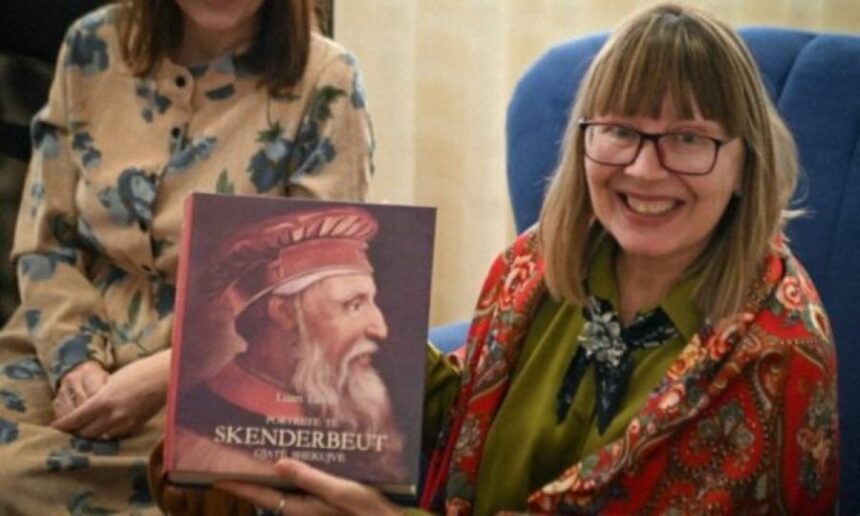
Lyudmila Makey, a Ukrainian journalist who has been living in Kosovo for several years, shared her experiences on the fourth anniversary of the war started by Russia. She described the difficulty of living far from her family while using her time in Kosovo to learn the Albanian language.
“Of course, it was hard for me to be here at first. My family is far away and still in Ukraine. Every morning I wake up and every evening my thoughts are with them. My daughter is still in Kyiv, and as you know, the humanitarian situation there is catastrophic,” Makey said.
She emphasized the strong support she has received from Kosovan citizens, the government, and NGOs.
“I feel the support from the people of Kosovo. When I walk through the streets, citizens greet me saying ‘Slavi Ukraini’ (Glory to Ukraine), and I reply ‘Rroftë Kosova’ (Long live Kosovo),” she said.
Makey also expressed satisfaction with the journalist programs offered by Kosovan authorities.
“Here, we are not just refugees; we continue to work and lead active lives as journalists. On the fourth anniversary of the war, we will gather at Zahir Pajaziti Square at 17:00 to honor soldiers who died and to show Kosovo and the world that we are still alive and continuing our work,” she added.
She shared her favorite Albanian words and a humorous experience:
“I remember my first meeting with Prime Minister Albin Kurti. I didn’t know Albanian at all and tried to remember some words my friends used frequently. One word I liked was ‘Çka bone?’ (What did you do?). I said it during the meeting, and everyone laughed. Now I understand it’s a casual phrase used daily, not in formal meetings. Our conversations are more serious now.”
Makey reflected on the ongoing threat from Russia:
“No one knows when the war will end, but in these four years, I’ve learned to live in a new reality. We understand the war could last a long time. We will fight as long as we can because this is a war for the survival of the Ukrainian people, not just territory. Even if a peace deal were signed temporarily, I believe Putin would continue gathering forces to threaten not just Ukraine but Europe.”
Kushtrim Nreci from the Ministry of Internal Affairs, responsible for refugee affairs, highlighted Kosovo’s empathy toward Ukrainians:
“We don’t see this just as an international development or ordinary war; we feel the pain of Ukrainian citizens. Having experienced war ourselves, we understand their suffering.”
He added that although the number of Ukrainian asylum seekers in Kosovo is small, the program for hosting Ukrainian journalists is among the most successful in Europe.
“Journalists who have come to Kosovo have experienced stable integration, allowing them to report freely from Kosovo. We are glad to have helped them and shared their pain, even if in a small way.”
So far, 19 Ukrainian journalists have been received in Kosovo.