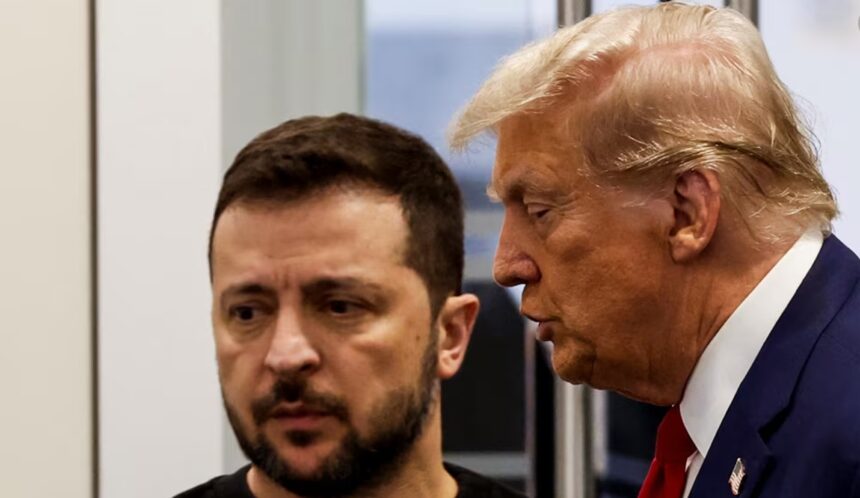
On February 25, 2026, U.S. President Donald Trump and Ukrainian President Volodymyr Zelensky held a phone call to coordinate diplomatic efforts ahead of key negotiations in Geneva. Both leaders confirmed the conversation as teams from both countries prepared for talks on February 26.
The Geneva discussions involve Rustem Umerov, Ukraine’s National Security and Defense Council Secretary, meeting with U.S. special envoy Steve Witkoff and Trump advisor Jared Kushner. Focus areas include a proposed “prosperity package” for Ukraine’s economic recovery and preparations for a potential three-way summit with Russia planned for March.
Zelensky emphasized on social media that Trump supports the sequence of diplomatic steps, calling a direct leader-level summit the “only way to resolve complex and sensitive issues and end the war.”
Key sticking points remain territorial disputes and political will. Zelensky noted that lower-level working groups may not resolve contested issues, stressing that progress requires leader-level negotiations. Ukraine signaled willingness to consider ceasefires along current front lines, contingent on strong security guarantees from Washington and European allies.
Russia, however, continues to demand Ukraine cede additional territory in Donetsk, a proposal Kyiv has firmly rejected. Kremlin spokesman Dmitry Peskov recently expressed doubt over whether the current Ukrainian negotiating position offers a viable path forward.
In the U.S., influential Republican lawmakers have urged expanded military support for Ukraine to strengthen its negotiating position. Senator Lindsey Graham called for supplying Tomahawk cruise missiles, emphasizing the need to strike Russian drone and missile factories deep inside Russia. Senator Jerry Moran echoed these calls, describing Russia’s invasion as a “strategic failure” and stressing that Moscow should not claim victory in the field or at the negotiation table.
Representative Don Bacon highlighted that providing long-range precision weapons and enforcing strict sanctions is essential to uphold global precedent against territorial aggression.
Despite several diplomatic rounds this year, no decisive progress has been achieved. The success of any Zelensky-Putin summit in neutral territory will likely depend on the outcomes of Geneva talks and the proposed March trilateral meeting.