Serbian President Aleksandar Vučić has intensified diplomatic efforts to expand Serbia’s trade, investment, and energy partnerships in Central Asia, as Belgrade continues its EU integration process while exploring alternative economic opportunities.
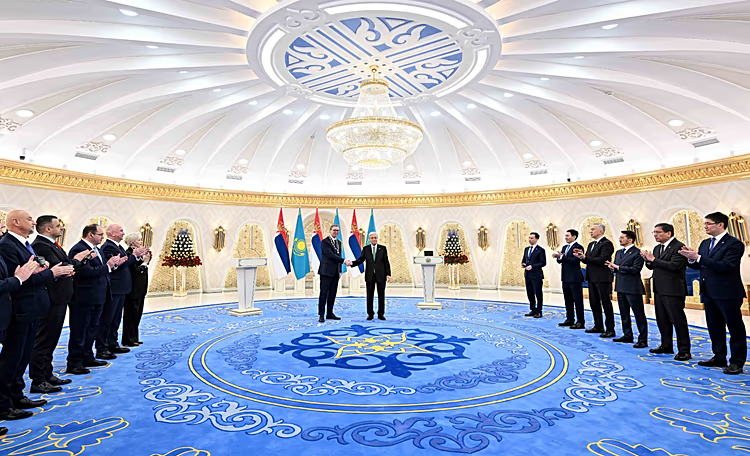
During an official visit to Kazakhstan, held at the invitation of President Kassym-Jomart Tokayev, Vučić discussed strengthening political dialogue, boosting trade and investment, and expanding cultural and humanitarian cooperation between the two countries.
Following their talks, Tokayev awarded Vučić the Golden Eagle Order, highlighting what both sides described as a growing strategic partnership.
Trade and Investment Cooperation Expanding
Officials noted that economic ties between the two countries have been steadily improving, with trade turnover rising by more than 7% since the Kazakh president’s visit to Belgrade in 2024. Kazakhstan’s exports to Serbia have surged significantly, while around 60 Serbian companies are already operating in Kazakhstan, with expectations that cooperation could expand further.
Vučić also met with Kazakhstan’s Prime Minister Olzhas Bektenov and representatives of major investment funds. Several agreements were signed outlining future cooperation in business, industry, and technology.
Among the key developments were defence and technology agreements, including cooperation between SP Kaztechnology and Serbian state arms exporter Yugoimport SDPR to repair and modernise self-propelled artillery systems. Another framework deal focuses on technology transfer and the establishment of production facilities for high-energy materials, while Kazakhstan’s investment agency has been negotiating with Serbian pharmaceutical companies to localise production in the country.
Serbia Expands Energy Partnerships
Vučić’s outreach in Central Asia comes alongside efforts to diversify Serbia’s energy sources. Shortly before travelling to Astana, he hosted Ilham Aliyev in Belgrade, where the two sides signed an agreement on the design, construction, and operation of a gas-turbine power plant.
The project is expected to be built near the Serbian city of Niš, with construction projected to last more than two years and completion planned for 2029. Officials say the initiative forms a key component of Serbia’s long-term energy transition strategy, allowing the country to reduce dependence on a single supplier and convert imported gas into electricity for domestic use and future exports.
Strategic Diplomacy Beyond Europe
Analysts say Serbia’s growing engagement with Central Asian partners reflects Belgrade’s broader strategy of balancing its EU ambitions with diversified economic partnerships abroad. While Vučić has reiterated Serbia’s commitment to the European path, he has also emphasized the importance of developing new growth opportunities while waiting for progress in the EU accession process.
During the visit, Vučić also thanked Kazakhstan’s leadership for not recognising Kosovo’s independence, underscoring how geopolitical considerations continue to influence Serbia’s foreign policy relationships.