Kosovo is another “Balkan fairy tale,” a mix of roots, departures, returns, and children scattered across Europe, writes Corriere dello Sport.
The Kosovo national team dreams of its first FIFA World Cup appearance, and today that dream no longer seems so distant.
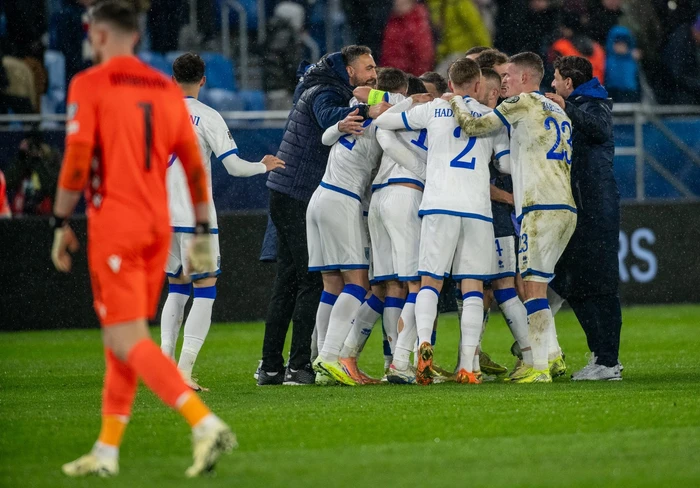
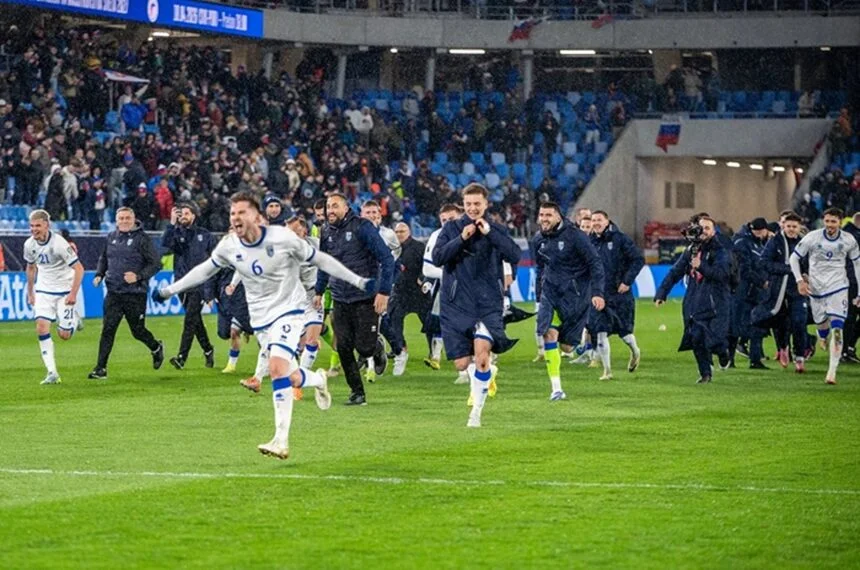
A dramatic 4-3 victory over Slovakia has boosted the team’s ambitions and increased excitement around a squad that, though young as a nation, is already rich in history, identity, and belonging.
Italian influence is also present: captain Amir Rrahmani, currently injured, is expected in Pristina to support his teammates.
Franco Foda: A Mixed Identity on the Bench
Coach Franco Foda embodies this idea of mixed identity. Born in Germany with Italian roots on his father’s side, he brings together different cultures.
As a player and coach, he has always been known for discipline, but in Kosovo he has found something more: a team that must be shaped not only tactically but also emotionally.
The former Austrian national coach at Euro 2020, since 2024 Foda leads a squad where diverse playing styles, journeys, and football cultures converge, united by a common desire for success.
Muriqi and Zhegrova: Kosovo’s Talent and Italian Connection
Kosovo’s offensive strength rests mainly upfront. Vedat Muriqi, known as “the pirate,” remains the key attacking figure and the squad’s most recognizable player.
Alongside him is Edon Zhegrova, a pure talent who brings creativity and flair to the game. Even though he didn’t play the full 90 minutes against Slovakia, he remains one of Kosovo’s most potent weapons.
In goal is Arijanet Muric, with Mërgim Vojvoda in defense, and Valon Berisha, another diaspora product, providing experience and energy in midfield.
The team combines Balkan physicality with Central European training, creating a unique blend of qualities.
Kosovo Believes in the 2026 World Cup
It is no coincidence that Kosovo, despite being a relatively new name in international football, has developed a clear identity.
It may not have the depth of larger teams, but it has enthusiasm, intensity, and a special motivation. For many players, a World Cup appearance would be more than a tournament — it would be the fulfillment of a sporting and national identity still in the making.
The dream is real. Not easy, but real.
Kosovo relies not only on fans in Prishtina but also on its scattered children across Europe, who continue to support the team with pride.