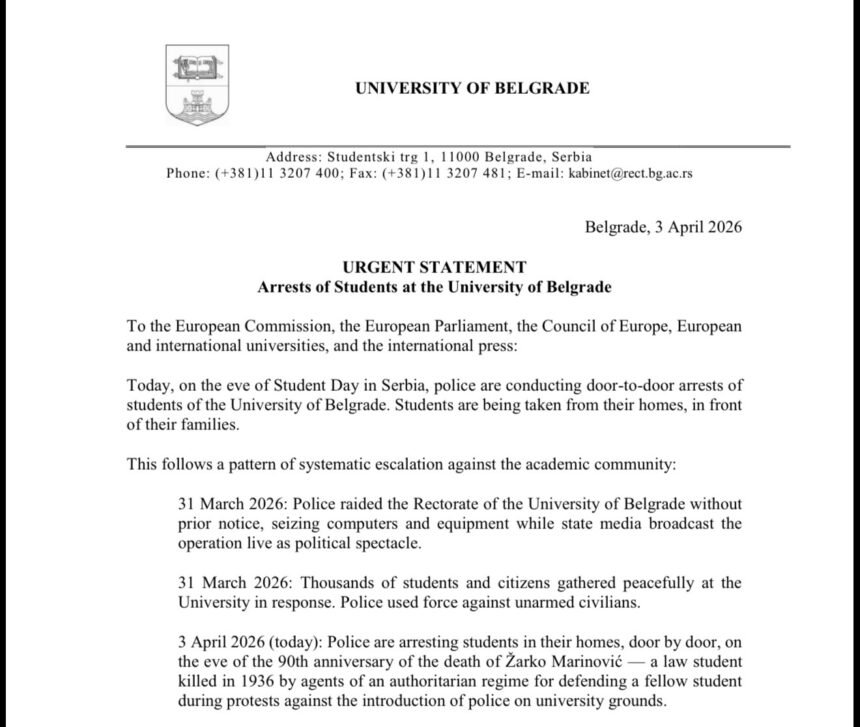
The University of Belgrade has issued a public appeal to European institutions, universities, and international media, alleging that police in Serbia are conducting door-to-door arrests of its students.
According to the statement, officers have detained students from their homes in front of their families, in what the university describes as a broader escalation against the academic community. The arrests reportedly come just ahead of Student Day in Serbia.
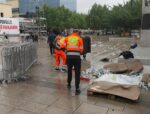
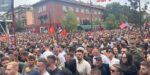
The university outlined a series of recent developments, including a police raid on its Rectorate on March 31, during which equipment was seized and the operation was broadcast by state media. On the same day, thousands of students and citizens gathered peacefully at the campus, where police allegedly used force against demonstrators.
The latest arrests, reported on April 3, coincide with the anniversary of Žarko Marinović, a law student killed in 1936 during protests against police presence at the university. The institution drew parallels between the historical event and current developments, describing the situation as a repetition of past repression.
For over a year, students across Serbia have been protesting over the collapse of a railway station canopy in Novi Sad, which resulted in 16 deaths. The university claims that participants have faced criminal charges, financial pressure on institutions, media campaigns labeling them as extremists, and now arrests.
In its appeal, the university called on the European Commission, the European Parliament, and the Council of Europe to take action, including condemning the arrests, holding emergency discussions, and launching monitoring missions. It also urged European universities to show solidarity and the international press to closely follow developments.
The statement concluded with a message of support for detained students and a warning that restrictions on academic freedom and civil liberties in Serbia could have broader implications across Europe.