The European Commission is seeking to reactivate a largely overlooked clause in the European Union treaties that obliges member states to provide mutual assistance in the event of an attack. Opinions remain divided, but progress appears possible.
Shortly after midnight on March 2, sirens wake residents of a small coastal village in Cyprus. Seconds later, an explosion is heard. An Iranian drone, launched from Lebanon, strikes a British military base on the island, while two other drones are intercepted at the last moment.
A few days later, President Nikos Christodoulides, who also holds the rotating presidency of the EU Council, recalls a clause introduced in 2009. Article 42(7) of the EU Treaty states that member states must provide “aid and assistance by all the means in their power” in the event of an attack on an EU country.
Although Cyprus has not formally triggered Article 42(7), Christodoulides warned that the EU must urgently prepare for such a scenario.
The Clause Is Not an Option, but an Obligation
Until now, most EU member states have relied on NATO and its Article 5 of the North Atlantic Treaty, which also obliges mutual assistance. However, fewer countries are confident that Donald Trump would come to their defense in the event of an attack.
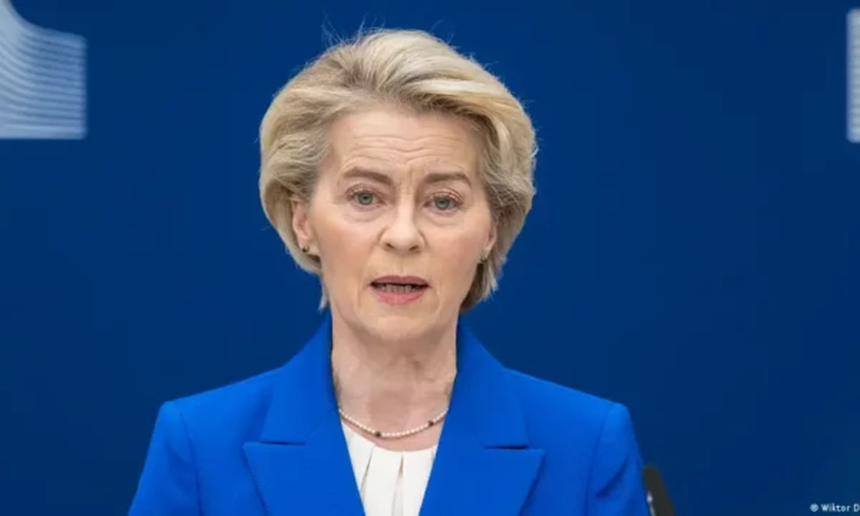
President of the European Commission Ursula von der Leyen stated at the Munich Security Conference in February: “I believe the time has come to revive the European mutual assistance clause. Mutual assistance within the EU is not an option—it is an obligation.”
Key Differences Between Article 5 and Article 42(7)
According to security analyst Juraj Majcin from the European Policy Centre in Brussels, the main difference lies in how assistance is provided. The EU clause relies largely on intergovernmental and bilateral support, while NATO’s Article 5 reflects a broader, structured principle of collective deterrence.
German defense expert and former SPD lawmaker Kristian Klink argues that Article 42(7) is, at least on paper, more binding than NATO’s Article 5. The requirement to provide assistance “by all means in their power” is often interpreted as support “to the fullest extent of their capabilities.”
By contrast, NATO’s Article 5 gives member states more discretion, allowing each to take “such action as it deems necessary,” including the use of armed force.
Both experts emphasized that assistance under Article 42(7) is not limited to military support—it can also include diplomacy, humanitarian aid, and financial assistance. This is particularly relevant for EU members that are not part of NATO, such as Austria, Cyprus, Ireland, and Malta.
Activated Only Once
NATO’s Article 5 has been invoked only once—after the September 11 attacks. In response, NATO deployed surveillance aircraft to help patrol U.S. airspace, with over 360 missions carried out by crews from 13 countries.
Similarly, Article 42(7) has been invoked only once—after the 2015 Paris attacks carried out by the so-called Islamic State. EU members supported France with naval and air capabilities, largely within the U.S.-led coalition against ISIS.
However, analysts warn that in both cases, the clauses were used in response to events they were not originally designed for.
“Significant Differences” in Brussels Debate
In March, EU representatives met in Brussels to discuss Article 42(7). According to meeting records cited by ARD and Der Spiegel, a senior official stressed that a functional mutual assistance clause would make the EU more credible and save valuable time in the event of an attack.
However, several countries remain skeptical. Ireland and Malta expressed the strongest doubts about the operational implementation of the clause. Others prefer to rely primarily on NATO, arguing that the EU is not a military actor. Italy has also taken a cautious stance.
Meanwhile, countries such as France, Spain, Netherlands, Germany, and Austria are pushing for the clause to be taken seriously and for a broader debate to begin.
Despite this, agreement remains distant. A German diplomat noted “significant differences,” warning that this does not bode well for the EU’s ability to respond. The EU, he added, “has not yet fully adapted to geopolitical realities.”
A ‘Coalition of the Willing’ Led by Germany
Swedish Ambassador to Berlin, Veronika Wand-Danielsson, argues that Europe must “wake up,” describing the current situation as a new Cold War. Sweden only joined NATO in 2024, having previously relied more on the EU.
She supports a dual-track approach: Article 42(7) should be applied to “civil and hybrid threats,” including attacks on critical infrastructure and cyberattacks, while traditional military defense remains NATO’s responsibility.
Such a position could form a European compromise, avoiding conflict with NATO while still strengthening EU capabilities.
However, she noted that not all EU members are likely to agree. A “coalition of the willing,” led by Germany, may need to move forward independently and develop concrete plans for implementing Article 42.
First Simulation Exercise in April
The EU is still at an early stage in this discussion. In April, it plans to conduct its first simulation exercise on what would happen if a member state activated the mutual assistance clause.
The scenario includes escalating disinformation campaigns, cyberattacks, and drones entering EU airspace. For now, the exercise will be conducted as a tabletop simulation.