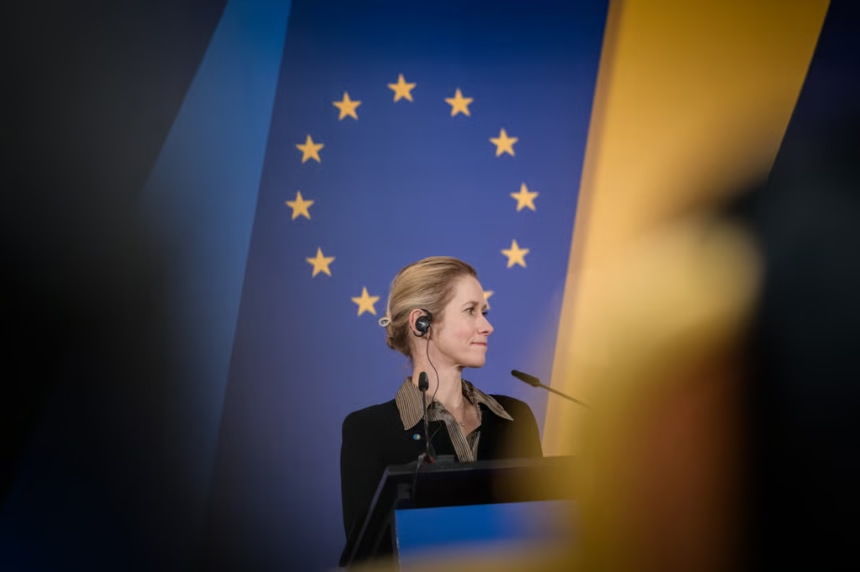
The European Union’s top diplomat Kaja Kallas has called on Israel to immediately halt its military strikes in Lebanon, warning that the scale of attacks risks undermining a fragile ceasefire between the United States and Iran.
Kallas criticized what she described as “heavy-handed” actions by Israel, stating that while Hezbollah had drawn Lebanon into the conflict, Israel’s response had gone beyond the bounds of self-defense.
“Israeli strikes have caused massive destruction and significant civilian casualties, making it difficult to justify such actions as proportionate,” Kallas said in a public statement.
Her remarks follow reports from Lebanese authorities that at least 200 people were killed in Israeli airstrikes on Wednesday, intensifying international pressure on Israel to scale back its operations. Similar concerns were raised by António Guterres, who warned that continued escalation could destabilize broader regional efforts toward de-escalation.
The criticism comes at a sensitive moment, as a ceasefire initiative announced by Donald Trump earlier this week faces increasing uncertainty. Tehran has indicated it may withdraw from the agreement if Israeli operations in Lebanon continue, while also raising concerns over potential disruptions in the strategically vital Strait of Hormuz.
Despite mounting criticism, Israeli Prime Minister Benjamin Netanyahu signaled no intention of halting military operations, reaffirming that Israel would continue to target Hezbollah with “force, precision, and determination.”
Israel and the United States maintain that Lebanon is not covered under the current ceasefire framework. However, Iran has linked its continued participation in the agreement to a halt in Israeli strikes, further complicating diplomatic efforts.
The latest developments risk deepening tensions between the European Union and Israel, whose relations have already deteriorated over the war in Gaza and ongoing regional conflicts.