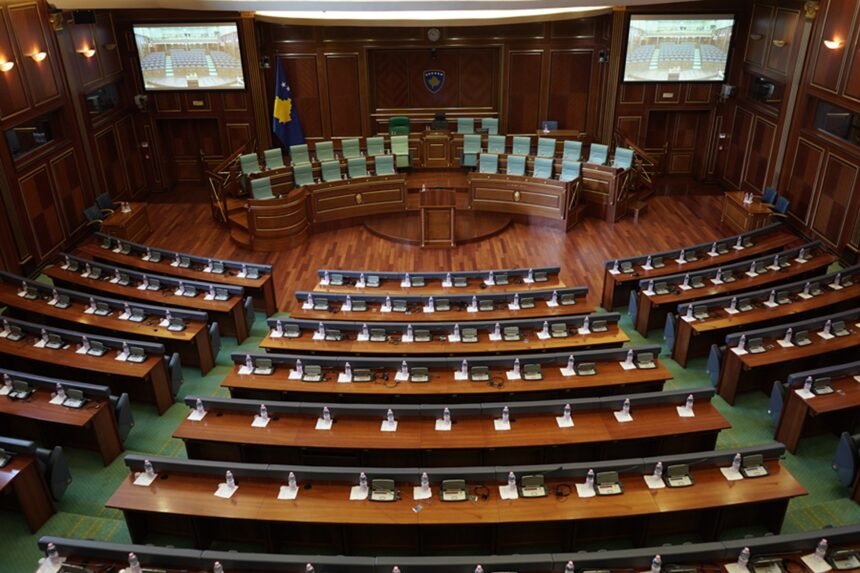
Around two weeks remain until the deadline set for electing a new president, otherwise the country may head to elections that must be held within 45 days.
University professor Rrahman Paçarizi sees new elections as the only remaining option.
He argues that political parties are not sufficiently engaged in finding a solution.
“I think the only option now is elections, because it seems no one is truly interested in finding a solution. It is somewhat strange that Lëvizja Vetëvendosje is not more engaged in electing the president, as this would secure a stable four-year mandate,” he said.
According to him, the main responsibility lies with Lëvizja Vetëvendosje, which holds the largest number of seats in the Assembly.
He also pointed to strong polarization in recent parliamentary sessions, both in political positioning and the language used.
“There has been no real engagement from any side, especially not from those who hold responsibility. Smaller parties like LDK or AAK do not have the numbers to secure even signatures, let alone elect a president. The burden therefore falls on Vetëvendosje,” Paçarizi added.
Currently, Albulena Haxhiu is serving as acting president after the mandate of Vjosa Osmani ended on April 5.
She can exercise this role until October 5 if a new president is not elected by April 28—the deadline set by the Constitutional Court of Kosovo.
A week ago, a meeting took place between Prime Minister Albin Kurti and LDK leader Lumir Abdixhiku, who agreed to continue discussions to avoid new elections. However, no further meetings have been held since.
Paçarizi said the remaining time has already been largely wasted, indicating a lack of seriousness from political actors.
He suggested that a potential solution could involve cooperation with the Democratic Party of Kosovo, given the need for at least 80 votes, while noting that relying solely on LDK may not be sufficient.
He also observed that political parties appear to have already entered campaign mode, holding meetings with citizens across municipalities.
“Vetëvendosje, with its recent €200 million package, has effectively entered campaign mode. Opposition parties are also positioning themselves, while even the president has begun activities resembling a campaign. It increasingly looks like elections are unavoidable,” he concluded.
Previously, Vetëvendosje had proposed Glauk Konjufca and Fatmire Mulhaxha-Kollçaku as presidential candidates, but the vote failed due to lack of quorum.
Former President Vjosa Osmani had issued a decree to dissolve the Assembly, which was later invalidated by the Constitutional Court, granting an additional 34 days to elect a president. If this fails, the Assembly will be dissolved and the country will head to elections within 45 days.