Péter Magyar, the winner of Hungary’s parliamentary elections, who achieved a historic victory by defeating long-time Prime Minister Viktor Orbán, was previously part of the political circle close to power in Hungary before becoming one of its most outspoken critics of the system and corruption in the country.
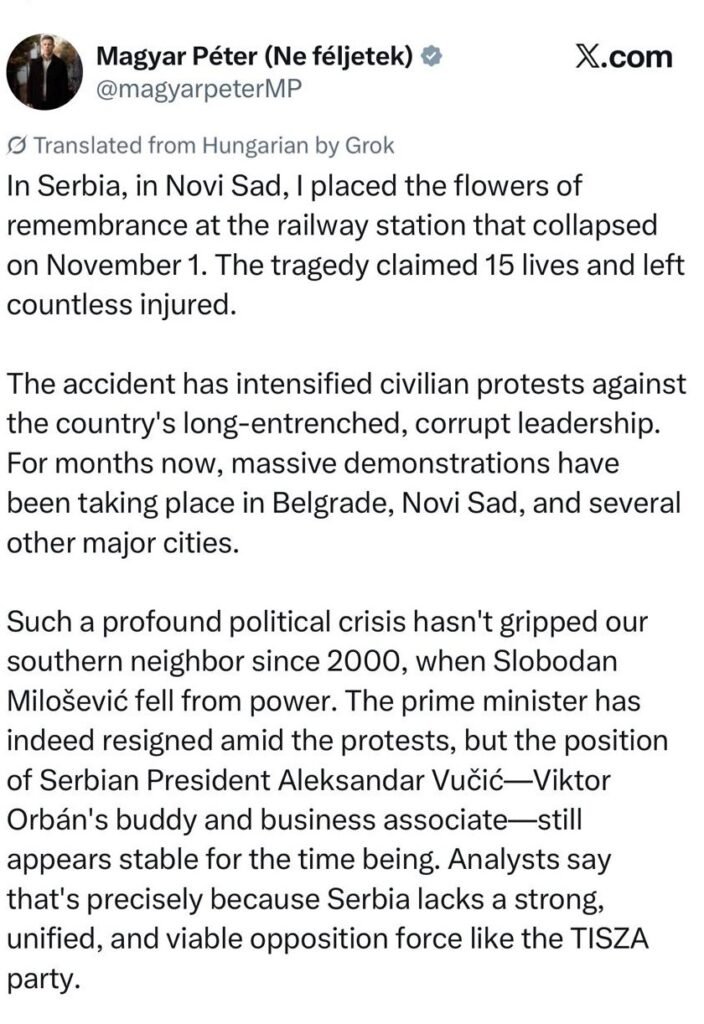
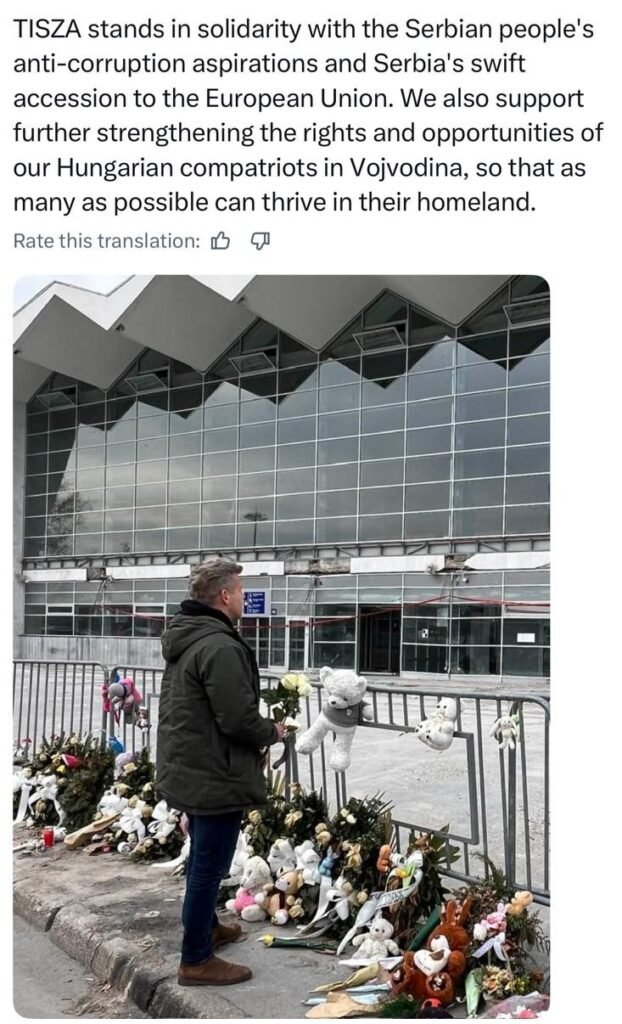
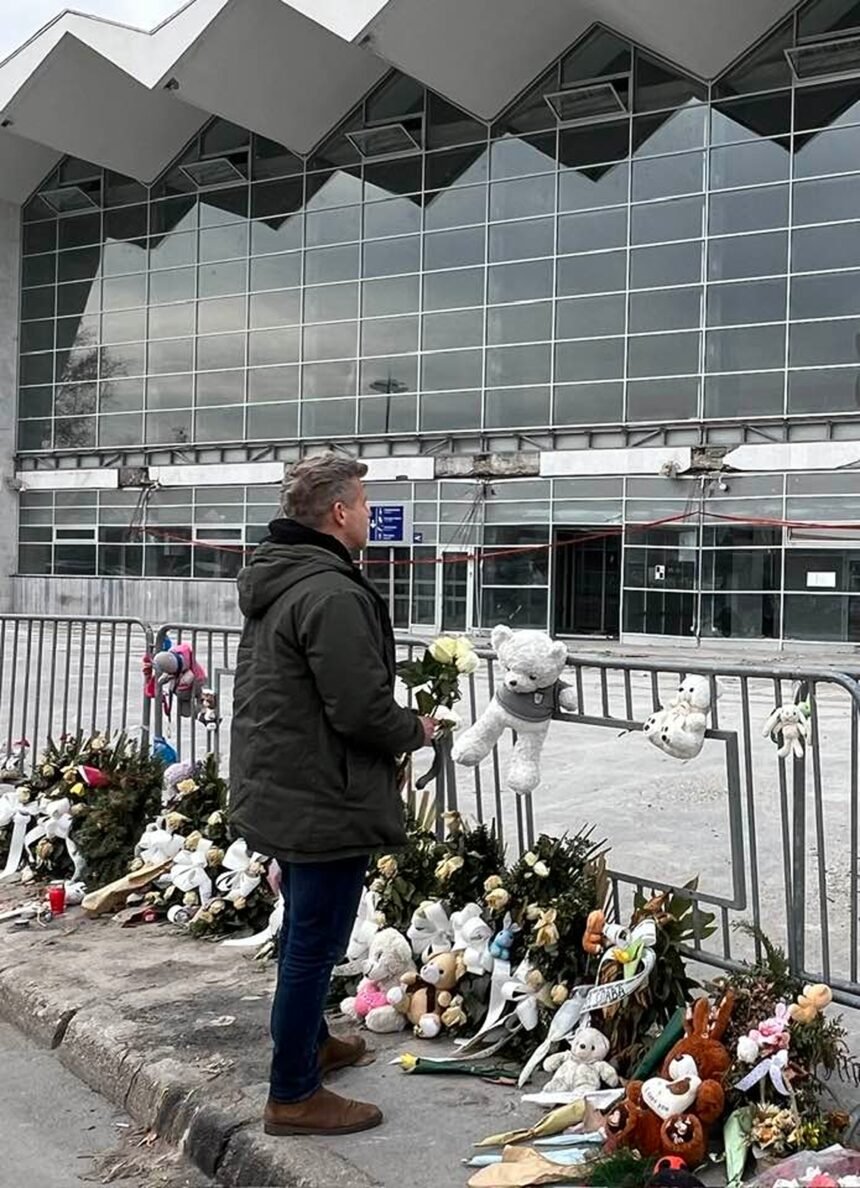
A year earlier, following the tragedy in Novi Sad, Serbia, where 15 people were killed and several others injured after the collapse of a building facade, Magyar visited the city and laid flowers at the site in honour of the victims. The gesture was seen as an act of solidarity with the affected families and local citizens.
At the time, the tragedy sparked widespread public reaction and protests in several Serbian cities, including Novi Sad and Belgrade, where citizens demanded accountability and stronger action against corruption and institutional negligence. Magyar’s visit was also interpreted as a sign of support for these public sentiments and the growing anti-corruption movements in the country.
Today, following his electoral victory in Hungary, he is seen as a key figure in a major political shift in Central Europe, symbolically linking his earlier regional engagement with his rise to power.