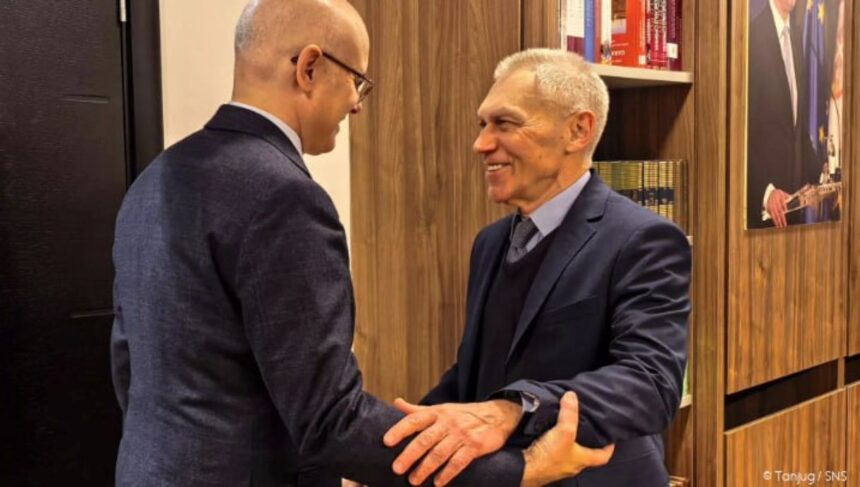
A recent meeting between the president of the Serbian Progressive Party (SNS), Miloš Vučević, and Russia’s ambassador to Serbia, Aleksandar Bocan-Harčenko, has renewed debate over Serbia’s foreign policy direction and its ongoing “balancing” approach between East and West.
Vučević described the meeting as part of regular diplomatic communication and emphasized what he called the importance of maintaining “traditional friendship” with Russia.
The discussions come amid heightened international tensions and increasing expectations from the European Union for Serbia to align its foreign policy more closely with EU positions, particularly regarding relations with Moscow.
Serbian authorities, following the policy line of President Aleksandar Vučić, continue to promote a stance of military neutrality while maintaining cooperation with both Western and Eastern partners.
However, critics argue that this approach lacks clear strategic direction and risks undermining Serbia’s credibility as an EU candidate country.
In the broader European context, where many countries are reassessing relations with Russia, frequent meetings between Serbian officials and Russian representatives are increasingly viewed as sending mixed political signals to Brussels.
Analysts also note that such engagements have produced limited tangible outcomes in areas such as trade or energy cooperation, suggesting that they serve more as political signaling than substantive policy development.
The so-called “two-chair policy” is therefore increasingly seen as a potential strategic liability rather than a diplomatic advantage for Serbia.