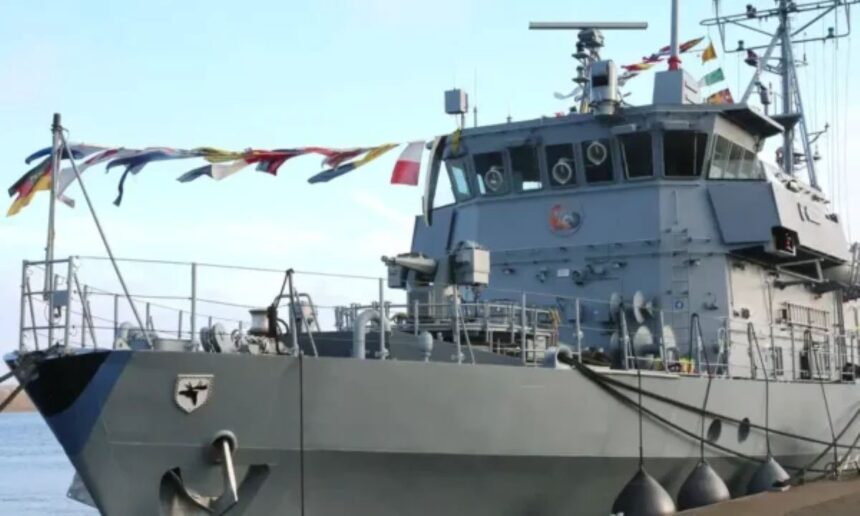
As global energy prices surge due to the Iranian blockade of the Strait of Hormuz, Germany is positioning its elite naval assets to assist in future international clearing operations. The mine-hunter vessel “Fulda” has departed from its base in Kiel-Wik, heading for the Mediterranean to be stationed closer to the potential theater of operations.
The Strait of Hormuz, a critical artery for global oil and gas, has been effectively closed since the outbreak of the war with Iran on February 28, 2026. Reports suggest the waters have been heavily mined by Tehran, leading to a significant spike in global liquefied natural gas (LNG) and oil prices.
Germany’s “Niche” Expertise
The German Navy (Bundeswehr) is world-renowned for its mine-countermeasure (MCM) capabilities. While Germany currently operates its smallest fleet in history, its MCM units are considered a “scarce resource” within NATO.
- Technology: The fleet utilizes 10 specialized vessels equipped with advanced underwater drones and highly trained divers.
- Operational Reality: Commander Inka von Puttkamer clarified that mine-hunters are vulnerable; they cannot defend themselves against air or surface attacks. Therefore, any mission would require a “package” including frigates, corvettes, and potentially the new P-8 Poseidon maritime patrol aircraft for protection.
Political and Legal Hurdles
Chancellor Friedrich Merz (CDU) has signaled to U.S. President Donald Trump that Germany is ready to help restore maritime security, but under strict conditions:
- End of Hostilities: A mission can only begin after a stable conclusion to the current war with Iran.
- Collective Security: The mission must be under the umbrella of a collective system, such as the UN, NATO, or the EU.
- Parliamentary Mandate: The Bundestag must approve the specific details, including the number of troops, the area of operations, and the mission’s duration.
Strategic Dependence on the U.S.
Defense Minister Boris Pistorius emphasized that no German mission will take place without the United States.
“The Americans—along with the Israelis—are the ones fighting this war and therefore possess the best situational awareness in the region,” Pistorius stated.
He noted that Germany would need to operate in close coordination with U.S. forces to handle the “aftermath” of the conflict, specifically the complex task of demining the strait to reopen global trade routes.
Key Data: The Strait of Hormuz Blockade (2026)
| Factor | Impact |
| Start of Conflict | February 28, 2026 |
| Primary Threat | Naval mines and surface blockades by Iran |
| Economic Consequence | Sharp rise in global oil and LNG prices |
| German Asset Deployed | Mine-hunter “Fulda” (currently in Mediterranean) |
| Prerequisite for Mission | Permanent ceasefire and Bundestag approval |