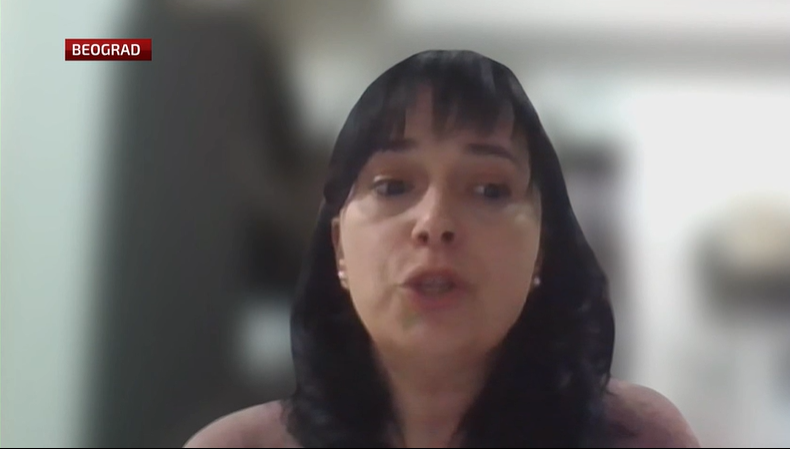
Ana Jakovljević, a Member of Parliament and member of the Committee on European Integration, has accused the Serbian government of performing “political tricks” to create a facade of compliance with European Union demands.
The criticism comes as Belgrade rushes to pass judicial and electoral laws—a prerequisite for unlocking billions of euros from the EU Growth Plan for the Western Balkans.
“Damage Control, Not Democracy”
Jakovljević argues that recent moves—such as assigning prosecutors to the Office for Organized Crime and reinstating a prosecutor to Eurojust—are merely attempts to reverse the self-inflicted damage caused by the controversial “Mrdić Laws.”
“The authorities are trying to say to the European Commission: ‘Look, we are working, we are trying,’ just as they have been doing for 14 years, yet we never move from the spot,” Jakovljević told N1. She emphasized that there is no “sincere intention” for Serbia to become a democratic state governed by the rule of law.
Economic Populism vs. Reality
The MP also took aim at Finance Minister Siniša Mali, who recently suggested that the state budget does not rely on the EU funds. Jakovljević dismissed these claims as pure populism intended to “sedate” the public.
- Dependency: Jakovljević reminded that Serbia’s economic stability remains heavily reliant on EU financial support.
- The Narrative: She argued that the Ministry’s rhetoric is designed to project a false sense of stability while institutional structures are “absolutely falling apart.”
The “Marta Kos” Effect: Shifting Scrutiny
According to Jakovljević, the tone from Brussels has sharpened significantly since Marta Kos took over as the European Commissioner for Enlargement.
“The messages are much clearer now. It is very easy to read that the European Commission believes Serbia is not on the European path,” Jakovljević stated.
She noted that the Commission is no longer satisfied with the formal adoption of laws. The focus has shifted to implementation—monitoring how laws are applied in practice rather than just how they appear on paper. Jakovljević warned that Brussels is fully aware of the government’s “manipulations” and is unlikely to be swayed by superficial changes.