
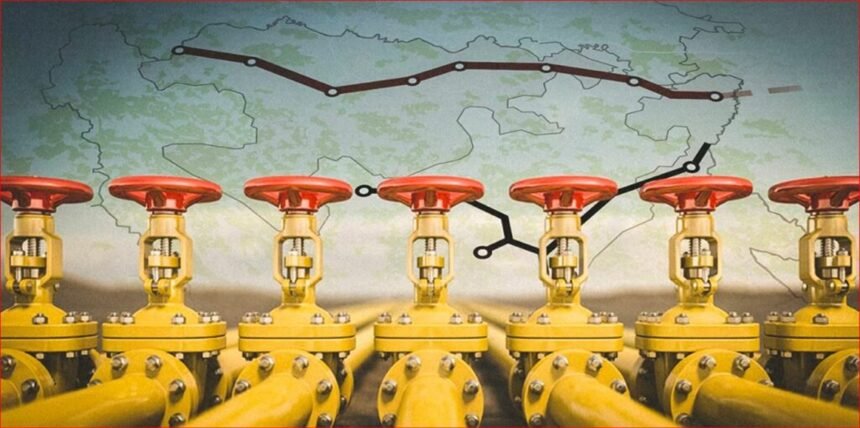
As natural gas increasingly becomes a central pillar of Europe’s energy security strategy, the United States is strongly backing new energy projects across the Western Balkans. From Albania to Bosnia and Herzegovina, a new regional network is taking shape. But in this emerging energy map, Kosovo remains absent.
Over the past five years, Kosovo’s approach toward natural gas has been marked more by hesitation than by a clear strategic policy. From a concrete American-backed infrastructure project, to its rejection in 2021, and now renewed discussions about possible future options, the country still lacks a defined direction.
At the Trans-Atlantic Gas Security Summit held in Washington in February, Kosovo’s acting Minister of Economy, Artane Rizvanolli, expressed Kosovo’s readiness to receive natural gas supplies from the United States, describing such cooperation as “crucial” for building a secure energy sector.
For a country where around 90 percent of electricity is still produced from coal and only about 10 percent comes from renewable sources such as hydropower, wind, and solar energy, gas is increasingly viewed as a potential alternative to reduce dependence on a single energy source.
Yet in recent weeks, while the United States and American companies signed multi-billion-dollar energy agreements with several Western Balkan countries aimed at expanding U.S. energy influence in the region, Kosovo was not included in this wave of investments.
Major initiatives have involved Albania, Croatia, and Bosnia and Herzegovina, including a significant gas pipeline project intended to reduce Sarajevo’s dependence on Russian energy supplies.
For U.S. Secretary of Energy Chris Wright, these agreements represent a new era of cooperation with Central and Eastern Europe.
“These partnerships are built on our mutual support for an agenda of energy expansion — and this is demonstrated by the multi-billion-dollar agreements that have been signed,” Wright wrote on X.
Although Kosovo currently lacks a clear role in these developments, it remains on the radar of the United States. Joshua Volz, special envoy of the U.S. Department of Energy, stated that Kosovo’s energy system urgently requires modernization, creating major opportunities for American industry and investment.
However, he emphasized that large-scale projects will depend largely on Kosovo itself, particularly improvements in the country’s regulatory and business environment.
“Steps must be taken to encourage American private investment and international financing to come to Kosovo. The U.S. Departments of Commerce, Treasury, and State are working on this. If and when market dynamics change and the business environment becomes more attractive, the Department of Energy will be ready to help connect American industry with industrial partners in Kosovo,” Volz said.
Five years ago, Kosovo withdrew from a U.S. Millennium Challenge Corporation-backed gas infrastructure project. At the time, Minister Rizvanolli argued that more information was needed before concluding whether gas infrastructure represented the best option for Kosovo’s energy transition.
“The gas pipeline will be built only if it serves the interests of Kosovo’s citizens and the state, and if it aligns with Kosovo’s strategy. First the strategy is developed, then decisions are made about specific projects,” Rizvanolli stated in parliament on November 18, 2021.
Kosovo’s Energy Strategy for 2022–2031 later included the possibility of future integration with regional gas networks and envisioned the phase-out of coal by 2050 in favor of alternative energy sources.
One option frequently discussed is linking Kosovo to infrastructure planned in Albania or Greece, especially through the Trans Adriatic Pipeline, which transports Azerbaijani gas through Greece and Albania into Italy, or through the planned LNG terminal in Vlorë.
Burim Ejupi, director of the Institute for Development Policy (INDEP) in Prishtinë, argues that Kosovo has not completely missed the opportunity, but has fallen behind due to the absence of a clear political position.
“The easiest path for energy transition is through gas, because during combustion it emits roughly half the carbon dioxide. A gas-fired power plant can also start operating very quickly and offers controllable production capacity. Kosovo has balancing problems in electricity generation, and a gas power plant would be very welcome, especially considering the millions in penalties paid in recent years,” Ejupi explained.
A 2022 study by INDEP concluded that natural gas could become increasingly important for Kosovo in addressing the “energy trilemma”: decarbonization, energy security, and affordability.
At the same time, a study financed by the European Investment Bank suggested that Kosovo’s future gas sources could include Russian gas, liquefied natural gas from Greece, and supplies from Croatia.
According to Ejupi, gas in Kosovo is no longer merely a technical issue, but fundamentally a political decision.
He noted that during the former Yugoslavia, infrastructure routes already existed between Obiliq and Skopje, as well as between Obiliq and Mitrovicë, potentially reducing the need for new land expropriations.
Based on current calculations and investments linked to TAP, Ejupi estimates that Kosovo’s full gas infrastructure could be completed within three to five years at a cost ranging between €200 million and €400 million.
Meanwhile, Brenda Shaffer from the Atlantic Council argued that the key challenge is not pipelines themselves, but securing reliable gas sources. For Kosovo, she believes those sources already exist through the Southern Gas Corridor and Albania.
“If you are not energy secure, you cannot be secure as a state. There is no national security without energy security,” Shaffer said, emphasizing that U.S.-backed gas interconnection projects in the Western Balkans represent a historic opportunity for diversification and reduced pollution.
Still, not everyone sees gas as the ideal solution.
Anne-Sophie Corbeau from the Center on Global Energy Policy in Paris warned that transitioning from coal to gas is not automatically the right path, particularly if one dependency is simply replaced by another.
“What I see is that the entire region is moving from one dependency — previously Russian gas — toward another, mainly American liquefied natural gas. Depending on LNG is acceptable if supply sources are diversified. But if everything comes from only one country, even a major future exporter, would you really want to depend entirely on one state?” Corbeau stated.
According to U.S. official Joshua Volz, countries that choose to cooperate with the United States on energy diversification and security can expect increased foreign investment, as American involvement in the energy sector is widely seen as a factor of stability and credibility.
In this context, gasification may become exactly the push Kosovo needs to move beyond energy insecurity and become more attractive to international investment.