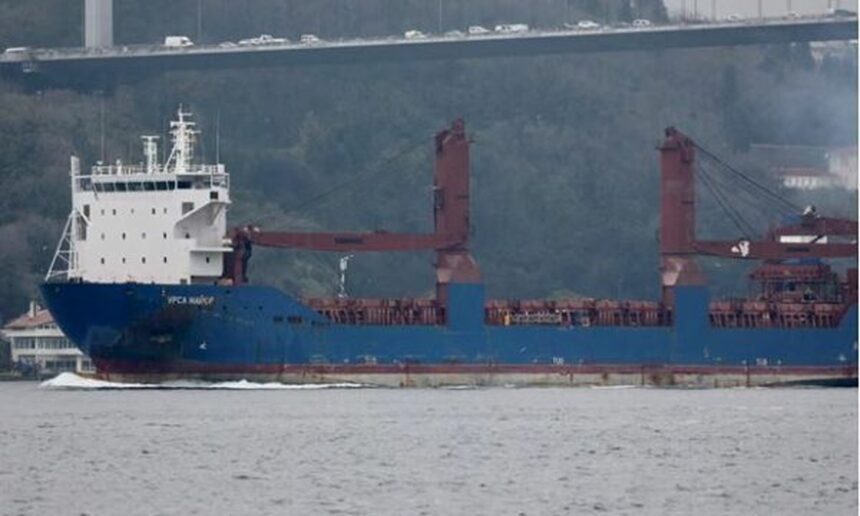
A Russian cargo vessel that mysteriously sank off the southeastern coast of Spain may have been transporting submarine nuclear reactor components intended for North Korea, according to multiple investigative reports and intelligence findings.
The ship, identified as the Ursa Major (“Great Bear”), a 142-meter Russian-flagged cargo vessel owned by the state-linked company Oboronlogistics, reportedly departed from Saint Petersburg en route toward Vladivostok before sinking approximately 62 nautical miles off the coast of Murcia on December 23, 2024.
Mysterious Explosions Before the Sinking
According to Spanish maritime rescue authorities, the vessel issued a distress call after suffering multiple explosions in its engine room. Rescue teams reported the ship had begun listing heavily, while crew members abandoned the vessel amid worsening conditions.
Spanish emergency services initially launched a rescue operation involving helicopters, tugboats, and rescue vessels. However, the operation reportedly changed dramatically after a Russian warship arrived at the scene and ordered Spanish rescue ships to withdraw.
Reports indicate that shortly afterward, several underwater explosions were detected near the vessel before it ultimately disappeared beneath the Mediterranean Sea at a depth of nearly 2,500 meters.
Two crew members are believed to have died, while fourteen others were rescued.
Suspicions of Nuclear Cargo
Although Russian authorities officially claimed the ship carried “non-hazardous cargo,” investigators reportedly became suspicious after examining satellite imagery and interviewing the vessel’s captain.
According to leaked findings cited by international media, the captain allegedly admitted that part of the cargo included components resembling nuclear reactors used in submarines. Investigators also identified two unusually large blue containers onboard, each estimated to weigh around 65 tons.
Sources familiar with the investigation suggested the final destination may not have been Vladivostok, but the North Korean port city of Rason.
The allegations have intensified speculation that Russia may have attempted to transfer sensitive nuclear technology to the regime of Kim Jong Un amid growing military cooperation between Moscow and Pyongyang following the war in Ukraine.
NATO and Intelligence Concerns
The incident has reportedly drawn major attention from Western intelligence agencies. Aircraft specialized in detecting radioactive particles allegedly flew over the sinking site multiple times in the months following the disaster.
Investigators are also examining the possibility that the vessel was sabotaged. Some reports claim damage to the hull may have been caused by a high-speed supercavitating torpedo — a sophisticated underwater weapon believed to be possessed only by a limited number of countries, including the United States, Russia, Iran, and certain NATO members.
A subsequent visit to the wreck site by the Russian vessel Yantar, often accused by Western intelligence of underwater espionage operations, further deepened suspicions surrounding the case.
Growing Geopolitical Tensions
If confirmed, the transfer of submarine nuclear reactor technology to North Korea would represent one of the most serious violations of international sanctions in recent years and could significantly escalate global nuclear security concerns.
The case remains under investigation, while many of the secrets surrounding the Ursa Major continue to lie at the bottom of the Mediterranean Sea.