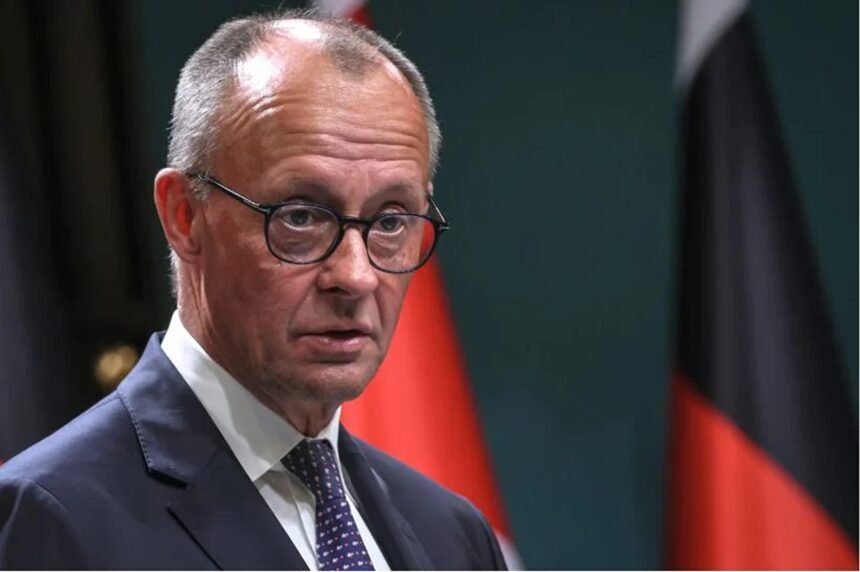
In a bid to break decades of enlargement gridlock, German Chancellor Friedrich Merz has proposed a radical, multi-speed overhaul of the European Union’s accession framework.
In an official letter dispatched to the bloc’s core leadership—including European Commission President Ursula von der Leyen, European Council President Antonio Costa, and Cypriot President Nikos Christodoulides (whose country currently holds the rotating EU Council Presidency)—Merz called for “innovative, immediate solutions” to inject a new geopolitical dynamic into integration tracks for Ukraine, the Western Balkans, and Moldova.
According to copies of the document reviewed by Radio Free Europe, Merz bluntly warned that the current EU enlargement architecture is moving far too slowly, generating “understandable resentment and frustration” among both long-waiting candidate states and frustrated member capitals.
The Western Balkans and Moldova: Elevated to “Observer Status”
For the Western Balkans and Moldova, the German Chancellor is advocating for an immediate policy of “gradual, block-by-block integration” that bypasses the traditional all-or-nothing approach. Instead of keeping applicant states in an institutional waiting room until full ratification, Merz suggests granting them immediate Observer Status across all major EU institutions.
   [THE MERZ GRADUAL INTEGRATION BLUEPRINT]

   WESTERN BALKANS & MOLDOVA                  UKRAINE (SUI GENERIS)
   ┌────────────────────────────────────────┐ ┌────────────────────────────────────────┐
   │ • Institutional Observer Status        │ │ • "Associate Member" Status           │
   │ • Joint EU Commission/Parliament meets │ │ • Seat at Leader/Ministerial Tables    │
   │ • Privileged Single Market Access       │ │ • Phased Acquis Alignment (No Veto)    │
   └────────────────────────────────────────┘ └────────────────────────────────────────┘
                                       │
                                       ▼
                       [AUTOMATIC SNAPBACK MECHANISM]
         Immediate loss of privileges if rule of law or democratic core regresses
Key features of the proposal include:
- Privileged Single Market Entry: Granting frontline economic integration and access to the European single market ahead of formal membership.
- Institutional Alignment: Holding mandatory joint sessions of the European Commission and the European Parliament with regional leaders on issues directly impacting Southeast Europe.
- The Copenhagen Commitment: Merz explicitly re-anchored the proposal within the historic 2003 Thessaloniki Agenda, reiterating that the ultimate goal remains full, absolute membership.
Currently, Albania, Montenegro, Serbia, Bosnia and Herzegovina, and North Macedonia hold official EU candidate status, while Kosovo remains a potential applicant.
Ukraine: A Unique “Associate Member” Without a Veto
Acknowledging the extreme wartime realities facing Kyiv, Merz designed a separate, sui generis (unique) status specifically tailored for Ukraine, creating the title of a “Shtet Anëtar i Asociuar” (Associate Member State).
This fast-track mechanism aims to bring Ukraine directly into the inner circle of European decision-making immediately—without waiting out complex, multi-year domestic ratification processes across individual EU capitals—while parallel, formal accession talks run concurrently.
“Ukraine is a member of the European family,” Chancellor Merz wrote in his letter to Brussels. “With this approach, Ukraine would take a massive step forward, immediately closing the distance to full membership. We would be offering Ukraine a significant institutional equivalent to membership that far exceeds what we could achieve in the medium term through our current methodology.”
Safeguards, Reversibility, and No Treaty Changes
To ensure the integrity of the bloc’s foundational democratic values, Merz included stringent security clauses into both pathways, establishing an automatic “Mekanizëm Kthimi” (Snapback Mechanism). Under this rule, if a candidate country regresses on core democratic values, the rule of law, or structural judicial independence, all newly granted institutional privileges will be automatically revoked.
Crucially, the German head of government emphasized that his sweeping proposals do not require complex amendments to active EU Treaties or legal frameworks. Instead, the transition relies entirely on a “strong, unified political agreement” among the current 27 member states. This architecture aims to deliver a powerful, rapid geopolitical message of solidarity to Ukraine and the Western Balkans as they navigate intensive security, economic, and regional challenges.