Sometime in the late 19th century, while the Austro-Hungarian Empire still stretched from the Adriatic Sea to present-day Ukraine, a Hungarian man walked into a bookstore in Vienna and asked the clerk: “Can you sell me a globe of Hungary?” While likely an anecdote, it has been recounted for generations because it perfectly mirrors the hubris of a nation that believes its homeland is the entire world. Within less than a generation, the Treaty of Trianon would strip Hungary of two-thirds of its territory, making the buyer’s pride look less farcical and more tragic.
Today, however, that story takes on an entirely new meaning. Following Hungary’s historic parliamentary elections on April 12, 2026, it is non-Hungarians who have begun searching for a “globe of Hungary.” Moderate and liberal political observers from Brussels to New York view the crushing defeat of strongman Viktor Orbán as a sign that global illiberalism is finally receding. They hope that where Hungary leads, the world will follow—believing that far-right candidates like Marine Le Pen will stumble in France, and the Alternative for Germany ($AfD$) will tank in Berlin.
Yet, this optimistic view is far detached from reality. Péter Magyar, Hungary’s newly elected Prime Minister, won by riding a wave of anti-establishment energy that could just as easily benefit populist candidates elsewhere. In recent elections in Bulgaria, for instance, the party of former President Rumen Radev—frequently labeled a Russophile and Eurosceptic—won on an anti-corruption platform nearly identical to Magyar’s. This proves that aggressive anti-corruption rhetoric can elevate not just Orbán’s opponents, but also the very leaders traditionally viewed as his allies.
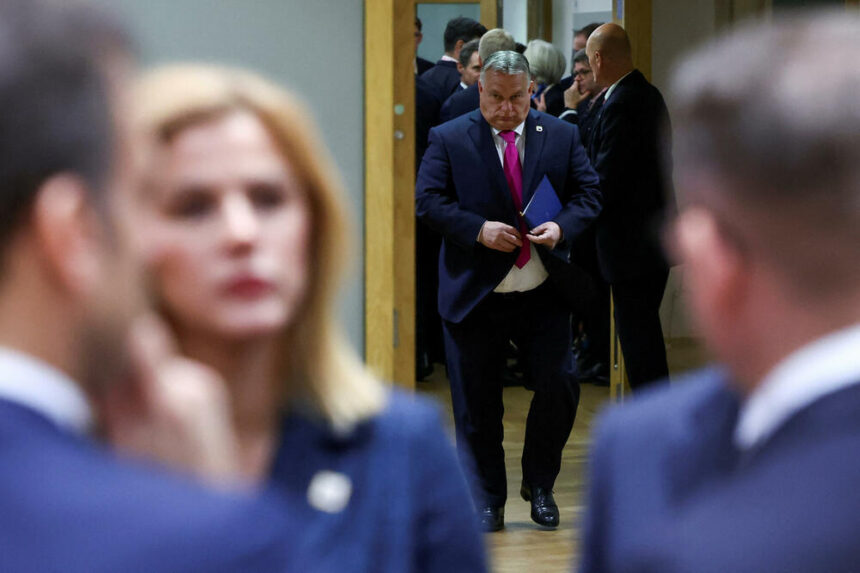
If anything, national populists across Europe will continue to look to Orbán’s institutional playbook to reshape liberal-democratic regimes. His defeat does not signal the death of the European far-right; rather, it marks the end of the illusion that Trumpism is a monolithic, global movement. By peacefully accepting his loss without contesting the results—unlike Donald Trump in 2020—Orbán preserved the democratic credibility of Europe’s new right. Furthermore, as a staunch conservative, Péter Magyar represents an evolution of Orbán-style nationalism, not its rejection.
This victory ushers in a new era of European politics. By distancing themselves from Washington, Europe’s right-wing factions are driving the continent toward an unexpected consensus: one where pro-European elites accept the central role of sovereign nation-states, while populist parties realize that Moscow, Beijing, and Washington—not Brussels—pose the true threat to their national sovereignty. In short, Europe is finally becoming more European.
   [THE GEOPOLITICAL SHIFT: BUDAPEST 2026]
   • Old Paradigm (Orbán):     MAGA Ideologue • Kremlin Interlocutor • Beijing's EU Economic Hub
   • New Paradigm (Magyar):    Sovereign Conservative • Anti-Corruption Focus • Domestic Standards First
   • European Consequence:    Release of €90B ($105B) in frozen aid to Ukraine; loss of Russian veto.
How Orbán Lost Hungary
In many ways, Orbán—previously Europe’s longest-serving prime minister—became to the political right what Fidel Castro was to the left: the leader of a small, relatively minor country who captured the imagination of the world. He transformed Budapest into the intellectual, financial, and institutional capital of the Western right. Far-right intellectuals were treated like royalty, populist parties received easy loans from Hungarian banks, and fugitive right-wing politicians were readily granted asylum.
Orbán’s initial rise in 2010 was a rebellion against the corruption of the previous socialist government. However, it was his fierce resistance to Angela Merkel’s 2015 open-door migrant policy that elevated him to a central player in European geopolitics. He positioned himself as an indispensable global mediator: Trump’s top ideological ally, Vladimir Putin’s closest geopolitical friend inside the EU, and China’s most reliable economic partner. In the age of Trump, where diplomacy revolved around personal relationships rather than institutional state interests, Budapest wielded outsized leverage, purchasing cheap Russian gas while securing Chinese investments that eclipsed those in Germany and France.
               [ORBÁN'S THREE-WAY DIPLOMATIC AXIS]
                                │
     ┌──────────────────────────┼──────────────────────────┐
     ▼                          ▼                          ▼
  WASHINGTON (MAGA)          MOSCOW (KREMLIN)          BEIJING (CCP)
Served as chief White     Acted as an EU informant   Secured massive heavy
House advisor on Europe;  and prime propagator of    industry investments,
guided Trump's narratives. Ukraine war skepticism.   outpacing Paris & Berlin.
The supreme irony is that by executing this strategy, Orbán became the very thing he initially sought to destroy: a globalist. His final re-election campaign focused almost entirely on foreign policy, hosting international figures like U.S. Vice President JD Vance and securing endorsements from Argentine President Javier Milei to project global importance.
But in contemporary Hungary, globalism proved to be a losing hand. Magyar’s opposing campaign focused strictly on local living standards and deliberately sidestepped international grandstanding. Explaining his past victories, Orbán often joked that his name literally means “winner.” This time, he was defeated by a man whose last name, Magyar, literally translates to “Hungarian.”
How Trump Lost the European Right
It took considerable time for European leaders to realize that Donald Trump’s second presidential term was neither purely transactional nor unpredictable. Brussels braced for a trade war; instead, it faced an ideological onslaught. The hope that the American president would eventually value transatlantic alliances proved entirely false.
For Trump, the post-WWII liberal order was never an American achievement, but an anti-American constraint built at the expense of domestic U.S. industry. Political theorist Stephen Holmes described Trump’s post-liberal vision as a “hierarchy without order”—a system where Trump reigns supreme, and all other global actors must submit. While major powers like Russia and China are permitted their own regional spheres of influence, they may only have them as long as they defer to American primacy. Trump does not seek collaboration; he demands absolute obedience.
                  [THE HIERARCHY WITHOUT ORDER MODEL]
                                  │
                       United States Primacy
                                  │
         ┌────────────────────────┴────────────────────────┐
         ▼                                                 ▼
   [SPHERES OF INFLUENCE]                            [EUROPEAN AXIS]
   Granted to Moscow/Beijing                         Forced submission to US tariffs,
   conditional on US deference.                      military edicts, and trade rules.
This dynamic alienated Europe’s right-wing nationalists, who found Trump’s anti-immigration and anti-woke rhetoric appealing but chafed under his total lack of respect for their national sovereignty. The breaking points came in rapid succession: aggressive American tariffs levied against European states last year, Trump’s sudden ambitions to annex Greenland, and his unilateral escalation of the war in Iran.
The Iranian conflict and Trump’s subsequent rhetorical attacks on the Catholic Church—including the publication of $AI$-generated images depicting himself as the Pope—became a bridge too far. Italian Prime Minister Giorgia Meloni, previously Trump’s fiercest defender on the continent, refused to join the war effort and sharply criticized his actions, signaling that the electoral cost of aligning with Washington had become toxic. Orbán, conversely, remained silent. This cost him dearly, rendering him an institutional outcast and labeling him a “globalist puppet” in the eyes of the new European right.
The Kremlin’s Fractured Strategy
Orbán’s electoral defeat is both an ideological pivot and a geopolitical earthquake that completely dismantles the Kremlin’s calculus for Europe. During the campaign, Bloomberg News leaked verified transcripts from an October 2025 meeting between Orbán and Putin, where the Hungarian leader reportedly described his country as a “mouse” eager to assist the Russian “lion.”
Hungary’s primary utility to Moscow was its systematic use of its EU veto, which successfully paralyzed a €90 billion ($105 billion) developmental aid package for Ukraine. With the mouse officially removed from the board, Russia’s strategy to fracture European resolve has collapsed. Magyar’s arrival ensures that Kyiv will secure the financial runway needed to sustain its defensive operations for at least another two years.
                 [THE KREMLIN'S BALKAN-DANUBE MATRIX]
                                    │
       Orbán's Defeat Removes Russia's Chief Veto Mechanism in Brussels
                                    │
                                    ▼
       €90 Billion ($105 Billion) in Frozen EU Military Aid Unlocked for Kyiv
                                    │
                                    ▼
       Kremlin Strategies Face Accelerated European Rearmament and Cyber Threats
Russian strategists must now confront a rearming Europe without their primary internal disruptor. This significantly elevates the risk that Moscow will abandon political subversion in favor of raw, kinetic hybrid warfare—including catastrophic cyberattacks and infrastructure sabotage targeting vulnerable eastern EU states before the continent fully completes its defense modernization.
A New Consensus: Europe Becomes More European
The political realignment in Budapest reveals two definitive structural trends shaping the future of the continent:
- The Sovereign Turn is Permanent: Europe’s center-right and liberal elites have accepted that deeper federal integration is a dead end. Centrist leaders like German Chancellor Friedrich Merz are aggressively championing national self-determination, strategic autonomy in defense, and hardened border controls, effectively absorbing the core tenets of the traditional right.
- The New Right Has Dropped Euroscepticism: Parties like Marine Le Pen’s National Rally and the $AfD$ have realized that calls to exit the EU or abandon the Euro are electorally ruinous. Instead, they view Washington, Moscow, and Beijing as the authentic threats to their sovereignty. Meloni’s model—combining fierce national identity with strict institutional cooperation in Brussels and ironclad support for Ukraine—is now the gold standard for the continental right.
Driven by the energy crisis sparked by Trump’s war in Iran, right-wing factions have significantly softened their opposition to the EU’s green transition, while both the center and the right are united in an unprecedented push for European rearmament. The Hungarian election of April 12 did not restore the old, briselsk-led liberal status quo. Instead, it birthed a far more independent, heavily armed, and distinctly sovereign Europe.