From Belgrade’s football terraces to a hidden “human slaughterhouse” in Ritopek, a sprawling investigation reveals how organized crime, encrypted communications, and alleged institutional links formed one of the most disturbing criminal networks exposed in modern Europe.
A major investigative documentary, drawing on indictments from Serbia’s Organized Crime Prosecutor’s Office and reporting by OCCRP and European law enforcement agencies, has brought renewed attention to one of the most complex organized crime cases in recent European history.
At the center is a violent criminal ecosystem that stretches across Serbia and the wider Western Balkans, shaped by drug trafficking routes, football hooligan structures, and encrypted communication networks that operated across borders with relative impunity for years.
The case is anchored in the long-running conflict between two Montenegrin criminal factions the Kavac and Škaljari clans. What began as a split within a single cocaine trafficking network evolved into a sustained war spanning Montenegro, Serbia, Bosnia and Herzegovina, Croatia, and Slovenia. According to European investigative agencies, this conflict is linked to more than 100 killings across the region.
These groups function as key intermediaries in the cocaine supply chain, moving shipments from South America into Europe, where distribution is handled through established local networks.
From Stadium Violence to Organized Crime Structure
The documentary traces the rise of Veljko Belivuk and his associates, who emerged from the football hooligan scene in Belgrade, particularly within FK Partizan supporter groups.
What began as organized stadium violence gradually developed into a structured criminal organization known as “Principi.” Police files and CCTV footage cited in the investigation document repeated violent incidents involving rival supporters and individuals connected to football club leadership.
Following internal shifts within the hooligan hierarchy, Belivuk consolidated authority over the group. From that point, Principi expanded beyond stadium violence into organized criminal activity, including kidnappings, extortion, drug trafficking, and targeted killings.
Investigators describe this transformation as a shift from informal hooligan networks into a disciplined criminal structure aligned with Balkan drug trafficking organizations.
The Ritopek Property and the Execution Chamber
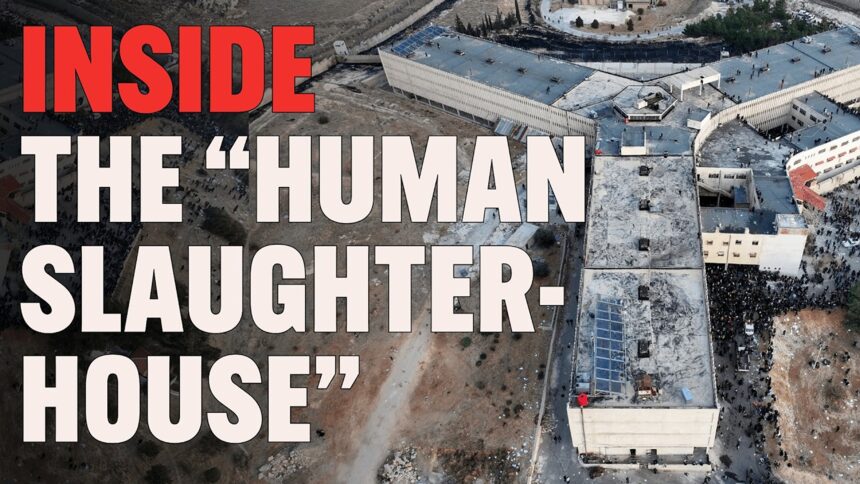
One of the most significant elements in the investigation is a property in Ritopek, a suburb on the outskirts of Belgrade, which prosecutors describe as a concealed execution site.
Externally, the house appeared unremarkable. Inside the garage, investigators later identified a hidden entrance leading to a basement chamber. The space had been structurally modified and prepared with plastic-lined surfaces, reinforced areas, and a layout consistent with confinement and execution.
According to indictments and forensic findings, victims were brought to the site after being lured through trusted intermediaries. In many cases, individuals close to the victims played a role in facilitating contact, before later becoming part of the criminal structure themselves.
Once inside the basement, victims were restrained, interrogated, and executed. Investigators documented extensive efforts to eliminate physical evidence, including dismemberment and the use of industrial machinery designed to destroy bodies. Remains were disposed of in the Danube River, while personal belongings were burned.
Forensic analysis confirmed the presence of biological traces and structural modifications consistent with multiple violent deaths, although complete bodies were never recovered.
Victim Pattern and Method of Operation
Court documents and investigative reporting describe a consistent operational pattern. Victims were selected based on rival affiliations, internal disputes, or perceived threats to the organization.
They were typically approached under false pretenses business meetings, weapon purchases, or personal introductions before being abducted.
In at least one documented case, a victim was forced to unlock his mobile phone prior to execution, allowing the group to extract contact lists and send intimidation messages to associates and rivals. Photographs of killings were also circulated as a form of psychological pressure within criminal networks.
Sky ECC: The Communications System Behind the Network
A major breakthrough in the investigation came through the infiltration of Sky ECC, an encrypted messaging platform widely used by organized crime groups across Europe.
Through a coordinated operation involving French, Belgian, and Dutch authorities, investigators extracted encryption data from server infrastructure hosted in France. This enabled the decryption of vast volumes of communication, exposing approximately one billion messages from over 170,000 users.
Inside these communications, law enforcement documented detailed coordination of criminal activity, including kidnappings, execution planning, drug shipments from South America, cryptocurrency payments, and real-time operational updates.
Investigators also recovered images showing violence, weapons, and financial transactions shared within criminal chat groups. The communications revealed a highly structured operational environment in which criminal activity was coordinated with precision and discipline.
Allegations of Institutional Links
One of the most sensitive aspects of the case concerns documented contacts between members of Belivuk’s network and individuals within Serbian security institutions.
Communications referenced in investigative files indicate exchanges between the group and a high-ranking officer within the Serbian gendarmerie, as well as references to senior police officials within the Ministry of Interior.
Messages recovered from Sky ECC communications also refer to higher-level figures described in hierarchical terms such as “boss” and “big boss,” which investigators interpret as indicating political levels above operational police command.
Belivuk later stated in testimony that his group operated with awareness or support from elements of the state apparatus. These claims remain contested but form part of ongoing judicial proceedings and investigative scrutiny.
Political Context and Systemic Questions
The documentary situates the case within a broader political and institutional context in Serbia, where organized crime networks, football hooligan structures, and political influence have been repeatedly examined by journalists and international observers.
It highlights how hooligan groups were not only active in stadium violence but were also reportedly used in political mobilization and intimidation environments.
Following the exposure of Sky ECC communications and subsequent arrests, Serbian authorities described the dismantling of Belivuk’s group as a significant victory against organized crime. However, investigative reporting continues to raise questions about how such a network was able to operate over an extended period.
Aftermath and Continuing Investigations
Following coordinated arrests across Serbia and Europe, investigators searched the Ritopek property and documented extensive forensic evidence consistent with multiple killings, including biological traces, industrial equipment, and structural modifications consistent with concealment of crimes.
Dozens of suspects have since been charged with serious offenses including organized criminal association, multiple murders, kidnapping, drug trafficking, weapons violations, and rape.
The Belivuk case remains one of the most significant organized crime investigations in Europe in recent decades. It brings together extreme violence, encrypted digital infrastructure, transnational drug trafficking, and allegations of institutional overlap that continue to be examined in court proceedings.
While key members of the network have been arrested and prosecuted, the broader implications of the case particularly regarding the relationship between organized crime and structures of power remain at the center of ongoing debate and investigation across the Balkans and Europe.