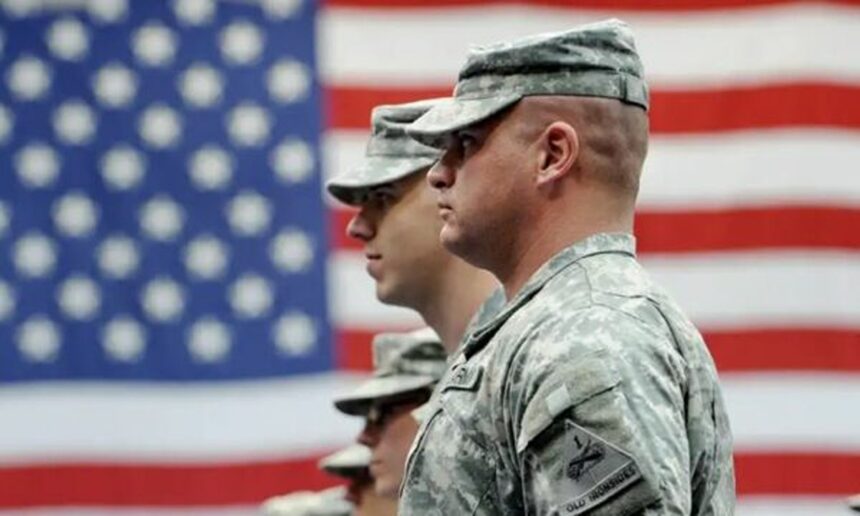
The United States maintains a broad military presence across Europe that goes beyond its NATO obligations. Its forces are stationed through a complex network of bases that also serve Washington’s own global strategic interests.
From the Azores to Romania, and from northern Norway to Sicily, U.S. troops are deployed across multiple European locations. This system, however, is not static and has shown signs of fluctuation during Donald Trump’s second presidential term, with several adjustments to troop rotations and deployments.
Just days after a planned rotation of 4,000 soldiers to Poland was paused, Trump announced the deployment of an additional 5,000 troops, citing strong relations with Poland’s right-wing nationalist president, Karol Nawrocki.
The presence of U.S. forces in Europe reflects both historical commitments and modern geopolitical calculations, particularly regarding deterrence and rapid global deployment capabilities.
Why are there so many U.S. troops in Europe?
After the end of World War II in 1945, the alliance of Western powers that defeated Nazi Germany split into two blocs: the Western allies led by the United States and the Soviet Union with its partners. To coordinate defense during the emerging Cold War, NATO was founded in 1949.
From the beginning, the U.S., as the alliance’s dominant military power, saw a permanent troop presence in Europe as essential to deterring the Soviet-led Warsaw Pact. At its peak in the late 1950s, up to 475,000 American soldiers were stationed in Europe. After the collapse of the Soviet Union in 1991, that number gradually declined to tens of thousands.
The trend shifted again after 2014, following Russia’s annexation of Crimea, when NATO’s deterrence posture in Europe was strengthened.
Where is the U.S. military presence strongest?
Germany remains the central hub of U.S. military operations in Europe, hosting more than 36,000 active troops. Key command structures are located in Stuttgart, where U.S. European Command (EUCOM) and U.S. Africa Command (AFRICOM) are based.
The Ramstein Air Base serves as the main air operations hub for Europe and Africa and plays a critical role in missions extending into the Middle East. Nearby Landstuhl hosts the largest U.S. military hospital outside the United States. The Büchel base is also believed to store U.S. nuclear weapons under NATO’s nuclear-sharing arrangement.
Italy and the United Kingdom follow in terms of troop numbers, hosting around 12,700 and 10,200 U.S. personnel respectively. Italy hosts rapid deployment forces and the U.S. naval headquarters for Europe and Africa in Naples, while the UK hosts key NATO air bases.
These figures do not include temporary rotational deployments to NATO’s eastern flank, which increased significantly after 2014.
Why do U.S. troops remain in Europe?
European bases serve as strategic platforms for global U.S. military operations. Installations in Germany and the UK, for example, have been used in operations linked to the Middle East, including tensions involving Iran.
At the same time, some European allies have restricted U.S. operations. Italy has at times denied landing permissions for military aircraft at Sigonella, while Spain has limited access to airspace and bases—moves that have previously triggered U.S. political pressure.
Europe also provides critical logistical advantages. Deploying forces directly from the United States would require significantly more time and resources. Bases like Ramstein also support advanced communications systems, including drone operations and intelligence coordination.
The eastern flank of NATO, particularly Poland, has become increasingly important as part of deterrence efforts against Russia.
Current political uncertainty
Recent months have seen policy fluctuations regarding troop deployments. The Pentagon briefly paused a planned rotation of 4,000 troops to Poland, citing budget concerns and shifting priorities.
Soon after, Trump announced the deployment of 5,000 additional troops to Poland, without clarifying whether this involved new forces or reassignments from other countries, including Germany.
Earlier statements also suggested potential troop reductions in Germany and a reconsideration of previously agreed plans for missile deployments in the country.
These developments highlight growing uncertainty over the long-term structure of the U.S. military presence in Europe, even as its strategic importance remains firmly in place.