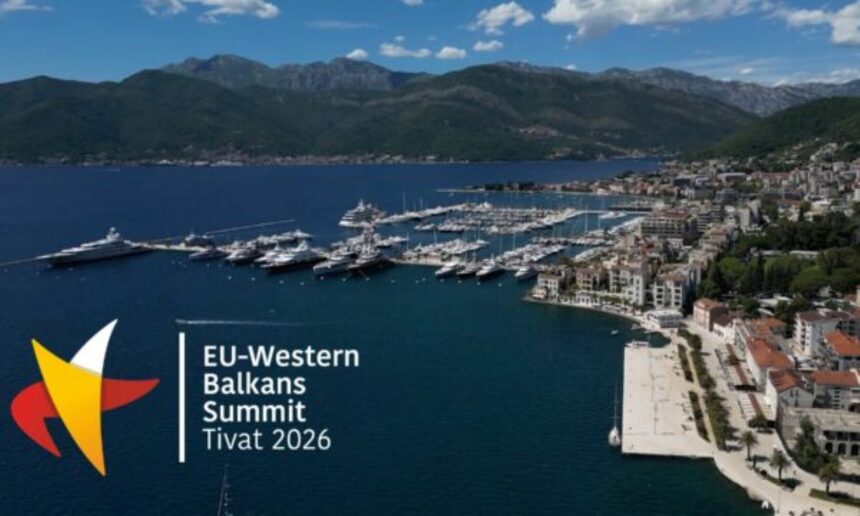
While regional news portals continue to copy-paste the preliminary briefing notes released weeks ago, the live reality on the ground in Montenegro today looks drastically different. Here is the direct breakdown of what is actually happening at the EU-Western Balkans Summit right now.
1. The Absent Leadership: The Kallas and Costa Timelines
- The Text Claims: High Representative Kaja Kallas is actively participating in today’s summit, and European Council President António Costa’s preparatory tour took place “between June 1 and June 4, 2026.”
- The Reality:
- Kaja Kallas did not make it to Montenegro. As confirmed by her office last night, she fell suddenly ill on Thursday, canceled her entire itinerary (including the youth forums in Budva and the gala dinner in Kotor), and is currently working from home in Brussels.
- The preparatory tour timeline shifted. Costa actually held his high-stakes bilateral meetings in Pristina and surrounding capitals earlier in the week, wrapping up his pre-summit visits ahead of schedule to coordinate the arrival of broader European delegations.
2. The Real Agenda: The Franco-German “Gradual Integration” Shakeup
While the preliminary agenda broadly references “the Growth Plan” and “socio-economic convergence,” the true focus of today’s closed-door lunch has shifted to an aggressive, newly leaked Franco-German Non-Paper.
Instead of waiting for traditional, slow-moving bureaucratic chapters to finish, Paris and Berlin are pushing the European Commission to implement a system of Accelerated Single Market Access (EEA+) and Political Observer Status. This would allow compliant candidate nations to sit in on European Council meetings and trade freely with the bloc long before full membership is granted.
┌────────────────────────────────────────────────────────────────────────┐
│             Tivat Summit 2026: The Three Core Pillars                  │
├────────────────────────────────────────────────────────────────────────┤
│ 1. The €6 Billion Growth Plan: Tying immediate financial payouts to   │
│    the execution of rigid rule-of-law and judicial anti-corruption.   │
│ 2. The EEA+ Framework: Offering early integration into the European    │
│    Single Market for states that provisionally close Clusters 1 to 5.  │
│ 3. The Structural Counter-Hybrid Matrix: Initiating joint defense vectors│
│    to harden local networks against foreign state interference.        │
└────────────────────────────────────────────────────────────────────────┘
3. Hardening Defense: The Asymmetric Threat Matrix
With global geopolitical dynamics fracturing, the security segment of today’s summit has transitioned from theoretical cooperation into an emergency regional mandate. Leaders are discussing concrete, synchronized defense mechanisms:
- The European Peace Facility (EPF): Direct financial allocations and equipment transfers to strengthen and modernize the defensive capabilities of Western Balkan armed forces.
- The Hybrid Shield: Integrating the region directly into the European Cyber Security Agency (ENISA), the European Democracy Shield, and the Rapid Alert System (RAS). The immediate objective is to build a unified defensive wall against foreign information manipulation, deep-fake campaigns, and hostile state-sponsored infrastructure hacking.
4. The Geopolitical Elephant in the Room
The official theme may be “Shared Prosperity and Stability,” but the summit floor is dominated by the bitter bilateral warfare playing out between Serbia and its neighbors.
From the dramatic deportation of 87 Serbian criminal operatives at Tivat Airport to Belgrade’s retaliatory mass arrests of Montenegrin citizens, the European heavyweights on the ground—including Emmanuel Macron and Friedrich Merz—are using today’s platform to demand that regional leaders choose between structural Euro-Atlantic integration or permanent, localized hybrid escalation.