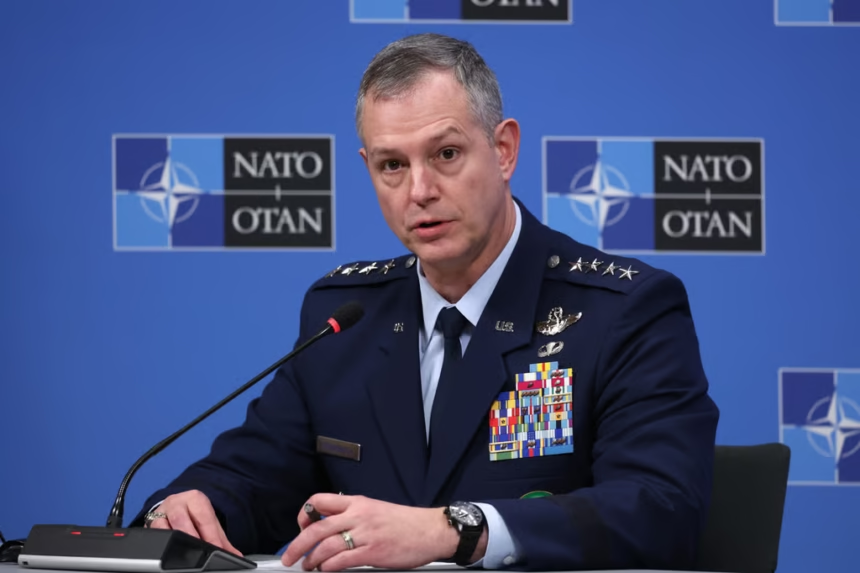
In a major shift to tighten the defense of its Eastern Flank, NATO countries are drafting a proposal to grant General Alexus Grynkewich, the Supreme Allied Commander Europe (SACEUR), expanded authority to independently shift air defense assets and adjust military alert levels.
The defense package aims to eliminate bureaucratic delays to counter the rising volume of hostile drone and missile incursions across alliance territory. NATO diplomats and officials expect member states to formally sign off on the plan ahead of the July 7–8 Summit in Ankara, Türkiye.
1. The Catalysts for Strategic Adaptation
The collective push for a centralized response has intensified due to persistent, destabilizing aerial incidents stretching along the allied border zone:
- Drone Swarms: Unmanned aerial vehicles (UAVs) have repeatedly crossed into Poland and Romania, causing localized disruptions and security alerts.
- Airspace Intrusions: Frequent radar anomalies and air boundary violations have shaken Estonia.
- Debris Hazards: Suspicious drone crashes in Latvia have led to infrastructure damage, civilian injuries, and significant local political fallout.
- Regional Ballistic Threats: Earlier this year, Iranian ballistic missile launches targeting Türkiye underscored the vulnerability of fragmented national missile networks, highlighting the necessity of an alliance-wide defense framework.
2. Standard Constraints vs. Proposed Autonomy
For decades, NATO’s reactive footprint has been shaped by individual member-state mandates. The new proposal aims to streamline this command pipeline:
NATO Air Defense Operational Chain Architecture

 [ CURRENT MODEL: FRAGMENTED CAVEATS ]
 ┌────────────────────────────────────────────────────────────────────────┐
 │ Individual Member States retain tight veto power over where and how    │
 │ specific national air weapon systems are utilized.                     │
 └───────────────────┬────────────────────────────────────────────────────┘
                     ▼ Resulting in:
 ┌────────────────────────────────────────────────────────────────────────┐
 │ A rigid patchwork of national rules that prevents the Supreme Commander│
 │ from deploying swift, inter-border defensive counter-strikes.           │
 └────────────────────────────────────────────────────────────────────────┘

 [ PROPOSED MODEL: RECENTRALIZED FLEXIBILITY ]
 ┌────────────────────────────────────────────────────────────────────────┐
 │ General Alexus Grynkewich secures immediate tactical authority.        │
 └───────────────────┬────────────────────────────────────────────────────┘
                     ▼ Empowered to:
 ┌────────────────────────────────────────────────────────────────────────┐
 │ • Reallocate defensive assets laterally across borders without embassy  │
 │   or diplomatic sign-offs.                                             │
 │ • Elevate weapon readiness alert statuses autonomously.               │
 │ • Formally fuse ballistic defense systems into daily fighter air-      │
 │   policing grids across the Eastern Flank.                             │
 └────────────────────────────────────────────────────────────────────────┘
3. Strategic Impact & Implementation Status
| Operational Arena | Old Defensive Protocol | New Integrated Mandate |
| Asset Mobility | Air units bound strictly to host-nation borders. | Cross-Border Flexibility. SACEUR can dynamically reposition defensive grids where threats spike. |
| System Synergy | Fighter jets and ballistic defense screens operated on parallel, siloed channels. | Full Integration. Jet patrolling and ballistic tracking systems merge into a unified air defense network. |
A senior NATO official emphasized that while individual nations instinctively turn to the alliance whenever a foreign drone breaches their sovereign airspace, “NATO also needs nations to do their part” by shedding restrictive domestic caveats.
General Grynkewich presented the technical blueprint of these flexibility measures to ambassadors earlier this year. Negotiators are now finalizing the language to ensure a unified transatlantic consensus by the time allied heads of state convene at the presidential compound in Ankara next month.