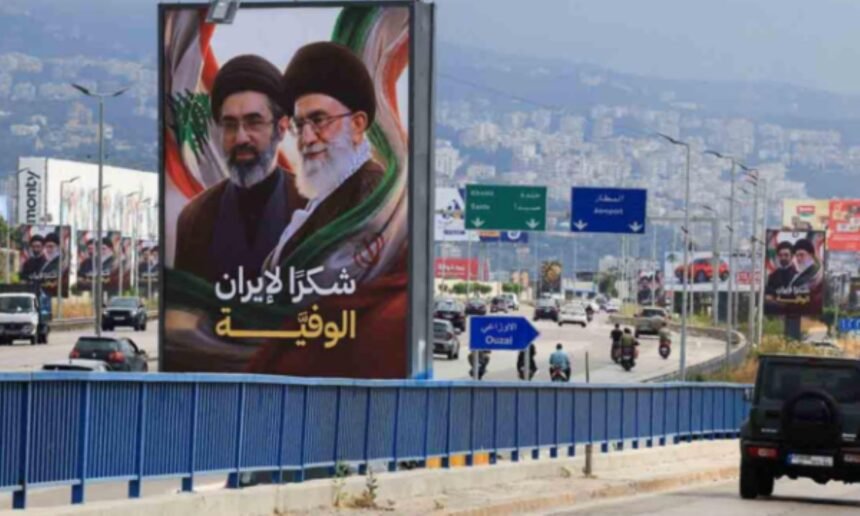
Lebanese officials arrived in Washington on Tuesday, June 23, 2026, determined to launch a crucial fifth round of direct, face-to-face negotiations with Israel. The diplomatic push comes even as Beirut’s sovereign authority is severely challenged by parallel, high-level geopolitical maneuvers between the United States and Iran.
Despite intense regional skepticism, the Lebanese government maintains that direct engagement with Israel is the only viable mechanism to secure a permanent end to the war, which erupted on March 2, 2026.
The Sovereign Tug-of-War: Beirut vs. Tehran
The latest diplomatic itinerary in Washington is unfolding under the heavy shadow of a newly reached U.S.-Iran Memorandum of Understanding. While this broad agreement has brought about the longest temporary lull in regional fighting since March, it has also created an existential crisis for Lebanese statehood.
- The Geopolitical Gridlock: Tehran has aggressively sought to absorb the Lebanese conflict into its own comprehensive negotiations with the Trump administration.
- The Sovereign Pushback: Lebanese President Joseph Aoun and Prime Minister Nawaf Salam have forcefully rejected Iran’s attempts to negotiate on Lebanon’s behalf, treating direct bilateral talks as a vital test of state sovereignty.
“”There remains a fundamental problem of trust between us and the Israelis in these talks,”” a senior Lebanese official admitted to reporters on the eve of the three-day summit. “”We cannot fulfill their demands, and they reject all of ours. However, establishing a reasonable timetable for an Israeli military withdrawal is the only chance we have to generate momentum and push back against Iranian overreach.””
The Conflicting Washington-Tehran Diplomatic Tracks:
[Direct State Track] --> Lebanon & Israel negotiate directly to establish border pilot zones & a withdrawal timeline.
[Parallel Axis Track] --> Iran negotiates broad regional ceasefires with the U.S., claiming to represent Lebanon.
[Domestic Friction]   --> Hezbollah rejects the direct Lebanon-Israel talks, preferring to rely on Tehran's track.
Key Obstacles: Border Withdrawals and Disarming Hezbollah
The three-day Washington summit, led on the Israeli side by Yechiel Leiter and on the Lebanese side by Simon Karam, faces immense friction due to deeply incompatible primary objectives:
- Lebanon’s Mandate: Beirut’s delegation is demanding a concrete, reasonable timeline for the withdrawal of Israeli ground forces from southern Lebanon. They aim to replace them with the Lebanese Armed Forces (LAF) within designated “pilot zones.”
- Israel’s Mandate: Israeli government spokesperson David Mencer reiterated that Israel’s primary condition for a lasting peace agreement is the total disassembly and disarmament of Hezbollah.
While previous rounds in April and May successfully outlined border security frameworks based on UN Resolution 1701, executing them remains a logistical nightmare. The Lebanese government has historically moved with extreme caution regarding Hezbollah, fearing that forcing direct disarmament could trigger a devastating domestic civil conflict.
With Hezbollah actively betting on Iran’s diplomatic track and calling on Beirut to abandon the Washington summit entirely, the Lebanese delegation views these three days of direct talks as a critical stand to prove that the Lebanese state still controls its own national destiny.