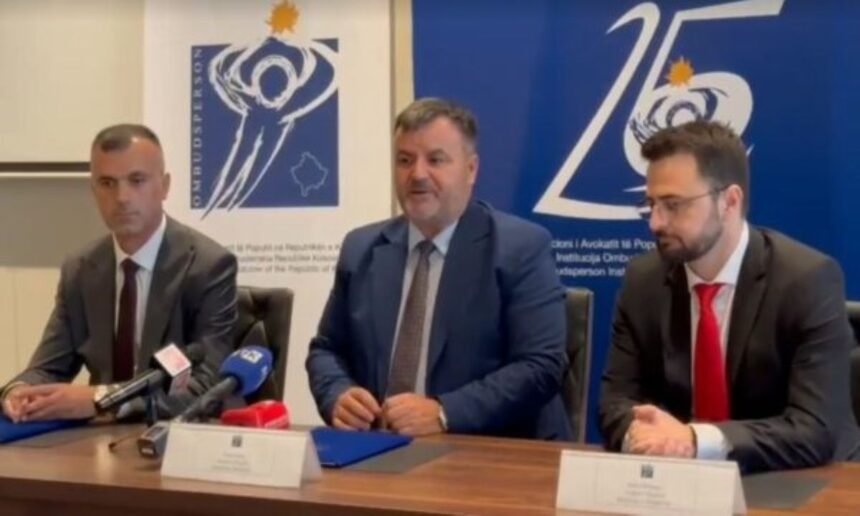
The human rights ombudsmen of Kosovo, Albania, and North Macedonia have convened a landmark trilateral summit, establishing a unified institutional coalition to protect citizens’ civil rights across national boundaries.
The high-level meeting focused heavily on the unique challenges of cross-border legal disputes, environmental degradation, and institutional gridlock that frequently impact citizens traveling or residing between the three neighboring Balkan states.
Overcoming Territorial Blindspots
Because ombudsman offices are legally restricted by national borders, a lack of institutional communication has historically left expatriates, seasonal workers, and cross-border families in a legal vacuum.
- The Vision: Kosovo Ombudsman Naim Qelaj emphasized that this regional network creates an immediate feedback loop. ““Exchanging institutional experiences shows exactly where the region stands as a whole, not just individual countries,”” Qelaj explained. ““This enables us to offer mutual aid when citizens face systemic difficulties outside their home country.””
- The Structural Focus: The trilateral committee targeted critical everyday challenges, including civil documentation bottlenecks, the protection of civil rights, and cross-border healthcare access for citizens moving dynamically across the three countries.
Trilateral Ombudsman Cross-Border Blueprint:
[Civil Domain]         --> Streamlining documentation, multi-citizenship family law, & property inheritance.
[Judicial Domain]      --> Shared monitoring of interstate litigation & administrative holdups.
[Environmental Domain] --> Joint oversight of shared river basins and cross-border pollution controls.
Establishing Direct Points of Contact
Albanian Ombudsman Endrit Shabani highlighted that thousands of Kosovar and Macedonian citizens access seasonal employment, education, and healthcare within Albania every year, often encountering frustrating bureaucratic hurdles.
To bridge this structural gap, the three offices are building dedicated, fast-tracked channels.
“”We are creating synchronized points of contact and institutional cooperation mechanisms to treat complaints coming from the citizens of our three countries with absolute priority,”” Shabani announced.
Shabani detailed that the newly expanded scope of cross-border casework will aggressively look at:
- Overlapping real estate and property disputes.
- Family law matters involving split or dual citizenships.
- Environmental enforcement, specifically targeting the industrial pollution of rivers shared across mutual borders.
Aligning with European Standards
Endorsing the regional pact, North Macedonia’s Ombudsman Faton Selami stated that establishing these permanent oversight mechanisms is a vital benchmark on the path toward meeting European Union human rights frameworks.
The ombudsmen concluded the summit with a binding pledge: the new framework will move completely past simple, case-by-case data sharing. Instead, it creates a permanent, rapid-response institutional mechanism capable of stepping in the moment a citizen’s basic human rights are violated or ignored anywhere in the participating territories.