In a decisive move that highlights deepening concerns over the state of democracy in the Balkans, the Parliamentary Assembly of the Council of Europe (PACE) overwhelmingly adopted a 25-point resolution on Tuesday, June 23, 2026, targeting the functioning of democratic institutions in Serbia.
The resolution passed with 89 votes in favor, 13 against, and 4 abstentions. Co-authored by rapporteurs Viktoria Tiblom and Yunus Emre, the text outlines a severe polarization and continuous political tensions within Serbia, raising urgent alarms regarding the country’s adherence to the rule of law, public liberties, and democratic standards.
Demands for Accountability: The “Sonic Cannon” and Novi Sad Tragedies
The adopted document places heavy emphasis on two major flashpoints that have defined Serbian civil unrest and state crackdowns over the past two years:
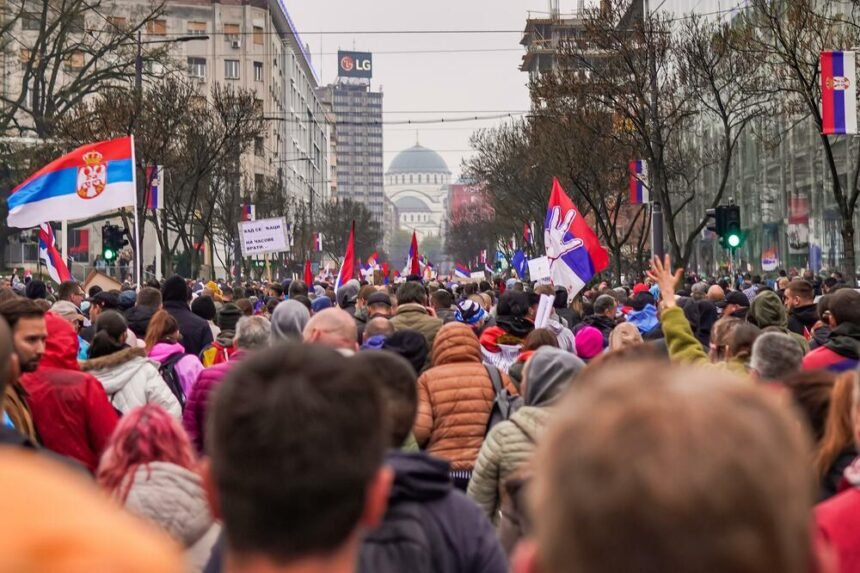
- The March 15, 2025 Sonic Weapon Deployment: PACE explicitly called on Belgrade to launch a transparent investigation into “credible allegations” regarding the use of acoustic crowd-control weapons (sonic cannons) to disperse mass demonstrations in Belgrade on March 15, 2025. The case has already escalated to the European Court of Human Rights (ECHR).
- Retaliation Against Free Speech: Rapporteur Emre sharply condemned the Belgrade Higher Public Prosecution’s (VJT) June 19 directive ordering police to interrogate every citizen and public figure who spoke out about the sonic weapon. European monitors labeled this an unlawful campaign to frame victims under the guise of “inciting the violent overthrow of the constitutional order.”
- The 2024 Novi Sad Tragedy: The resolution demands full clarity and swift prosecution for those responsible for the fatal canopy collapse at the Novi Sad railway station in 2024. The assembly noted with concern that while 13 individuals (including the former Minister of Construction and Transport) were initially detained, multiple key suspects have since been released pending trial, with zero verdicts delivered to date.
The “Mrdić Laws” and De-escalation Directives
While Europe previously lauded Serbia’s 2022 constitutional amendments aimed at judicial independence, the rapporteurs warned that recent legislative maneuvers have severely reversed that progress.
On January 28, the Serbian Parliament passed the controversial “Mrdić Laws” without any public or civil consultation. According to PACE, these laws alter the core mechanics of the judiciary and threaten to directly paralyze ongoing high-level corruption investigations, including the Novi Sad case.
PACE Directives to Serbian Authorities:
[CEASE]  --> Retaliation, unlawful surveillance, and smear campaigns against activists, journalists, and NGOs.
[HALT]   --> The deployment of unnecessary or disproportionate physical force against student movements.
[RESPECT]--> The traditional autonomy of universities and academic freedom.
[ALIGN]  --> Ongoing prosecutorial and judicial frameworks with Council of Europe standards.
Political Fallout: Opposing Views in Strasbourg
The floor debate exposed the deep rift between the ruling Serbian progressive coalition and opposition groups regarding the true catalyst behind the massive street movements, which saw up to 190,000 citizens march in Belgrade on May 23 to demand snap elections.
The Government’s Defense: Biljana Pantić Pilja, head of the Serbian delegation to PACE, dismissed the systemic nature of the protests. She claimed the entire unrest was fabricated by university professors afraid of losing their academic monopoly after President Aleksandar Vučić announced plans to bring prestigious foreign universities to Serbia. “The academic community began to protest out of fear of competition,” Pilja argued.
The Opposition’s Warning: Tatjana Pašić, MP for the Freedom and Justice Party (SSP) and Vice-President of the Social Democrats Group in PACE, countered that the regime’s behavior indicates an explicit shift away from European integration. “Instead of moving toward Brussels and Strasbourg, Serbia is turning toward Beijing,” Pašić testified, accusing Vučić of orchestrating aggressive anti-EU and anti-opposition campaigns to ensure Serbia never achieves full EU membership.