On Tuesday, June 23, 2026, the Serbian opposition party “Srbija centar” (SRCE) issued a formal public inquiry to the Minister of Mining and Energy, Dubravka Đedović Handanović. The party is demanding immediate transparency regarding the classification of national mineral reserves and the specific legal frameworks underlying contracts signed with the Chinese state-backed corporation, Zijin Mining.
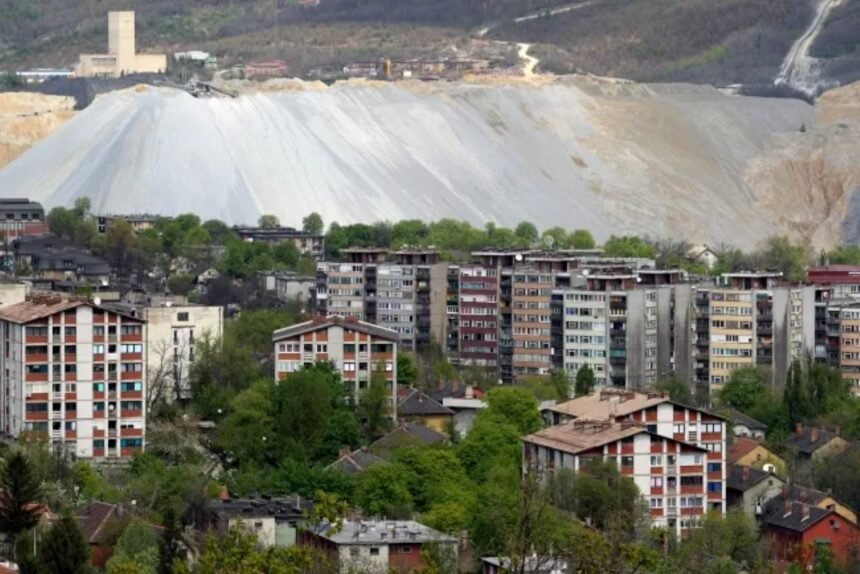
The party’s Committee for Energy and Mining stated that under the current SNS-SPS ruling coalition, Serbia has been transformed into a “mining Eldorado,” with the severe environmental and structural consequences of these large-scale operations visible across the country.
Key Demands Regarding the Secrecy of National Resources
The opposition’s inquiry focuses directly on the legal and strategic classification of Serbia’s natural wealth:
- Declassification of Mineral Data: SRCE explicitly asked the minister if, when, and for what specific reasons the “state secret” classification was removed from crucial national data—specifically the “Balance of Mineral Resources and Reserves, Underground Water Resources, and Geothermal Resources.”
- Current Secrecy Levels: The party demanded clarity on what level of confidentiality or classification current data regarding remaining mineral raw materials in Serbia holds.
- Foreign Corporate Influence on Strategy: Questions were raised over whether foreign mining or geological companies participated in the formal tenders, drafting, or adoption of the Strategy for the Management of Mineral and Other Geological Resources of Serbia, as well as its accompanying Strategic Environmental Impact Assessment.
The “Čukaru Peki” Gold Mine and 100% Chinese Ownership
A major point of contention highlighted by SRCE is the sharp asymmetry in the ownership structures of the mining complexes located in the Bor region, focusing on agreements dating back to 2019.
The Gold Reserve Ownership Question: SRCE demands to know whether “Zijin Mining Group” and its subsidiary “Serbia Zijin Mining” possessed exclusive, classified data regarding the mineralogical composition of the gold-rich ore body at the “Čukaru Peki” site prior to entering the Serbian market. Furthermore, they questioned what national interest justified making this specific mine 100% owned by the Chinese corporation.
In contrast, the opposition pointed out that the remainder of the former state-owned giant RTB Bor—which includes the “Veliki Krivelj,” “Jama,” “Cerovo,” and “Majdanpek” mines, along with the local Smelter—operates under a joint venture where Zijin holds a 63% stake and the Republic of Serbia retains 37%.
Ownership Structure of Key Mining Assets in Bor (Zijin Contracts):
========================================================================
Location / Complex         Zijin Mining Share    Republic of Serbia Share
========================================================================
Čukaru Peki Gold Mine     |||||||||||||||||| 100%   [ 0% - No State Share ]
------------------------------------------------------------------------
Former RTB Bor Assets     ||||||||||| 63%         |||||| 37%
(Krivelj, Jama, Cerovo,
 Majdanpek & Smelter)
========================================================================
Protecting Drinking Water and Domestic Expert Involvement
Finally, the party raised alarms regarding the legal protection of vital natural resources and potential conflicts of interest within the domestic academic and engineering communities:
- Banning Mining Near Water Sources: SRCE asked whether the Ministry plans to introduce legislation or strict regulations to completely ban mining operations within or near drinking water sources and reservoirs to protect the overriding public interest.
- Domestic Experts Working for Foreign Firms: The party requested official data on how many licensed Serbian mining and geological engineers have officially registered secondary employment or consulting contracts with foreign corporations operating in the country, explicitly naming “Serbia Zijin Mining,” “Zijin Copper,” “Malka Golaja Mining” (Zaječar), and “Rio Tinto.”
This formal challenge comes amid heightened tensions in eastern Serbia, where recent government moves to expand spatial plans for mining zones have sparked heavy criticism from local communities and environmental organizations.