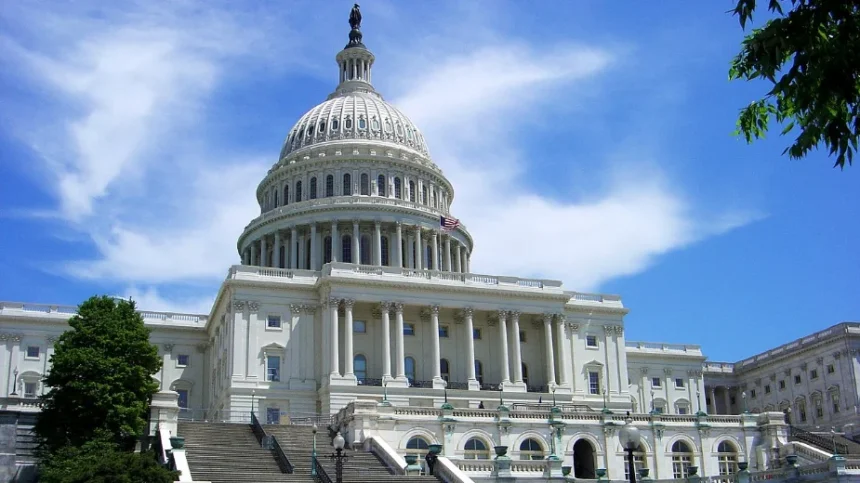
In a significant display of legislative pushback, the U.S. Senate has officially passed a war powers resolution directing President Donald Trump to halt ongoing military actions against Iran unless he secures explicit statutory authorization from Congress.
The vote, which took place on Tuesday, June 23, 2026, saw a critical handful of Republican senators cross party lines to join Democrats. The measure ultimately passed with a tight 50-to-48 majority. A matching version of the resolution was successfully pushed through the House of Representatives earlier this month, signaling deep bicameral unease on Capitol Hill.
A Symbolic Rebuke Amid an Unpopular Conflict
Despite clearing both chambers of Congress, the resolution functions primarily as a symbolic show of political force rather than a binding legal directive.
- The Enforcement Loophole: Because the measure was drafted as a concurrent resolution rather than a joint resolution, it does not require the president’s signature and does not carry the binding force of law. Consequently, it avoids a certain presidential veto while still allowing Congress to formally register its discontent.
- A Weary Public: The legislative maneuver arrives as the U.S.–Iran conflict enters its fifth month. Having erupted on March 2, 2026, the military engagement has suffered from steadily eroding domestic public support, adding heavy political weight to the Senate’s pushback.
The Legislative Path of the 2026 Iran War Powers Resolution:
[The Catalyst]     --> Deployment of U.S. forces following the March 2 outbreak of hostilities.
[House Vote]       --> Passed earlier this month by a unified Democratic majority & anti-war Republicans.
[Senate Vote]      --> Passed 50-48 on June 23, secured by a bipartisan coalition crossing party lines.
[Current Status]   --> Purely symbolic; lacks binding legal force but signals immense congressional friction.
Friction Over Trump’s Parallel Peace Plan
The bipartisan vote exposes a widening fracture within the Republican party regarding Trump’s distinct brand of foreign policy. While the administration recently finalized an interim peace agreement in Switzerland—triggering a fragile lull in the fighting—key congressional hawks remain highly critical of the diplomatic layout.
The Congressional Dilemma: Multiple conservative lawmakers have publicly expressed deep skepticism over the Trump administration’s willingness to grant a 60-day sanctions waiver on Iranian oil exports in exchange for unverified nuclear inspections.
By passing this resolution, a bipartisan coalition of senators has effectively signaled to the White House that if the current interim peace deal collapses and hostilities resume, the administration will face aggressive resistance if it attempts to escalate the war without formal, constitutional consent from Congress.