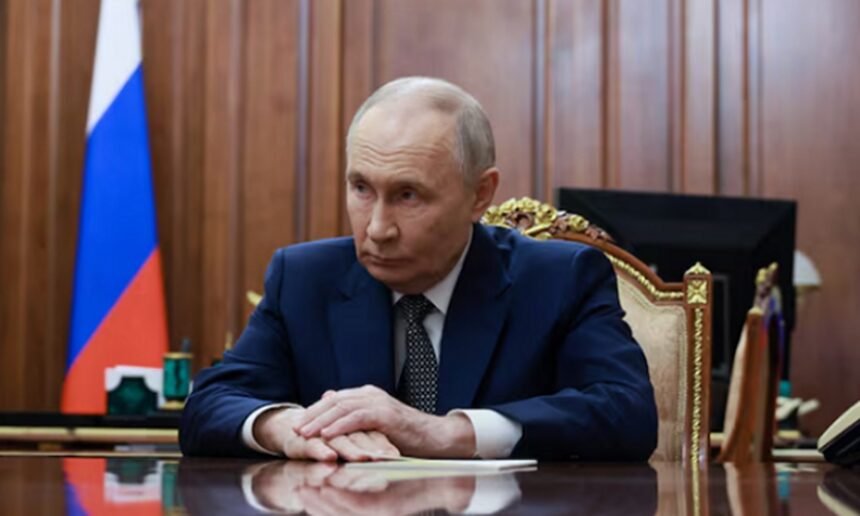
President Vladimir Putin declared on Wednesday, June 24, 2026, during a high-level briefing with members of the Russian government, that Moscow remains ready to resume peace negotiations with Ukraine.
However, Putin explicitly conditioned any potential diplomatic track on historical framework documents and the permanent recognition of Russia’s expanded borders, framework terms that Kyiv has repeatedly rejected as a non-starter.
The Four Pillars of Putin’s Negotiation Mandate
During his televised address to state officials, Putin emphasized that Russia would not enter open-ended consultations without an established procedural baseline. Instead, he outlined four rigid pillars that must guide any incoming peace settlement:
- The Istanbul Agreements (Spring 2022): Putin insisted that the draft treaties initialed by the Ukrainian delegation during the early weeks of the war remain entirely valid. “Everything was satisfactory to them at that time,” Putin stated, referencing the abandoned framework that included permanent Ukrainian neutrality, limits on foreign military forces, and caps on military hardware.
- The Anchorage Strategic Mechanisms: The Russian president referenced structural coordination and security communication mechanisms previously negotiated during high-level diplomatic contacts in Anchorage, Alaska.
- Realities on the Ground: Crucially, Putin stated that negotiations must account for current territorial control, implying that the Kremlin expects permanent, recognized sovereignty over the five Ukrainian regions it formally annexed (Crimea, Donetsk, Luhansk, Zaporizhzhia, and Kherson).
- The June 2024 Foreign Ministry Doctrine: The framework relies on terms Putin laid out at the Ministry of Foreign Affairs two years ago, which demanded the total withdrawal of Ukrainian troops from the entirety of the disputed administrative regions as a prerequisite for a ceasefire.
The Kremlin's Post-Conflict Settlement Matrix (June 2026):
[Legal Baseline]      --> Immediate implementation of the initialed Spring 2022 Istanbul Neutrality Draft.
[Security Framework]  --> Compliance with bilateral de-escalation mechanisms outlined in Anchorage.
[Territorial Demarcation] -> Permanent surrender of Ukrainian sovereign claims over "realities on the ground."
[Pre-Condition]       --> Disarmament of specific specialized brigades & permanent ban on NATO infrastructure.
Geopolitical Deadlock: A Tactical Push for Diplomatic Leverage
Independent geopolitical analysts view Putin’s renewed emphasis on the Istanbul draft as a highly strategic move designed to exploit shifting Western political dynamics. With the U.S. midterm elections approaching in November and ongoing aid debates fragmenting European parliaments, Moscow is attempting to position itself as the rational actor open to a diplomatic exit.
“As has been stated repeatedly, Russia is ready for peace talks with Ukraine,” Putin stated to his cabinet. “Moscow is ready for this on the basis of the agreements reached in Istanbul and initialed by the Ukrainian delegation at that time.”
Despite the Kremlin’s public signaling, authorities in Kyiv have consistently maintained that the 2022 Istanbul parameters are entirely obsolete, framing the draft as an attempt to reduce Ukraine to a vulnerable, defenseless satellite state.
With Ukrainian President Volodymyr Zelenskyy continuously pushing his own multi-point peace formula—which demands the total withdrawal of Russian forces to pre-2014 borders—Putin’s public decree cements a deep diplomatic deadlock, confirming that neither side is prepared to yield on core territorial sovereignty.