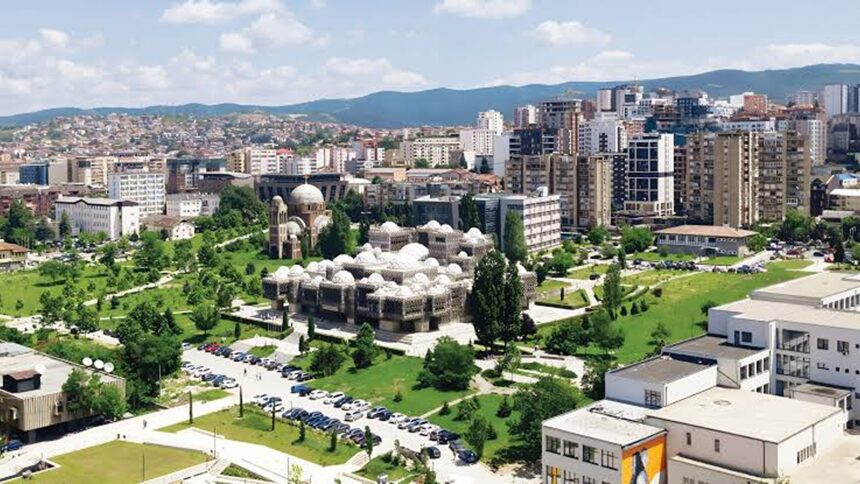
Once primarily associated with post-war reconstruction, Kosovo is building a new economic identity centered on investment, innovation, technology, energy, and human capital. That is the key message of the special report “Kosovo: A Balkan Success Story,” published by USA Today in collaboration with One World Media, which presents Kosovo as one of the emerging markets with strong potential in Southeast Europe.
The report highlights that Kosovo is attracting increasing interest from investors thanks to a combination of three key advantages: long-term growth potential, competitive costs, and a highly adaptable workforce.
With the youngest population in Europe, a strategic location at the heart of the Balkans, and a workforce increasingly connected to international markets, Kosovo is drawing attention in sectors including energy, finance, technology, healthcare, and manufacturing.
According to the report, Kosovo was for many years viewed primarily through the lens of post-war recovery rather than economic opportunity. That perception is now changing.
“For years, Kosovo existed largely outside the mainstream European investment conversation, as international audiences historically viewed the country through the lens of post-war recovery rather than economic opportunity,” the report states.
Today, Kosovo is increasingly being recognized as a market that combines long-term growth prospects, competitive operating costs, and a young workforce suited to the modern economy.
“Kosovo remains underrepresented despite being a small but resilient economy in the heart of Europe,” said Shpend Luzha, Chief Executive Officer of Banka Ekonomike.
Kosovar Businesses Expanding Internationally
The report notes that businesses in Kosovo are evolving from companies serving local demand into enterprises with regional and international ambitions. A new generation of entrepreneurs is developing globally oriented businesses in technology, digital services, and other innovation-driven sectors.
Rather than viewing Kosovo’s relatively small domestic market as a limitation, the report argues that regional integration and trade agreements have transformed the country into a gateway to larger markets.
Mimoza Kusari-Lila, Kosovo’s Minister of Industry, Entrepreneurship, Trade and Innovation, is quoted as saying:
“These agreements effectively transform Kosovo from a domestic market of around 1.5 million people into a gateway to a much larger regional and international customer base.”
Banka Ekonomike and Financial Development
The report dedicates special attention to Banka Ekonomike, Kosovo’s only fully locally owned commercial bank.
For 25 years, the bank has played an important role in the country’s economic development by supporting individuals, small businesses, large companies, and the Kosovar diaspora.
According to CEO Shpend Luzha, Kosovo’s banking sector has been built on strong capitalization, prudent regulation, and financial stability.
“It is a well-capitalized, highly regulated sector, and that has created a strong foundation of trust among customers and stakeholders in the banking market,” he said.
Energy as a Pillar of Economic Growth
USA Today’s report also highlights Kosovo’s energy sector, long considered one of the country’s greatest challenges.
Modernization of the electricity distribution network has significantly improved infrastructure. According to the report, KEDS has invested more than $340 million in upgrading Kosovo’s electricity distribution system.
KEDS CEO Alpin Dogan said the country is entering a new phase of modernization.
“Reliable energy is one of the most important foundations of economic development. We are moving from infrastructure investment toward technological investment. Our goal is to manage the grid more efficiently and respond more quickly.”
Kosovo is also increasing investments in renewable energy, including solar power, wind energy, and energy storage technologies.
Technology and Human Talent
The report emphasizes that Kosovo’s greatest competitive advantage is not only its cost competitiveness but also the talent and skills of its workforce.
Companies in technology and professional services are becoming increasingly integrated into international markets.
Mergim Cahani, Founder and CEO of Gjirafa, said:
“Kosovo should be viewed as one of Europe’s hidden opportunities.”
Healthcare Raising Standards
The final section of the report focuses on healthcare as one of Kosovo’s most promising sectors for future investment and development.
According to USA Today, Kosovo’s healthcare system is entering a new phase in which the emphasis extends beyond expanding access to medical services and products toward improving quality, transparency, and alignment with international standards.
One example highlighted is Meditech, founded in 1999, which has evolved from a pharmaceutical distributor into a trusted partner of global pharmaceutical companies.
The report credits Meditech’s growth to its strict quality standards, continuous international audits, and compliance with global pharmaceutical safety requirements.
By aligning with European Good Distribution Practice (GDP) standards and U.S. Food and Drug Administration (FDA) requirements, the company aims to ensure pharmaceutical products are managed according to internationally recognized best practices.
“We are not simply distributing medicines—we are bringing standards to Kosovo’s healthcare market,” said Meditech CEO Arianit Jakupi.
Jakupi emphasized that pharmaceutical companies should contribute not only to supplying medicines but also to creating a safer and higher-quality healthcare system.
One of Meditech’s priorities is expanding patient access to therapies that are currently unavailable in Kosovo through partnerships with leading international pharmaceutical companies.
“This is not only about doing business; it is about delivering services that are essential for the population,” Jakupi said.
He added that introducing new therapies represents an opportunity to improve patient care while bringing Kosovo’s healthcare system closer to European standards.
The report notes that healthcare spending in Kosovo remains below the European average, leaving considerable room for new investment in infrastructure, specialized medical services, pharmaceuticals, and healthcare technologies.
According to industry representatives, the next challenge is not simply increasing capacity but ensuring higher quality standards and equal access to healthcare.
“Patients should receive the same standard of care regardless of where they live,” Jakupi emphasized.
Kosovo Positioned for Future Investment
The report concludes that while challenges remain, Kosovo’s overall trajectory is positive.
Rather than relying solely on competitive costs, the country is increasingly building its economy on knowledge, innovation, skilled talent, and the ability to compete in international markets.
The full report document can be found by clicking https://www.usatoday.com/story/sponsor-story/one-world-media/2026/07/06/kosovo-a-balkan-success-story/90822387007/