Russia’s annexation of Crimea in 2014, its destabilization of eastern Ukraine, the militarization of the Kaliningrad region, and the full-scale invasion of Ukraine in 2022 have fundamentally transformed the security landscape of Central and Eastern Europe.
The war in Ukraine has marked the most serious security crisis in Europe since the end of the Cold War, forcing countries across the region to reassess their defense strategies, strengthen military capabilities, and deepen cooperation within NATO and the European Union.
For Central European and Eastern European states, Russia’s actions have demonstrated that traditional military threats remain a central challenge, while hybrid threats — including cyberattacks, disinformation campaigns, economic pressure, political interference, and border provocations — have become increasingly important elements of modern conflict.
Security experts argue that Russia’s strategy combines conventional military power with non-military tools designed to weaken Western institutions and expand Moscow’s influence in the post-Soviet space. This approach has increased concerns among countries located closest to Russia, particularly those that view the Kremlin’s policies as an attempt to revise the international order established after the Cold War.
A New Security Reality in Central Europe
The Russian invasion of Ukraine exposed weaknesses in Europe’s ability to respond rapidly to large-scale security challenges and accelerated changes in defense policies across the continent.
Several Central and Eastern European countries have increased military spending, accelerated the modernization of their armed forces, purchased advanced weapons systems, strengthened missile defense capabilities, and expanded military cooperation with NATO allies.
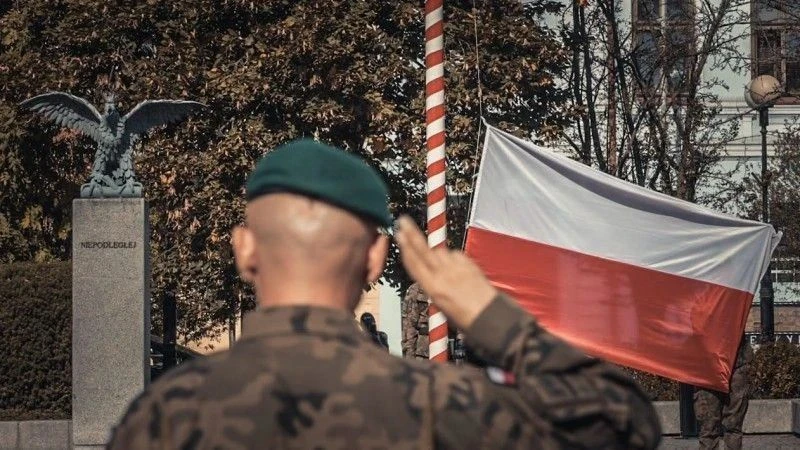
Poland, in particular, has emerged as one of the region’s most important security actors. Warsaw has significantly increased defense investments, expanded its military capabilities, and positioned itself as a key frontline state in NATO’s eastern flank.
The growing perception of a Russian threat has encouraged countries in the region to strengthen regional cooperation and develop new mechanisms of deterrence. NATO’s enhanced presence in Eastern Europe and closer coordination among allied states have become central elements of the new security architecture.
Poland’s Strategic Position Between East and West
Poland’s geographical location has historically placed it at the center of European power competition. Situated between Germany and Russia and positioned at the intersection of continental and maritime geopolitical spaces, Poland has become a crucial state in shaping regional security dynamics.
Geopolitical theories developed by thinkers such as Halford Mackinder and Nicholas Spykman remain relevant in understanding Poland’s strategic importance. Mackinder’s concept of the “Heartland” emphasized the importance of control over the central Eurasian landmass, while Spykman’s “Rimland” theory highlighted the importance of coastal regions and strategic access points.
Poland’s position reflects elements of both concepts. Its location makes it a key link between Western Europe and the eastern parts of the continent, while also making it a potential target of geopolitical competition.
Following Russia’s invasion of Ukraine, Poland has increasingly taken on the role of a security hub for NATO’s eastern flank, supporting Ukraine militarily and politically while strengthening its own defense capabilities.
Ukraine as a Strategic Battleground
Ukraine has become the central arena of geopolitical competition between Russia and the West. Its location between Russia and the Euro-Atlantic community has made it one of the most strategically significant countries in Europe.
For Moscow, Ukraine has long represented a critical element of its regional ambitions. Russian authorities have historically viewed Ukraine through the lens of shared history, culture, and strategic interests, while Ukrainian efforts toward European and Euro-Atlantic integration have been perceived by the Kremlin as a direct challenge to its influence.
Russia’s annexation of Crimea in 2014 and its support for separatist forces in eastern Ukraine were followed by the full-scale invasion in 2022, which dramatically changed the European security environment.
However, Russia’s aggression produced the opposite effect from what Moscow intended. Instead of weakening Western integration, the war strengthened Ukraine’s commitment to joining European and transatlantic structures and increased public support for NATO and EU membership.
The Black Sea’s Growing Strategic Importance
The Black Sea region has become another major focus of geopolitical competition. Located at the crossroads of Europe, Asia, Russia, and the Middle East, the region plays a vital role in energy routes, trade networks, military strategy, and regional stability.
Ukraine’s position in the Black Sea gives it significant strategic importance, not only for its own security but also for broader European interests. Control and access in this region have become central issues in the wider confrontation between Russia and the West.
The future stability of the Black Sea region will depend on Ukraine’s ability to rebuild, strengthen institutions, develop economic partnerships, and deepen cooperation with European partners.
A Long-Term Transformation of European Security
Russia’s war against Ukraine has reshaped Europe’s security architecture and ended decades of assumptions about a stable post-Cold War order.
Central European countries are increasingly focused on deterrence, defense modernization, and stronger alliances. Poland has become a leading military and political actor in the region, while Ukraine has emerged as a key factor in determining the future balance of power between Russia and the West.
The long-term challenge for Europe will be maintaining unity, strengthening collective defense, and adapting to a security environment where military confrontation, hybrid warfare, and geopolitical competition are increasingly interconnected.
The future of Central Europe’s security will largely depend on the ability of regional states and international organizations to respond collectively to emerging threats and preserve stability in a rapidly changing geopolitical landscape.