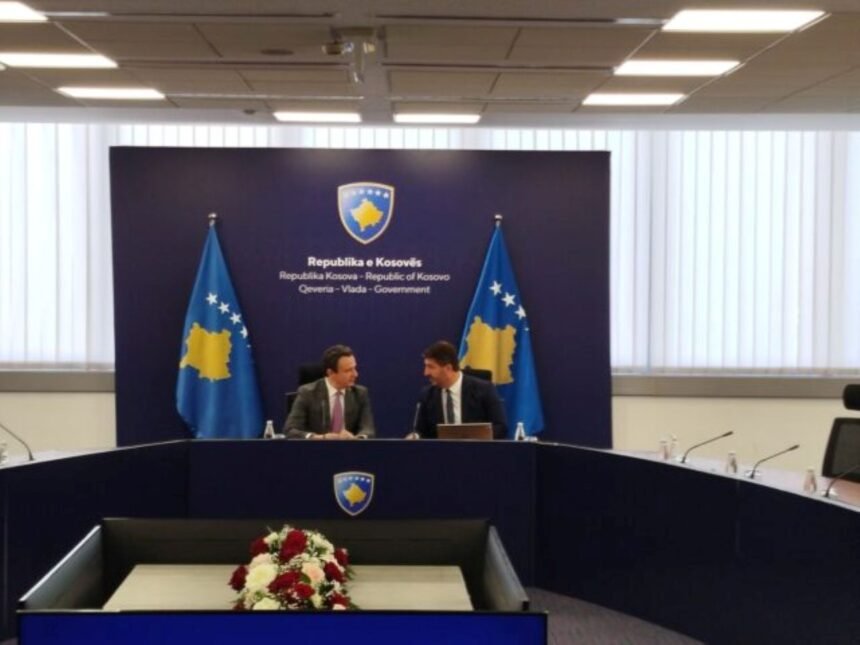
Kosovo’s Acting Prime Minister Albin Kurti has called on the international community to increase pressure on Serbia to open its military archives, describing the move as essential to determining the fate of people who were forcibly disappeared during the 1998–1999 Kosovo war.
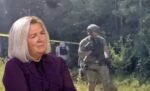
Kurti’s appeal came one day after excavation work began at a suspected mass grave site in the village of Kalludër, Zubin Potok, and on the same day that the Institute for Crimes Committed During the War in Kosovo (IKKL) published the country’s first official preliminary report documenting those killed, forcibly disappeared, and those who died as a consequence of the war.
“Yesterday, excavation began at a location in Kalludër, Zubin Potok, where a mass grave is suspected to exist. This reminds us that, for many families, the war has not ended until their loved ones are found. Every identification is a step toward justice,” Kurti said.
While noting that the ongoing excavations are the result of the work carried out by Kosovo’s institutions, Kurti accused Serbia of failing to implement the Declaration on Missing Persons agreed in Brussels on May 2, 2023.
“As these excavations are the result of the work of our institutions, Serbia’s failure to implement the Brussels Declaration on Missing Persons, particularly its refusal to open military archives, demonstrates that the neighboring state continues to evade responsibility for the crimes committed in our country during the last war,” he said.
Kurti renewed his appeal to international partners to intensify pressure on Belgrade, specifically calling for Serbia to reverse its decision to classify military archives until 2044 and to open the archives of the Yugoslav Army’s 37th Motorized Brigade, which he said could provide crucial information about the fate of those who remain missing.
The appeal coincided with the release of IKKL’s preliminary report, which documents a total of 13,227 victims linked to the Kosovo war. Of these, 12,230 cases (92.5%) relate to the period between January 1, 1998, and June 20, 1999, while 997 cases (7.5%) are connected to the post-war period between June 21, 1999, and December 31, 2000, where deaths or disappearances were directly linked to the conflict.
The report classifies victims into three categories: those killed, those forcibly disappeared, and those who died as a consequence of the war. According to IKKL, it represents the most comprehensive institutional record compiled to date and remains preliminary, allowing for updates as new evidence and documentation become available.
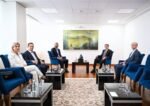
Kurti described the report as an institutional testimony to the human cost of Kosovo’s freedom.
“This report represents people, lives, families, and histories that cannot be reduced to numbers, but which our state has a duty to document with accuracy, dignity, and responsibility,” he said.
He stressed that the Institute was established not to replace previous documentation efforts but to verify, standardize, and institutionalize existing records. He also urged victims’ families, civil society organizations, and citizens with relevant information to cooperate with the Institute.
“Without documentation there is no memory, without memory there is no justice, and without justice there can be no lasting peace,” Kurti said.
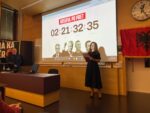
IKKL Director Atdhe Hetemi explained that the Institute has carried out an extensive verification process, examining each individual case rather than simply merging existing databases.
According to the report, 11,415 of the documented victims (86.3%) are male and 1,811 (13.7%) are female, while the gender of one individual has not yet been determined. The largest number of victims were between 31 and 50 years old, followed by those aged 18 to 30. The report also documents 1,241 child victims and 1,949 victims over the age of 65.
The report identifies the spring of 1999 as the deadliest period of the conflict, with April 26, 1999, recorded as the single day with the highest number of documented victims. Researchers based their findings on records from Kosovo’s Civil Registration Agency, the Institute of Forensic Medicine, the Kosovo Agency of Statistics, the Government Commission on Missing Persons, municipalities, as well as domestic and international organizations, including the Humanitarian Law Center (HLC), the International Commission on Missing Persons (ICMP), and the Council for the Protection of Human Rights and Freedoms.
IKKL said the preliminary list will continue to be updated as additional documentation, witness testimonies, and verified information become available.