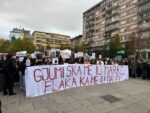
Several students in Belgrade have joined public cleanup efforts, removing offensive graffiti targeting Albanians as Serbia’s student-backed political movement prepares to form a new government following its reported election victory.
The movement, which according to preliminary parliamentary election results has defeated the Serbian Progressive Party (SNS) led by Aleksandar Vučić, has begun organizing initiatives to clean public spaces after two years of protests triggered by the deadly collapse of a railway station canopy in Novi Sad in 2024, which killed 16 people.
On Monday, students and other citizens took part in a cleanup operation at a park near Serbia’s presidential building in Belgrade. The area had been occupied for more than a year by a camp established by government supporters.
Within hours, the park had been cleaned and its playground restored for children, according to France 24.
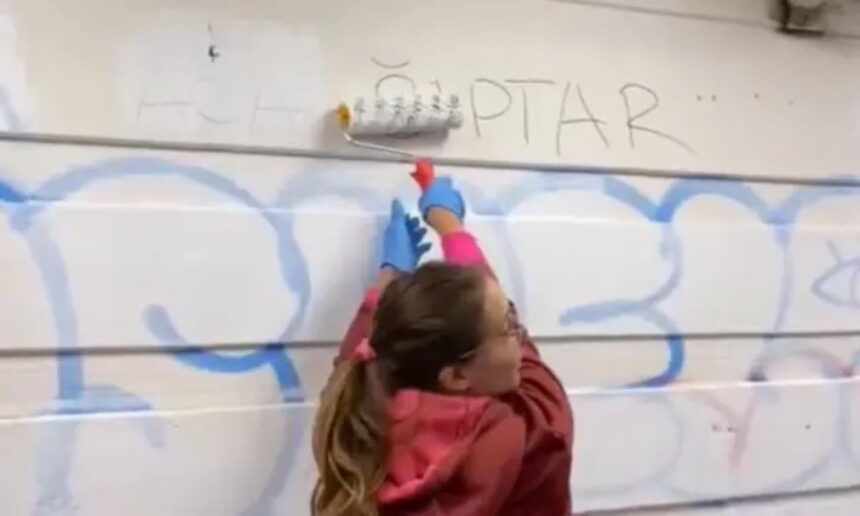
Dozens of residents also participated in cleaning a tunnel in central Belgrade, where the walls had been covered with graffiti reflecting the country’s political divisions.
Among the inscriptions found around the city were “Šiptar,” “FCK BLK” and “FCK SNS.”
The term “Šiptar” is commonly used as a derogatory slur against Albanians. “FCK BLK” targeted protesters whom the authorities had described as blockaders, while “FCK SNS” was directed at Vučić’s ruling party.
The removal of the graffiti formed part of broader efforts to restore public spaces following months of political confrontation and demonstrations.
Student-Backed Movement Claims Parliamentary Majority
Preliminary election results indicate that the student-backed list secured more than 52 percent of the vote, translating into approximately 140 of the National Assembly’s 250 seats.
If confirmed, the result would give the movement a parliamentary majority and allow it to govern without coalition partners.
However, the movement must await certification of the final results and the constitution of the new parliament before proceeding with government formation and the appointment of a prime minister.
The reported victory would bring an end to 14 years of SNS-led rule and mark a major political shift in Serbia.
The movement’s next challenge will be to establish the new institutions and translate its electoral support into a functioning government.