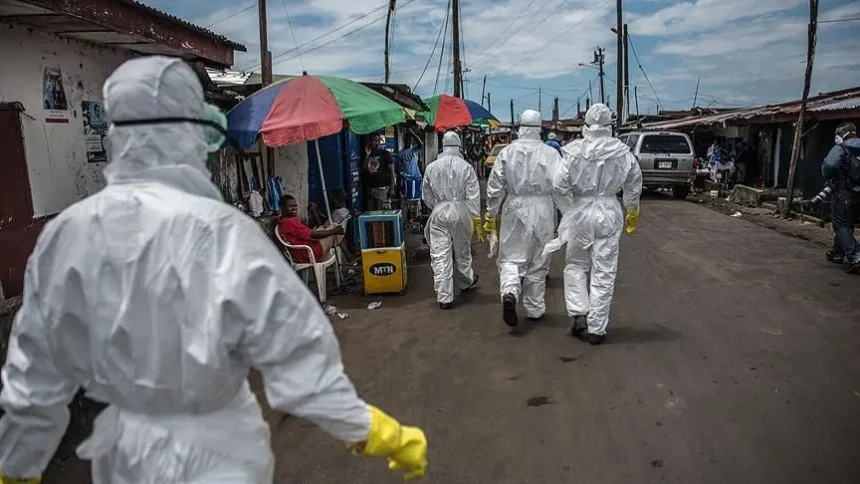
The Ebola outbreak in the Democratic Republic of Congo is accelerating at an alarming rate, with the number of confirmed cases surpassing 4,400 and more than 2,000 deaths recorded, according to the latest government data.
The outbreak, caused by the rare Bundibugyo strain of Ebola virus, has become the second-largest Ebola outbreak ever recorded and is spreading faster than previous outbreaks, raising growing concerns among international health authorities.
The latest figures show 4,449 confirmed cases and 2,061 deaths as of August 11, according to Congolese government data.
WHO Director-General Tedros Adhanom Ghebreyesus has repeatedly warned that the response is struggling to keep pace with transmission. Health officials say the situation is particularly serious in Ituri province, where roughly 90 percent of confirmed cases have been concentrated.
One of the biggest challenges is that a large proportion of deaths are occurring outside treatment centers. This suggests that many transmission chains remain undetected and that infected people are not reaching medical facilities in time.
The outbreak has spread across five provinces, while conflict, weak infrastructure and difficulties accessing remote communities are complicating efforts to identify cases and trace contacts.
A strain with no licensed vaccine
The outbreak is being driven by the Bundibugyo strain, a relatively rare Ebola virus for which there is currently no licensed vaccine or approved treatment specifically targeting the strain. Clinical trials for potential treatments are underway, while the first vaccine candidate specifically targeting Bundibugyo has entered Phase I safety testing.
WHO and its partners have significantly expanded the response. Treatment capacity has been increased to more than 800 beds, laboratory capacity has expanded from a single laboratory to 16, and more than 21,000 community health workers have been trained to identify suspected cases and support surveillance.
However, health officials say the scale of transmission means substantially more resources and faster action are needed.
The Africa Centres for Disease Control and Prevention has announced plans to move beyond conventional contact tracing and conduct more intensive door-to-door searches for suspected cases in affected communities.
The scale and speed of the outbreak have raised concerns that the official case count may still underestimate the true extent of transmission. Earlier WHO assessments found that a large proportion of newly identified patients had no known connection to previously identified cases, indicating that the virus was spreading through communities beyond established surveillance networks.
The current outbreak has already surpassed the total number of cases recorded during the 2018–2020 Ebola epidemic in eastern Congo, which had previously been the country’s largest outbreak.
Only the 2014–2016 Ebola epidemic in West Africa, which caused more than 28,000 reported infections and over 11,000 deaths, was larger.
WHO has declared the outbreak a public health emergency of international concern, underscoring the potential for further regional spread and the need for a coordinated international response.