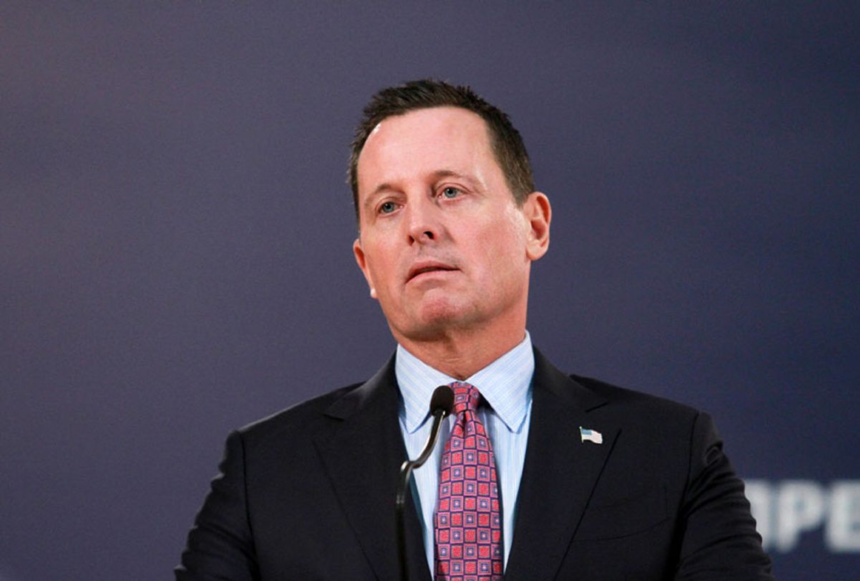
Richard Grenell, the former U.S. special envoy for the Kosovo-Serbia dialogue and a figure close to the Trump administration, has sharply criticized the Kosovo Specialist Chambers following the verdict sentencing four former Kosovo Liberation Army (KLA) leaders to a combined 81 years in prison.
Speaking to Top Channel, Grenell said Kosovo does not need a court in the Netherlands making decisions concerning the country and its people. He also characterized the verdict as politically influenced, presenting this as his assessment of the proceedings.
“Kosovo and Kosovo’s courts should decide Kosovo’s future and the issues that are important. We do not need a court in the Netherlands to make decisions for Kosovo.
You see a judgment like this being handed down and you think that it is politically influenced,” Grenell said.
He argued that Kosovo should act in its own interests and determine how to address matters concerning the country.
“I think the United States will do what is in the best interest of the United States, and Kosovo should do the same — act in its own interest, act on behalf of Kosovo, and not allow an international court to decide for it, but deal with this situation itself,” he said.
Grenell added that he did not believe the issue should be linked to the United States, President Donald Trump or other external political matters. Instead, he said the concern was the use of courts that, in his view, issue politically influenced decisions.
“The Prime Minister and Parliament should decide what the next step will be. I think Kosovo’s courts should decide these matters themselves,” Grenell said.
A day earlier, following the verdict, Grenell had called for the Specialist Chambers to be closed, describing them as “radical courts” and arguing that their funding should be cut.
The Specialist Chambers sentenced Hashim Thaçi and Jakup Krasniqi to 25 years each, Kadri Veseli to 18 years and Rexhep Selimi to 13 years. The defendants have indicated that they will appeal the first-instance judgment.