Serbian peace activist Aida Ćorović has suggested that Aleksandar Vučić’s reported election defeat may have been accompanied by informal guarantees from European Union leaders, arguing that the circumstances surrounding his acceptance of the result raise questions about a possible understanding with international partners.
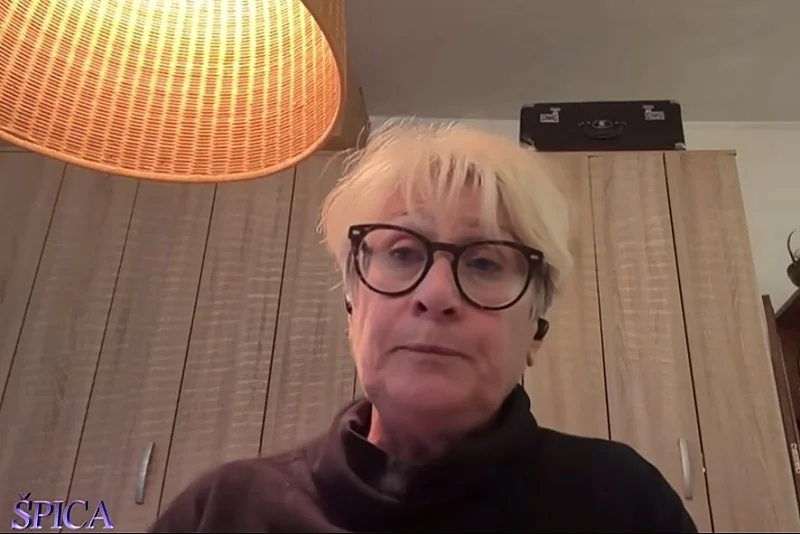
Speaking on Television Sarajevo (TVSA), Ćorović discussed the political developments surrounding Serbia’s parliamentary elections, the role of the EU and the challenges facing the incoming leadership.
Her comments followed what she described as a historic victory for the student movement, which, according to the report, secured approximately 140 parliamentary seats.
Ćorović questions the circumstances surrounding Vučić’s concession
Ćorović said the security measures in Belgrade in the hours before Vučić’s public announcement raised concerns about a possible escalation against citizens and student supporters awaiting the election results.
She pointed to the closure of a major street near the Republican Electoral Commission and the Presidency, the deployment of special police units and soldiers, and the movement of armored vehicles.
According to Ćorović, the situation initially appeared to signal the possibility of a confrontation with protesters.
She argued that Vučić’s subsequent response and relatively calm acceptance of the result were unlikely to have occurred without discussions involving international actors.
“I think some kind of deal with the international community, above all the EU, fell into place,” Ćorović said.
She argued that the student movement’s letter to EU institutions, combined with what she described as decisive electoral evidence, had weakened the EU’s ability to continue supporting Vučić politically.
Her claims about a possible agreement have not been independently established in the material provided.
Comparison with Montenegro’s Milo Đukanović
Ćorović drew a parallel between Vučić’s reported departure from power and the end of Milo Đukanović’s long period of political dominance in Montenegro.
She suggested that senior EU officials may have offered Vučić assurances that he would remain politically active and would not face prosecution after leaving office.
“My theory is that the highest EU officials gave some kind of promise and guarantees that nothing would happen to Vučić, similar to what happened in Montenegro when Milo Đukanović had to step down after 30 years,” she said.
Ćorović cited the continued activity of pro-government media outlets, including Informer, as what she considers an indication that Vučić’s political circle does not fear immediate consequences.
However, she presented the alleged guarantees as her own theory, and the report provided no independent evidence of an agreement between Vučić and EU officials.
Warning against repeating the post-Milošević experience
Ćorović also warned that any arrangement preventing accountability for members of the outgoing administration could undermine public confidence in political change.
She recalled the transition following Slobodan Milošević’s removal from power in 2000, arguing that members of his political establishment were able to remain active and later regain influence.
“Citizens in Serbia are outraged by what this government has done over almost 15 years, and I am certain that there is a desire for retribution,” she said, while warning that preventing lustration would be a mistake.
She also welcomed the reported failure of the Socialist Party of Serbia and radical political forces to cross the electoral threshold, describing it as a potentially significant development for the country’s political future.
Vučić’s remarks about Nataša Kandić
Ćorović further criticized Vučić’s election-night statement that Nataša Kandić, a prominent human rights activist, had won the election.
She interpreted the remark as a continuation of nationalist political rhetoric and the targeting of civil society figures, which she said could be used to mobilize dissatisfied voters during the reform process.
Asked about her own involvement during the election campaign, Ćorović said she had deliberately kept her distance from the student movement’s operational activities to prevent pro-government media from using her name against younger activists.
Her assessment reflects concerns among some critics of Vučić about accountability, the influence of the outgoing political establishment and the role of the EU in Serbia’s transition. The claims of a negotiated deal or guarantees for Vučić remain unverified.