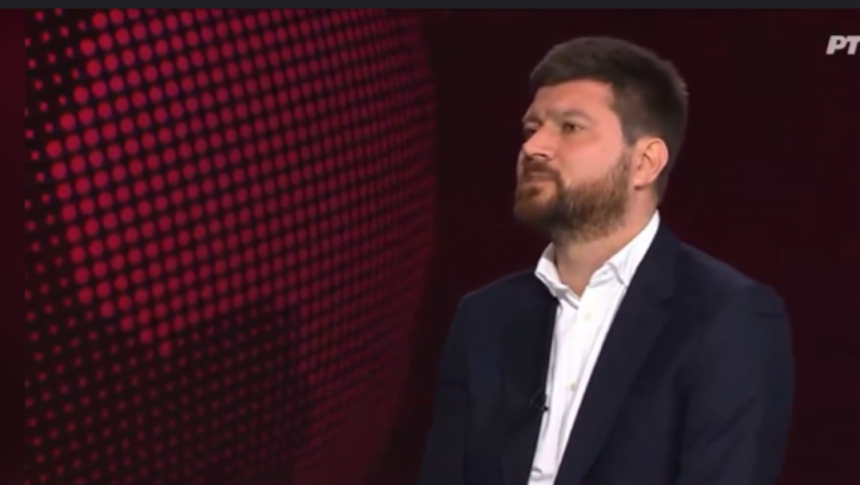
Nemanja Karović, a representative of Serbia’s student-backed electoral list “Students Win,” has accused the country’s public broadcaster, Radio Television of Serbia (RTS), of serving the government of outgoing President Aleksandar Vučić, while alleging that pro-government media outlet Informer received between €500,000 and €700,000 per month.
Karović made the accusations during an appearance on RTS, where he criticized the broadcaster’s coverage of the student movement and accused its management of complicity in government propaganda.
The interview attracted attention because students have repeatedly accused RTS of biased reporting during protests against Vučić’s government. Following the reported electoral victory of the student-backed list, Karović used his appearance on the public broadcaster to revisit those allegations.
He said it was appropriate to remind viewers of how RTS had portrayed the student movement during the protests.
Karović alleged that students had been compared to members of Hamas because of certain symbols, with reports insinuating that they were terrorists. He also criticized presenter Bojana Mlađenović for allegedly describing students as a “mob,” claiming she was subsequently promoted.
He rejected claims broadcast by RTS that students had attacked a gendarme and fought over bags of money, describing those reports as “flagrant falsehoods.”
Karović also criticized two special programs about the alleged use of a sound cannon during protests, arguing that the people discussed in the broadcasts had been publicly targeted and effectively put on trial through television coverage.
“Throughout that period, RTS demonstrated a servile relationship with the regime. That relationship was not merely collaborative, but complicit,” Karović said, accusing the broadcaster of transmitting government propaganda without sufficient scrutiny.
He argued that the coverage had resulted in the “continuous and systematic deception of viewers,” contradicting the public broadcaster’s legal obligations to citizens who finance its operations.
The student movement has called for the resignations of RTS management and the editor responsible for news programming. Karović stressed, however, that the movement did not seek to take control of the broadcaster, but wanted it to serve the public interest rather than any government.
Allegations over Telekom Srbija and media funding
Karović also targeted Telekom Srbija, accusing the state-owned telecommunications company of concentrating control over the media market and using public funds to support the previous government’s interests.
He alleged that substantial sums had been directed toward media outlets close to the authorities, as well as television series that were never produced.
“Just to mention one example, Informer was receiving between €500,000 and €700,000 per month. These are extraordinary figures, and we know why,” Karović said.
The allegations were made during the broadcast and were not independently substantiated in the report.
Karović further claimed that Telekom Srbija was attempting to weaken the weekly magazine Radar. The student movement is therefore demanding the immediate dismissal of Telekom Srbija General Director Vladimir Lučić.
Claim of attempted withdrawal of one billion dinars
Karović also alleged that there were serious indications that an attempt had been made to withdraw approximately one billion Serbian dinars from Postal Savings Bank, known as Poštanska štedionica.
According to his account, the alleged transaction could have threatened the bank’s liquidity and its ability to pay salaries and pensions.
He claimed that employees within the relevant institutions had prevented the attempt and that the National Bank of Serbia and the prosecution had been informed.
The allegations concerning the bank, Telekom Srbija and Informer have not been independently verified in the report. No responses from the organizations or individuals named in Karović’s statements were included in the available account.
Karović’s appearance comes amid a broader political confrontation over the role of public institutions, state-owned companies and media organizations in Serbia, following the reported electoral defeat of Vučić’s ruling bloc and the rise of the student-backed movement.