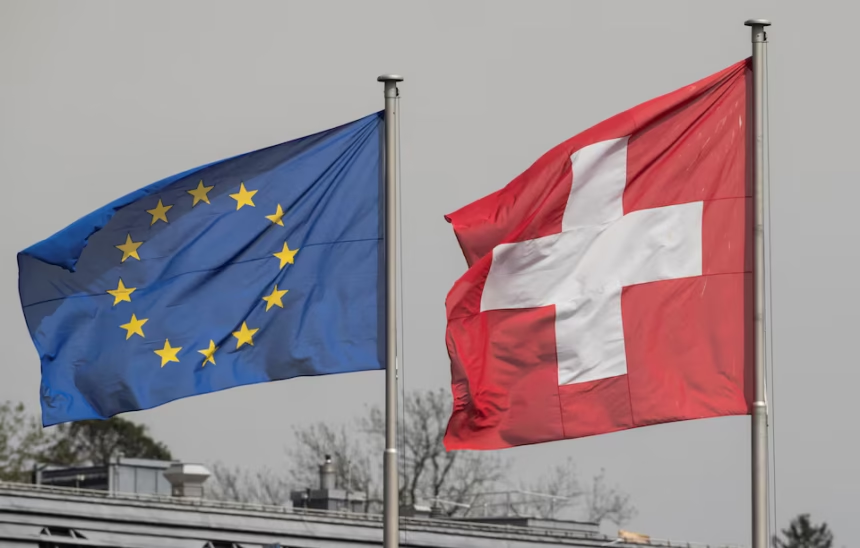
Switzerland’s government received a major political boost on Saturday in its bid to pass the most significant overhaul of Swiss-EU relations in over 20 years, after the centre-right Liberal Party (FDP) voted to support the new European Union framework agreement.
The deal — covering electricity, transport, state aid, freedom of movement, and Switzerland’s financial contributions to the EU — was finalized in December 2024 and approved by the Swiss cabinet in June 2025.
However, the agreement faces a national referendum, where it will encounter stiff resistance from the right-wing Swiss People’s Party (SVP), the largest faction in parliament. The SVP argues that the accord threatens national sovereignty, Swiss identity, and border control.
The FDP’s endorsement marks a turning point: in an internal ballot, 75% of party delegates voted in favor of the EU deal, signaling strong support within one of Switzerland’s most influential business-oriented parties.
Shifting Political Dynamics
Public debate in Switzerland has long revolved around fears that closer ties with Brussels could undermine the nation’s neutrality. Many eurosceptics have traditionally viewed the United States as a preferable partner.
Yet, that sentiment has weakened following U.S. President Donald Trump’s decision to impose 39% tariffs on Swiss goods — a rate far higher than those placed on EU exports. The move has prompted Swiss businesses to reconsider their global alliances.
Government and Public Outlook
The Swiss government has framed the EU agreement as vital for economic stability amid global uncertainty. Recent polls indicate that Swiss voters are twice as likely to support the deal as to oppose it, suggesting growing public acceptance.
Still, officials caution that a referendum is unlikely before 2027, leaving ample time for political maneuvering and public debate.
If approved, the agreement would represent the most comprehensive renewal of Swiss-EU relations since the early 2000s, strengthening Switzerland’s access to the single market while maintaining its independent governance model.