The landmark trial is approaching its most critical phase, with a verdict expected in the spring for Hashim Thaçi, Kadri Veseli, Rexhep Selimi, and Jakup Krasniqi.
This year is expected to be decisive for the so-called KLA Four, who have been held in detention in The Hague for nearly five years.
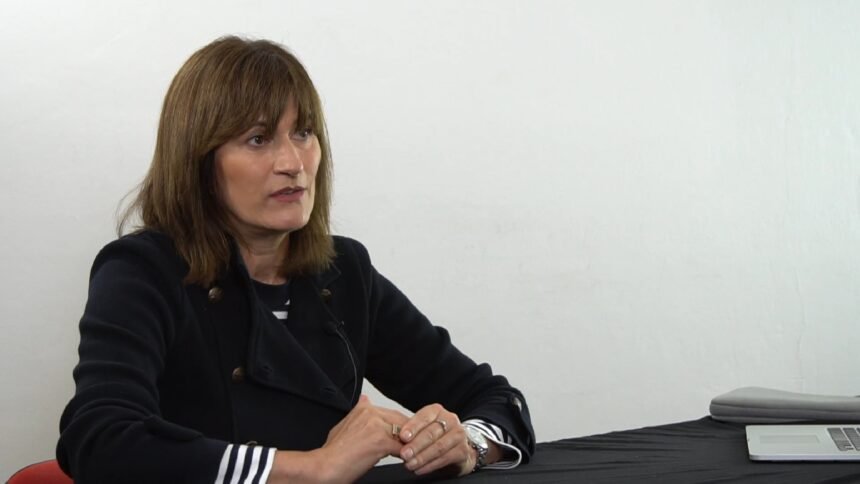
Nevenka Tromp, a researcher at the International Criminal Tribunal for the former Yugoslavia (ICTY), speaks about the significance of the upcoming verdict for Thaçi, Veseli, Selimi, and Krasniqi, while also criticizing the work of the Specialist Chambers over the years.
According to her, it is difficult to predict the final outcome; however, she emphasizes that there would be serious consequences for the state should the Kosovo Specialist Chambers uphold the prosecution’s accusations.
So far, six individuals have been indicted by the Specialist Chambers for alleged war crimes: Hashim Thaçi, Kadri Veseli, Jakup Krasniqi, Rexhep Selimi, Pjetër Shala, and Salih Mustafa. Shala has been sentenced to 13 years in prison, while Mustafa received a 15-year sentence.
Nevenka Tromp, who worked for many years at the ICTY, told KosovaPress that 2025 marked a key year, coinciding with the 10th anniversary of the establishment of the Specialist Chambers.
“There are six accused who were charged for alleged “crimes” during the period covered by this court’s mandate, mainly from 1998–1999 to 2000. One case, that of Salih Mustafa, has been fully completed. The Shala case is in the process of being finalized. However, the most important case — the Thaçi et al. case, involving four senior leaders of the Kosovo Liberation Army — has not yet been finalized. These individuals have been in court in The Hague since 2020. The case is expected to conclude sometime in 2026, but only at the first-instance level. Therefore, the first major assessment of this court’s efficiency is that it has not been very efficient. There are only six accused, and for the four main defendants, there is still not even a first-instance verdict, let alone a final one,” Tromp stated.
Concerns regarding the work of the Specialist Chambers were also raised by Kosovo’s Ombudsperson, Naim Qelaj, who questioned whether the principles of a fair and impartial trial are being respected.
“None of the four defendants in the Thaçi et al. case was allowed provisional release, not even for so-called humanitarian leave. Humanitarian leave refers to allowing an accused person undergoing criminal proceedings to visit family members in distress, particularly sick parents or to attend funerals of close relatives. The court’s treatment of the accused has been extremely strict. This humanitarian leave is an integral part of what we consider a fair trial, based on the principle that everyone is presumed innocent until proven guilty beyond reasonable doubt. They were not treated with the compassion they deserved, as the prosecution consistently relied on the argument that they posed a risk to the proceedings due to potential witness intimidation. This narrative of witness intimidation prevailed over all other rights guaranteed under modern human rights law, including the conditions under which an accused may be released while awaiting a verdict,” Tromp told KosovaPress.
The Specialist Chambers are formally part of Kosovo’s judicial system but operate in The Hague, Netherlands, with international staff.
The European Union is the main financier of the Specialist Chambers, which were established in 2015 by the Assembly of Kosovo following requests from the international community.
A major concern has also been raised over the acceptance of documents provided by Serbian authorities by the Specialist Chambers as material evidence.