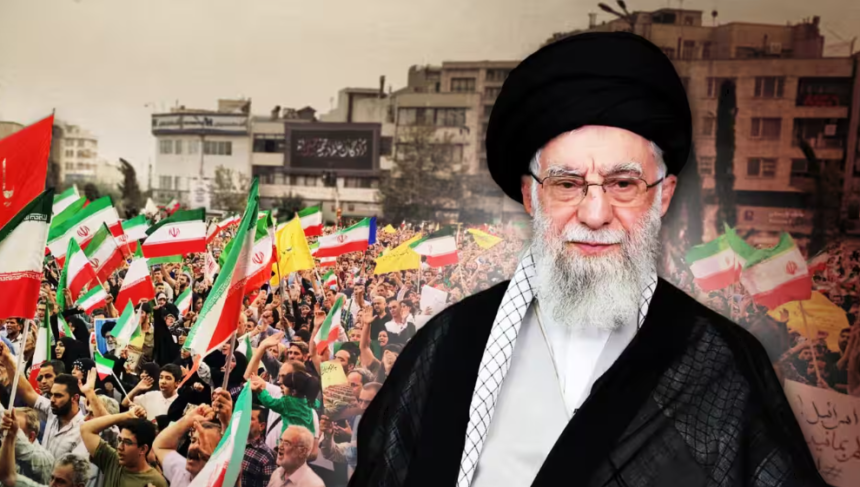
Iran is facing its most serious wave of unrest in years, as anti-government protests entered their thirteenth consecutive day, spreading nationwide and posing a direct challenge to the authority of Supreme Leader Ayatollah Ali Khamenei.
Authorities responded by cutting internet access and telephone lines, leaving much of the country isolated. Human rights groups report dozens of deaths, while thousands have been detained. As tensions rise, international pressure—particularly from the United States—is intensifying.
Here is what is driving the unrest and what it could mean for the future of Iran’s ruling system.
What Triggered the Protests?
The protests began in Tehran’s traditional bazaars, initially driven by rampant inflation and rising living costs, before spreading nationwide and evolving into broader anti-regime demonstrations.
Public anger peaked after overnight price spikes in basic goods, including cooking oil and chicken, with some products disappearing entirely from store shelves.
The situation worsened when Iran’s central bank ended a preferential exchange-rate program that allowed certain importers access to cheaper U.S. dollars. The decision pushed prices even higher, forcing many shopkeepers to shut down their businesses, sparking street protests.
Notably, the bazaaris—traditionally loyal supporters of the Islamic Republic—were at the forefront, making the unrest particularly significant.
Government attempts to calm the situation, including monthly cash handouts of about $7, have failed to stop the demonstrations.
How Widespread Are the Protests?
The demonstrations are the largest since the 2022 “Woman, Life, Freedom” protests, which followed the death of Mahsa Amini in police custody.
- Protests have erupted in more than 100 cities
- Hotspots include western provinces such as Ilam and Lorestan
- Protesters have openly chanted “Death to Khamenei,” directly challenging the Supreme Leader
Iranian state-affiliated media report that over 950 police officers and 60 Basij paramilitary members have been injured, describing protesters as “rioters” armed with weapons.
Meanwhile, Iran Human Rights (IHRNGO) reports:
- At least 45 protesters killed, including eight children
- Hundreds injured
- More than 2,000 detained
These figures cannot be independently verified, and Iranian authorities have not released comprehensive casualty data.
Why Are These Protests Different?
The participation of the bazaaris marks a major shift. Historically, they have been a pillar of regime support, playing a decisive role in the 1979 Islamic Revolution by financing clerical opposition to the shah.
Experts say their involvement signals deep economic desperation and collapsing trust.
Authorities have attempted to separate economic grievances from political dissent, branding calls for regime change as foreign-backed unrest and promising a harsher crackdown.
Analysts warn this unrest could be transformational.
“These protests will further damage an already fractured legitimacy for a state that is nearing the end of its life,” said Sanam Vakil of Chatham House.
Bloomberg Economics analyst Dina Esfandiary described the situation as reaching “a boiling point,” predicting significant political change before 2027.
Who Really Runs Iran — and What’s at Stake?
Iran has been a theocratic state since 1979, with ultimate power concentrated in the hands of the Supreme Leader.
Although Masoud Pezeshkian, elected president in 2024, promised economic reform and pragmatism, his authority is limited. Major decisions remain firmly under Khamenei’s control.
Despite campaign promises to protect the working class, economic mismanagement, corruption, sanctions, and environmental crises have pushed both the working and middle classes to the brink.
The Islamic Revolutionary Guard Corps (IRGC) has declared the preservation of the regime a “red line,” warning of possible retaliation.
Meanwhile, Reza Pahlavi, the exiled son of Iran’s last shah, has publicly backed the protests, calling for coordinated nationwide action. Some demonstrators have echoed monarchist slogans, though the extent of public support remains unclear.
Experts agree that the regime’s remaining tool is force.
“Large segments of the population have lost trust in the Islamic Republic,” said analyst Arang Keshavarzian.
What Have Trump and Khamenei Said?
U.S. President Donald Trump has warned Iran against violently suppressing protesters, threatening severe military consequences if killings continue.
Ayatollah Khamenei, in his first public response, dismissed U.S. criticism, accusing Washington of inciting unrest and vowing that the Islamic Republic will not retreat.
“A united Iranian people will defeat all enemies,” Khamenei said.
What Comes Next?
With public anger intensifying, economic pressure mounting, and security forces signaling readiness to act, Iran appears to be at a critical crossroads.
Whether the regime tightens its grip or faces irreversible change, analysts agree on one point: Iran’s political status quo is under its greatest threat in decades.