Albania and Croatia have agreed to deepen cooperation in the field of defence, including within the framework of a trilateral declaration also involving Kosovo, as Serbia continues to claim that the initiative represents a military alliance directed against it.
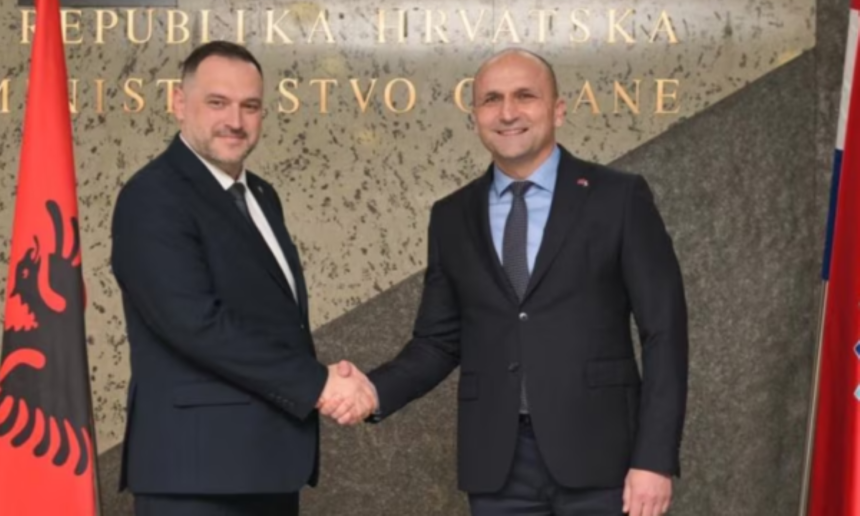
The agreement was reaffirmed during a meeting in Zagreb between Albania’s Minister of Defence, Ermal Nufi, and his Croatian counterpart Ivan Anušić on Wednesday. Both sides confirmed readiness to expand joint capabilities and strengthen cooperation in the defence industry, according to Albania’s Ministry of Defence.
The meeting comes on the same day Serbian President Aleksandar Vučić again warned that Belgrade would increase its arms purchases, alleging rising pressure from neighbouring countries and referring to what he described as a military alignment involving Pristina, Tirana and Zagreb.
Vučić has repeatedly made similar claims in the past, though no evidence has been provided to support them.
Last year, Albania, Croatia and Kosovo—NATO members Albania and Croatia, alongside Kosovo—signed a declaration aimed at enhancing cooperation in defence and security. The three countries have consistently stated that the initiative is not directed against any third party.
Both ministers rejected Serbia’s latest allegations, reiterating that the purpose of the cooperation is to strengthen regional stability in Southeast Europe and deepen friendly relations.
Minister Nufi said the trilateral declaration aims to promote economic cooperation and development of the defence industry, stressing that peace remains the foundation of all engagement.
Croatian Defence Minister Ivan Anušić echoed the position, stating that the initiative is not a military alliance but a framework for stability and cooperation in the region. Responding directly to Serbian claims, he said Croatia’s sovereignty as a NATO and EU member means it conducts its own foreign and security policy independently.
Security analyst Edward P. Joseph described repeated warnings from Belgrade regarding the initiative as exaggerated and potentially politically motivated, suggesting they may be used to justify increased militarisation and create a heightened sense of threat domestically.
He also pointed to Serbia’s growing arms acquisitions, including advanced missile systems, as a concern in the broader regional security context.
The developments come amid ongoing EU calls for Serbia to align its foreign policy with the bloc as part of its accession process, with negotiations remaining stalled in recent years.