Documents allegedly originating from Serbian intelligence structures and passed through Bojan Dimić to Fatmir Sheholli were subsequently circulated to individuals who could bring their contents into the public domain, including former Kosovo Deputy Minister for Communities and Return Milazim Gashi, according to materials cited by Dukagjini.
One of the documents concerned allegations about the financing and construction of mosques in Kosovo. According to the material, which Dimić allegedly sent to Sheholli, the purported objective of a BIA plan was to encourage the construction of as many mosques as possible across Kosovo.
The document was subsequently passed to Gashi, who brought the issue into the public debate.
In July 2024, Gashi publicly raised allegations concerning the financing of several mosques in Kosovo, linking them to what he described as suspicious structures connected to Serbia’s military establishment.
His claims prompted strong reactions from the Islamic Community of Kosovo and members of the Muslim community, who rejected the allegations and called for evidence regarding the alleged foreign financing. They warned that such claims could contribute to stigmatizing Islam in Kosovo and deepening divisions among citizens.
The alleged document trail has gained renewed attention following the indictment of Fatmir Sheholli on charges including espionage and the prosecution’s claims concerning materials allegedly supplied by Serbian intelligence structures.
Alleged use of intermediaries to amplify documents
According to the materials cited by Dukagjini, the alleged transfer of documents from Dimić to Sheholli was not an isolated case.
In another instance, Dimić allegedly sent Sheholli a separate document that Sheholli attempted to place in the Kosovo media.
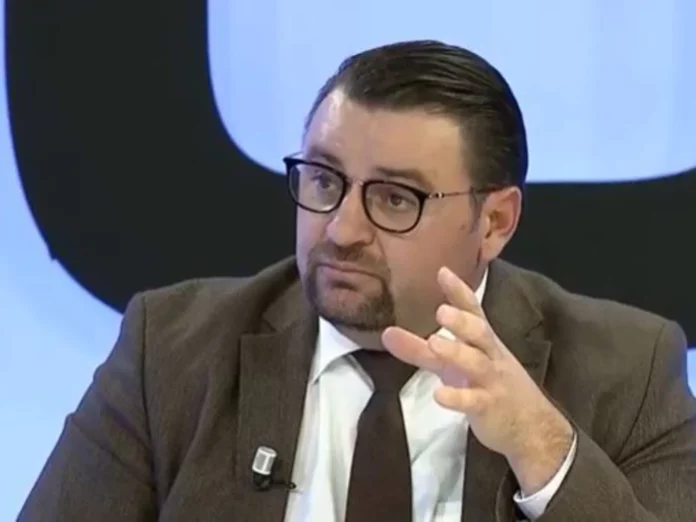
After those efforts reportedly failed, the document was eventually published by a media outlet in Albania. Sheholli later appeared on the television program “Kojshia Show”, where he said he had seen the document in an Albanian media outlet.
The document was discussed during the program as allegedly authentic material, with former Serbian State Security Service official Nafi Qegrani also participating in the discussion.
The reported chain of circulation — from Serbian intelligence-linked structures, through Dimić and Sheholli, and potentially to public figures or media outlets — has raised questions over whether such materials were intended to influence public discourse in Kosovo.
Claims about religion and social divisions
The allegations surrounding the mosque-related document are particularly sensitive because they concern religion and the role of Islam in Kosovo.
The Islamic Community of Kosovo and Muslim representatives previously rejected claims that the construction or financing of mosques was being directed by suspicious foreign structures and argued that such allegations risked portraying ordinary religious activity as a security threat.
The prosecution’s broader case against Sheholli has added a new dimension to those earlier controversies. According to the indictment reported by Kosovo media, prosecutors allege that Sheholli received materials and financial support from Serbia’s Security Intelligence Agency, BIA, with the aim of influencing political developments and public discourse in Kosovo.
The indictment also reportedly contains a separate document concerning an alleged Serbian plan to promote the image of Kosovo as a radicalized and extremist state, including through the construction of mosques and the encouragement of social and religious divisions.
The allegations remain matters for judicial proceedings, and the claims against Sheholli have not been established by a final court judgment.
The case nevertheless highlights the potential role of intermediaries, media channels and influential individuals in amplifying sensitive narratives that could affect Kosovo’s political stability and relations between different communities.