Belgrade — Serbia’s government faced a tumultuous 2025, and experts see few signs of improvement in 2026.
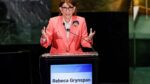
Ferenc Nemet, a Balkan analyst at the Center for European Policy Analysis (CEPA) and PhD candidate at Corvinus University in Budapest, highlights that President Aleksandar Vučić, in power for nearly a decade and a half, endured an exceptionally difficult year.
Challenges included student protests, setbacks to major economic projects, and failure to gain favor with former U.S. President Donald Trump, placing Vučić in a politically vulnerable position.
Domestic Unrest and Protest Movements
Protests, initially sparked by the Novi Sad stadium roof collapse in November 2024, which killed 16 people, continued through 2025, encompassing a wide cross-section of Serbian society. Demonstrators demanded:
- Greater accountability and transparency
- Independent judiciary and media
- Early elections
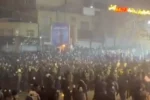
Government tactics—including smear campaigns against activists and academics, deflecting attention with crises in northern Kosovo, and blaming foreign actors—failed to quell public discontent. Massive demonstrations, including one in March drawing over 300,000 participants, underline the resilience of the protest movement.
Economic Setbacks
Vučić also suffered significant economic blows:
- Rio Tinto suspended its planned lithium mine indefinitely
- Affinity Partners, linked to Jared Kushner, canceled a luxury development in Belgrade
These projects represented billions in potential foreign investment, and their loss has both economic and political implications for the Serbian leadership.
The country’s sole oil refinery, NIS, majority-owned by Russian Gazprom Neft, remains under U.S. sanctions, requiring divestment of Russian holdings by mid-March—a move limiting Vučić’s strategic maneuvering.
International and EU Challenges
Despite Vučić’s pro-Trump orientation, U.S. policy prioritizes strategic interests over bilateral favoritism. Similarly, Serbia’s EU accession prospects remain stalled, with Brussels increasingly vocal about democratic shortcomings and Vučić’s reluctance to align with EU foreign and security policy.
Meanwhile, neighboring countries such as Montenegro and Albania continue to advance on their EU paths, highlighting Serbia’s stagnation.
Political Outlook for 2026
Analysts predict a continuation of Vučić’s “wait-and-see” approach, navigating internal pressures while hoping to maintain control. Persistent student protests and domestic discontent could push the president to call early elections by the end of 2026, as a last effort to consolidate power.
“The problems of the past year have not disappeared—they have intensified. Vučić will likely continue his strategy of waiting and observing, hoping to secure his political survival,” concludes Nemet.