While European Union funds under the new Growth Plan for the Western Balkans have not been formally blocked for Serbia, their disbursement remains strictly contingent on significant judicial and electoral reforms.
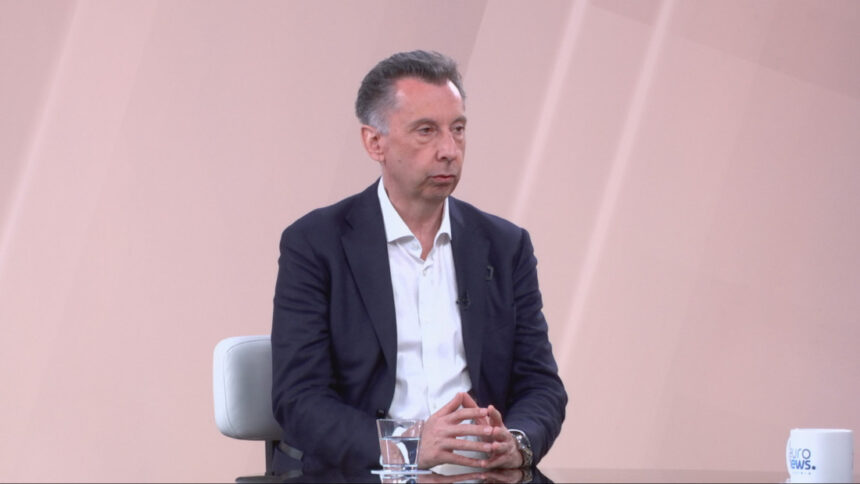
In an analysis for Euronews Serbia, Slobodan Zečević, Director of the Institute for European Studies, clarified the European Commission’s current stance, noting that while the money remains “on the table,” it will not be released until Belgrade implements specific recommendations from international bodies.
The Stalemate: Reform vs. Stagnation
According to Zečević, the European Commission functions as a collective body that has not issued a formal “blockade,” but rather a “conditional pause.” The release of funds, typically decided mid-year, depends on a country’s progress on its European path.
“We are currently in a gray area,” Zečević explained. “Technically, we haven’t lost the funds, but they won’t be paid out until the recommendations of the Venice Commission regarding the judiciary are fully implemented.”
Key Conditions for Disbursement
The EU has laid out a comprehensive set of requirements that the Serbian government must meet to unlock the financial package. These include:
- Judicial Independence: Adoption of Venice Commission standards to prevent political interference in the legal system.
- Electoral Integrity: Implementation of ODIHR recommendations to ensure free and fair elections, particularly regarding media access and the role of the Regulatory Authority for Electronic Media (REM).
- Foreign Policy Alignment: Continued pressure to synchronize Serbia’s security policies with the EU, specifically concerning sanctions against Russia.
- Democratic Functioning: Addressing concerns over a perceived “authoritarian direction” and the controversial “Mrdić Laws,” which Zečević described as the “straw that broke the camel’s back” for Brussels.
Economic and Political Risks
The expert warned that if Serbia fails to withdraw these funds within the 2026 calendar year, the capital will be redistributed to other Western Balkan nations that have met their reform targets.
“Serbia cannot develop dynamically without EU integration,” Zečević noted, emphasizing that a lack of progress creates an environment of distrust for investors and negatively impacts the daily lives of citizens. He further highlighted that Cluster 3 of the negotiations remains technically ready but is currently facing a “political blockade” due to the domestic climate.
As the government moves to adopt legal amendments to “amortize” the pressure from Brussels, the international community remains watchful. The coming months will determine whether these legislative changes are substantive enough to trigger the first major payouts from the Growth Plan.