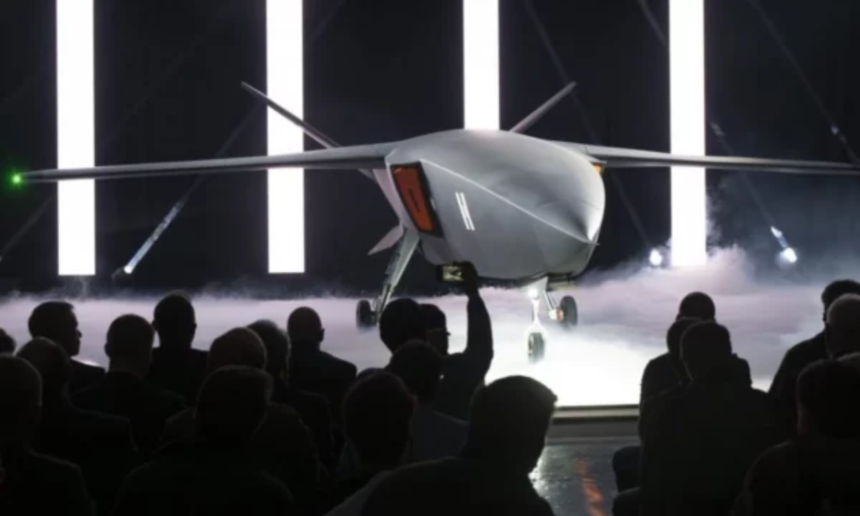
Inside a small workshop in England’s East Midlands, engineers at British startup Skycutter are designing weapons for Ukraine. Rows of 3D printers produce the bodies of interceptor drones, while motors and navigation chips are assembled by hand — a process replicated hundreds of thousands of times each month in Ukrainian partner factories.
The war in Ukraine has fundamentally changed modern warfare. Swarms of cheap, deadly, and increasingly autonomous drones are reshaping military strategy and forcing European armies to rapidly adapt.
European governments are now racing to modernize their defense industries as concerns grow over Europe’s heavy dependence on American military manufacturers. Pressure has intensified amid uncertainty surrounding Donald Trump’s stance on NATO and repeated demands for European allies to increase defense spending.
In response, the European Union has pledged up to €800 billion in defense investments over the next four years, while countries such as the United Kingdom are also increasing military spending with a renewed focus on defense sovereignty — the ability to produce and deploy weapons independently.
A large share of these investments is now flowing into European defense startups developing drones, anti-drone systems, autonomous technologies, and low-cost battlefield solutions.
The future battlefield is increasingly expected to rely on disposable and mass-produced systems rather than only expensive traditional equipment. British General Sir Roly Walker previously stated that future military equipment should include a mix of “survivable,” “attritable,” and “consumable” systems — many designed for single-use operations.
At the same time, Europe is seeking to reduce dependence on foreign supply chains, particularly Chinese-made components and materials, amid growing geopolitical tensions.
Defense startups such as Tekever, founded in Portugal, have rapidly expanded due to soaring demand for drone technology. The company reached a valuation of over $1 billion last year and continues expanding production across Europe.
Traditional defense manufacturers were largely caught off guard by the drone revolution. Falling costs of sensors, motors, and electronics have enabled smaller companies to compete in areas once dominated by major arms producers.
The changing economics of warfare have become increasingly visible. Iranian-made Shahed drones used by Russia reportedly cost around $30,000 each, while many NATO air defense missiles used to intercept them cost hundreds of thousands — or even millions — of dollars per shot.
The war in Ukraine has accelerated a major transformation in military thinking across Europe, where speed, mass production, low cost, and technological adaptability are becoming just as important as heavy tanks and conventional weapons.