Representatives of several international election observation missions said Serbia’s elections were largely conducted in a peaceful atmosphere, although incidents were reported. While observers described the high voter turnout as an encouraging sign of democratic participation, they also raised concerns about the misuse of state resources, unequal media coverage, voter intimidation and pressure during the campaign.
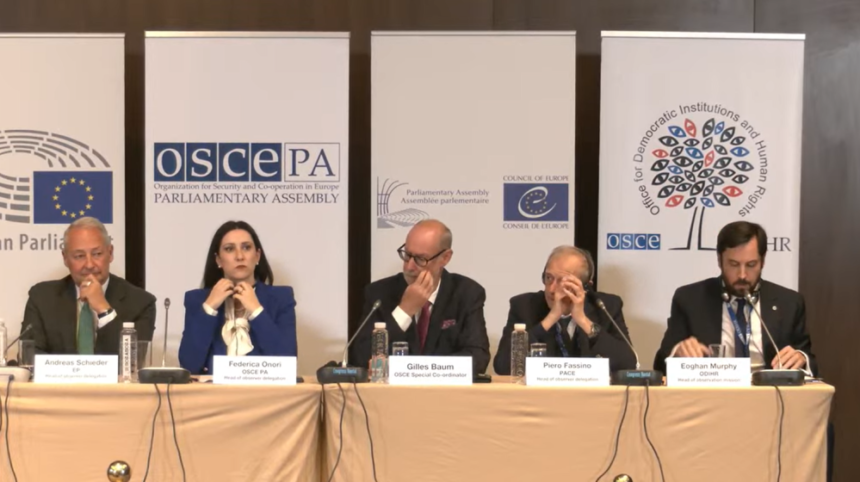
Speaking on behalf of a parliamentary observation mission, Luxembourg MP Žil Baum said the elections had taken place amid significant political polarisation.
“The ruling party had advantages, including the misuse of resources, intimidation and pressure on voters, candidates and civil society,” Baum said.
He noted that preparations for the elections had been organised efficiently and that the electoral system was inclusive.
Baum said international observers had positively assessed the voting process at most polling stations, while reports of physical violence had caused serious concern.
Addressing these shortcomings — including the misuse of public resources, unequal media coverage, pressure and voter intimidation — would be essential to strengthening public confidence in the electoral process and bringing future elections closer to OSCE standards, he added.
Baum also described the high turnout as a positive sign of citizens’ commitment to exercising their democratic rights and determining their future.
Piero Fassino, representing the Parliamentary Assembly of the Council of Europe, said the electoral process had been conducted well at 96 per cent of the polling stations observed by his mission.
“Overall, the elections took place in a peaceful and responsible manner, despite the polarised atmosphere,” Fassino said. He described the turnout, reported as the highest since 1990, as a significant moment for Serbia and called on the election winners to honour the trust placed in them by voters.
Federica Onori, representing the OSCE Parliamentary Assembly delegation, also highlighted the high turnout, stressing that democracy depends on citizens’ participation.
However, she said the elections had taken place amid deep political polarisation and widespread distrust of public institutions. Onori also pointed to problems involving the voter register, voting by citizens living abroad and pressure on voters.
She said strengthening institutions required time but also political will to acknowledge and address shortcomings and ensure citizens could participate actively in the democratic process.
Andreas Schieder, an observer from the European Parliament, said Serbia’s European future was important to the Parliament, adding that credible elections, public trust, democratic institutions and commitment to European values were essential to the country’s path towards EU membership.
Schieder praised the high turnout from the early hours of election day but also criticised the polarised campaign. He referred to the glorification of convicted war criminal Ratko Mladić during the campaign, saying that glorifying someone convicted of genocide was incompatible with European values.
The European Parliament observer said the mission had received numerous reports of irregularities and expressed hope that Serbian authorities would address the findings. He also highlighted problems faced by voters abroad, including long queues, and said the system needed to be improved to prevent citizens from having to wait for hours to cast their ballots.
Schieder added that he hoped Serbia’s new parliament and government would give fresh momentum to the country’s EU accession process.
Juan Murphy, representing the OSCE Office for Democratic Institutions and Human Rights (ODIHR) observation mission, also raised concerns about political polarisation, unequal campaign conditions and the use of state resources.
Murphy said the mission was concerned about alleged bias in decisions taken by Serbia’s Republic Electoral Commission on certain issues. He also highlighted unresolved problems with the unified voter register and the failure of state institutions to respond to the commission responsible for overseeing it.
According to Murphy, the use of state resources for campaigning undermined equal opportunities, while reports of intimidation and inconsistent police responses raised further concerns.
He also said the mission’s media monitoring had found unequal campaign coverage, with traditional media amplifying certain political narratives. Despite legal obligations, Serbia’s Regulatory Authority for Electronic Media had not addressed complaints before election day, he added.
ODIHR will remain in Serbia to follow up on further reports concerning the conduct of the elections, Murphy said.
The observers’ preliminary assessments acknowledged the high level of voter participation and the generally peaceful conduct of voting while identifying concerns that they said needed to be addressed to strengthen confidence in future elections.