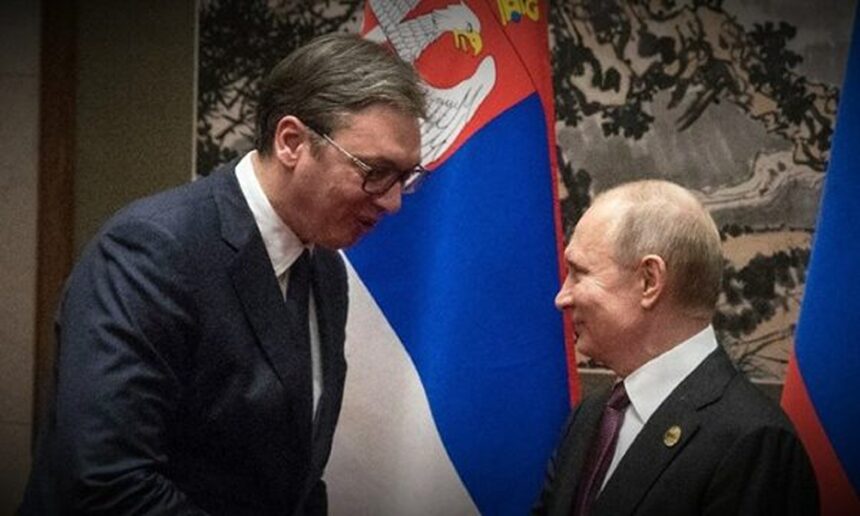
Montenegrin journalist and co-founder of the newspaper Vijesti, Željko Ivanović, has sharply criticized Serbian President Aleksandar Vučić, claiming that many Europeans increasingly perceive Serbia as the “Little Russia” of the Balkans and Vučić as a “regional Lukashenko.”
In an interview with the Serbian outlet Nova.rs, Ivanović commented on developments surrounding Vučić’s participation in the EU–Western Balkans Summit in Tivat.
According to Ivanović, Vučić’s reaction following the incident at Tivat Airport reflected frustration after Montenegrin institutions, in his view, exposed the situation before regional and European public opinion.
“Vučić once again demonstrated why he has transformed from a stabilizing factor into a destabilizing one in the region. That is why Europeans, as he himself has complained, see Serbia as the ‘Little Russia’ of the Balkans. I would add that they see him personally as a regional Lukashenko,” Ivanović stated.
He also addressed claims by Serbian authorities regarding alleged security threats against Vučić during his stay in Montenegro and speculation surrounding the whereabouts of alleged organized crime figure Radoje Zvicer.
According to Ivanović, if Serbian security services possessed credible information regarding Zvicer’s location, they would immediately share it with international partners.
“If Vučić and his services had relevant information about Zvicer, they would pass it on to Europol, the DEA, and other partner agencies. Since it appears they do not have such information, they are creating a spectacle around a serious issue for domestic political consumption,” he said.
Speaking about relations between Serbia and the European Union, Ivanović argued that recent statements and actions by the Serbian president are harming Serbia’s image among European partners and raising questions about the credibility of the country’s European integration process.
The remarks reflect Ivanović’s personal political assessment and criticism of Vučić’s leadership. They do not represent an official position of the European Union or its institutions.