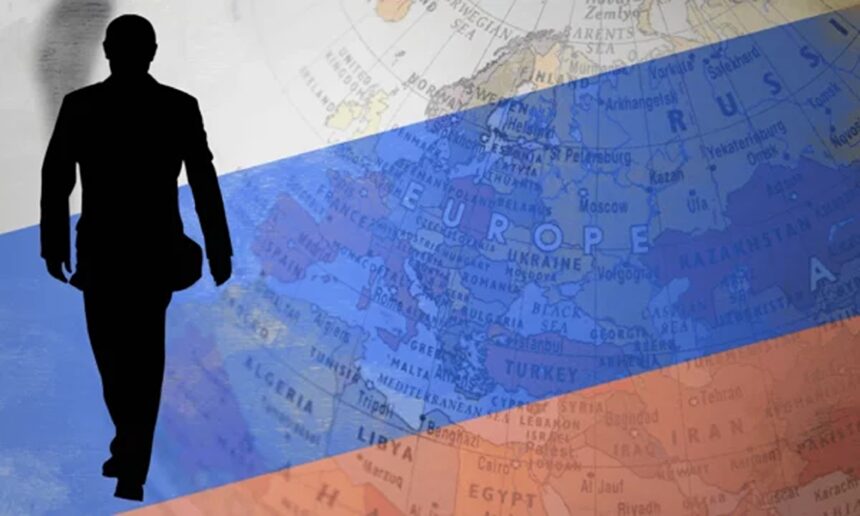
The primary objective of Russia’s aggression against Ukraine was to halt the processes of imperial disintegration that began with the collapse of the Soviet Union.
By defining Russia’s foreign policy in neo-imperial terms, Russian President Vladimir Putin sought to restore Moscow’s lost influence across the post-Soviet space and re-establish Russia as a global power.
However, in the long term, the invasion of Ukraine has not only failed to achieve these goals but has also accelerated the erosion of Russian influence on the international stage. Moscow’s actions strengthened internal cohesion within the European Union, encouraged NATO enlargement, and deepened transatlantic cooperation, ultimately weakening Russia’s position in Europe and beyond.
The Geopolitical Emancipation of Central and Eastern Europe
Russia’s invasion of Ukraine marks a turning point for the entire region, challenging the long-standing division between a “civilized” Western Europe—traditionally viewed as unified, prosperous, and politically powerful—and a supposedly “backward” Central and Eastern Europe, which for decades was perceived as operating under the shadow of Russian influence.
As a result, the countries of Central and Eastern Europe were often treated as peripheral actors within the broader European system. The war has significantly dismantled this narrative by strengthening the strategic role of these states and demonstrating their ability to pursue independent and influential foreign policies.
Growing External and Internal Pressures on Russian Foreign Policy
Amid a rapidly changing international order, the Russian Federation faces a range of challenges that may significantly shape its future foreign policy trajectory.
Most notably, Russia’s increasing international isolation—particularly following its aggression against Ukraine and the imposition of sanctions by the European Union and the United States—has already forced Moscow to reconsider key foreign policy priorities.
At the same time, growing public dissatisfaction with Russia’s authoritarian system of governance, combined with mounting economic difficulties, could generate internal pressure that may eventually lead either to political reforms or to a reassessment of foreign policy objectives.
Two Competing Geopolitical Visions for Europe
At the beginning of the 21st century, two major geopolitical visions for Europe emerged, both of which are likely to gain greater relevance following the end of the war in Ukraine.
The Franco-German Vision
The first vision was driven by the ambitions of Germany and France to establish a distinct European geopolitical sphere that would be strategically autonomous from the United States while relying on the economic strength of the European Union.
In practice, this concept envisioned two major geopolitical centers—Berlin and Paris—shaping the future direction of European integration while competing for strategic influence within Europe. At the same time, both capitals shared the broader objective of balancing the dominant role of the United States.
Prior to 2014, both France and Germany generally appeared willing to accommodate Russian expectations regarding the restoration of Moscow’s influence in Eastern Europe, including over countries such as Belarus, Ukraine, and other former Soviet republics.
A clear example of this approach was the 2008 NATO Summit in Bucharest, where France and Germany opposed granting Membership Action Plans to Ukraine and Georgia. Their position reflected a desire to preserve regional stability by avoiding further NATO expansion eastward, which Russia viewed as a direct challenge to its strategic interests.
The Central and Eastern European Vision
The second geopolitical vision was championed by the United Kingdom, several Central European countries, and the Baltic states.
This approach prioritized stronger transatlantic relations and a greater military presence of the United States in Europe. Within this framework, Washington was seen not only as a guarantor against potential Russian aggression but also as a counterbalance to excessive French and German influence over European integration.
These concerns became particularly pronounced among EU member states that joined after 2004, many of which feared excessive German dominance within the European Union and the possibility of renewed geopolitical cooperation between Berlin and Moscow at their expense.
In this context, deepening German-Russian energy cooperation—especially through projects such as the Nord Stream pipeline—was viewed by many Central and Eastern European countries as a significant threat to their strategic interests.
As a response, these states sought to strengthen regional cooperation while deepening their ties with the United States and NATO.
Supporters of this vision advocated a more decentralized European Union, opposing efforts to transform the bloc into a quasi-federal superstate dominated by its largest Western members. Instead, they promoted a “Europe of Nations” model, based on subsidiarity, national sovereignty, and respect for the diversity of member states.
For them, such an approach would reduce the risk of decision-making within the European Union being dominated by a small number of powerful countries and would better preserve the balance between national interests and European cooperation.