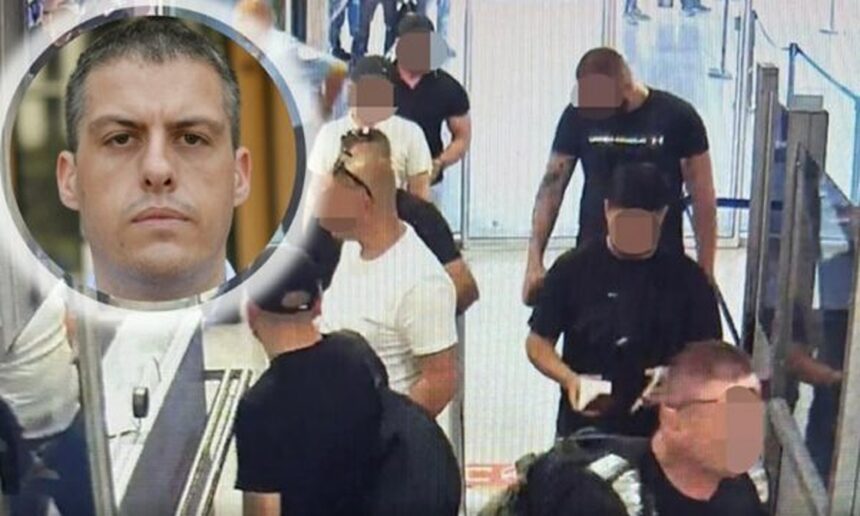
Serbian lawyer Ivan Ninić has claimed that the recent “Tivat case” involving a charter flight carrying 87 Serbian nationals to Montenegro reveals what he described as criminalized political structures operating under the leadership of Serbian President Aleksandar Vučić.
Speaking to Nova, Ninić argued that the incident was not merely a political miscalculation but rather “a direct export of state-linked crime, party-affiliated paramilitary elements, and intimidation squads aimed at destabilizing a sovereign state such as Montenegro.”
The controversy erupted after Montenegrin security authorities reportedly prevented the entry of 87 passengers who had arrived on a charter flight at Tivat Airport and subsequently returned the aircraft to Belgrade. According to reports, security services assessed that several individuals on board were persons of security interest.
“The decision of the Montenegrin authorities to deny entry to this group represents a serious institutional signal and a lawful response to a potential threat to national security,” Ninić stated.
Regional media reports have alleged that some passengers had connections to football supporter groups, private security structures, and various cases of violent criminal activity, including individuals with criminal convictions. Reports also claim that some names appeared in international security databases.
Questions have additionally been raised regarding the financing and organization of the trip. The identity of those who funded the charter flight and accommodation arrangements has not been publicly disclosed.
Ninić suggested that public funds may have been used, describing such a possibility as a serious political and moral issue.
“It is devastating to think that citizens could be financing charter flights for such structures while resources are lacking for basic needs,” he said.
According to Ninić, the purpose of the trip was allegedly to organize “spontaneous” gatherings in support of Vučić during the EU–Western Balkans Summit in Tivat, something he claims Montenegrin authorities viewed as a potential risk to public order and security.
The lawyer further argued that the incident reflects a broader political pattern in Serbia, alleging that networks linked to the authorities are used to exert influence beyond the country’s borders.
He also criticized Serbian officials for downplaying the incident and rejecting allegations that criminal elements were involved.
Meanwhile, Montenegrin newspaper Vijesti reported that accommodation had allegedly been arranged for the passengers at a luxury resort in Tivat through an agreement concluded one day before the flight between a local hotel company and a travel agency from Bijeljina.
The allegations and claims made by Ninić represent his personal assessment of the incident. Serbian authorities have rejected accusations of wrongdoing, and no official findings have publicly established that the passengers were involved in any illegal activity.